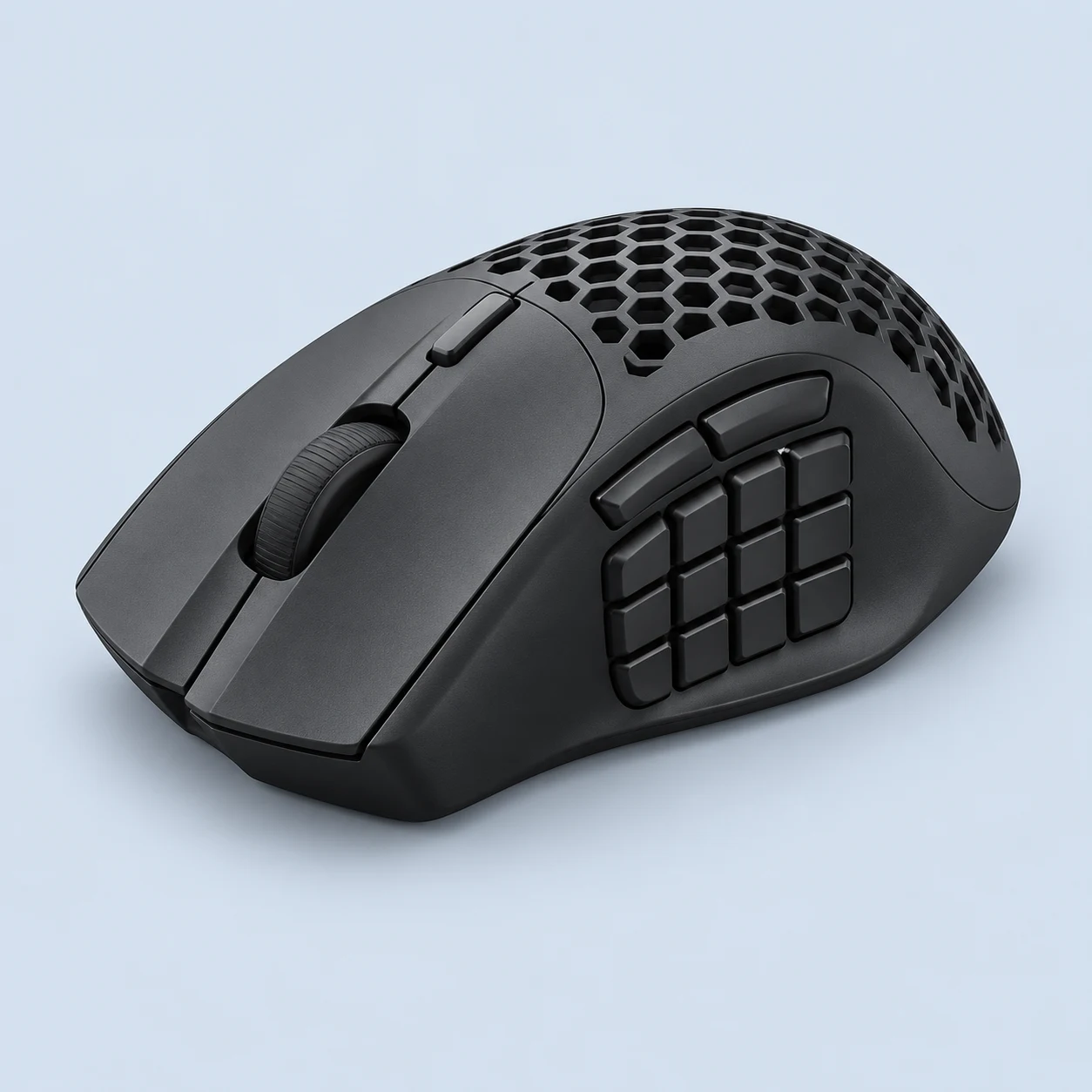
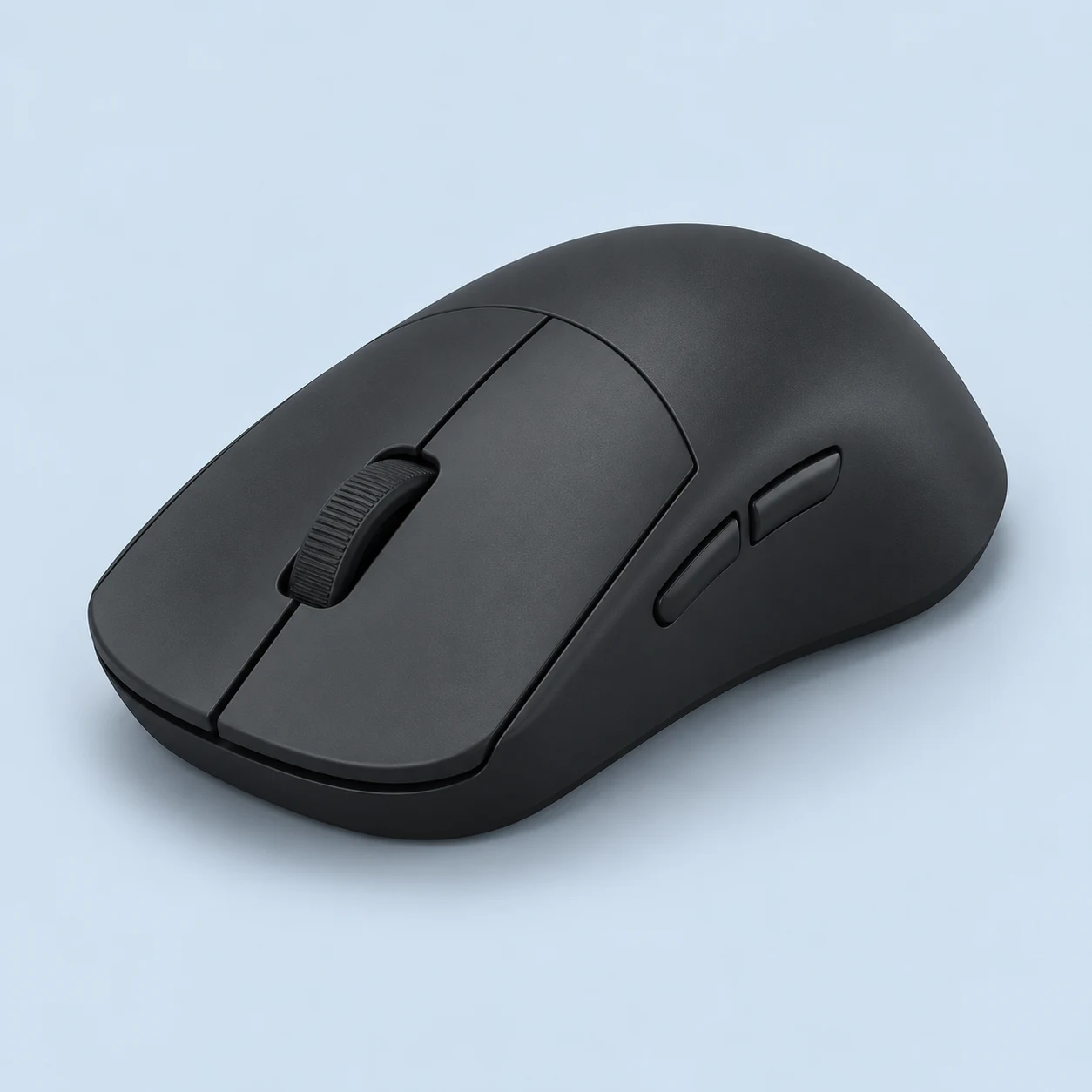
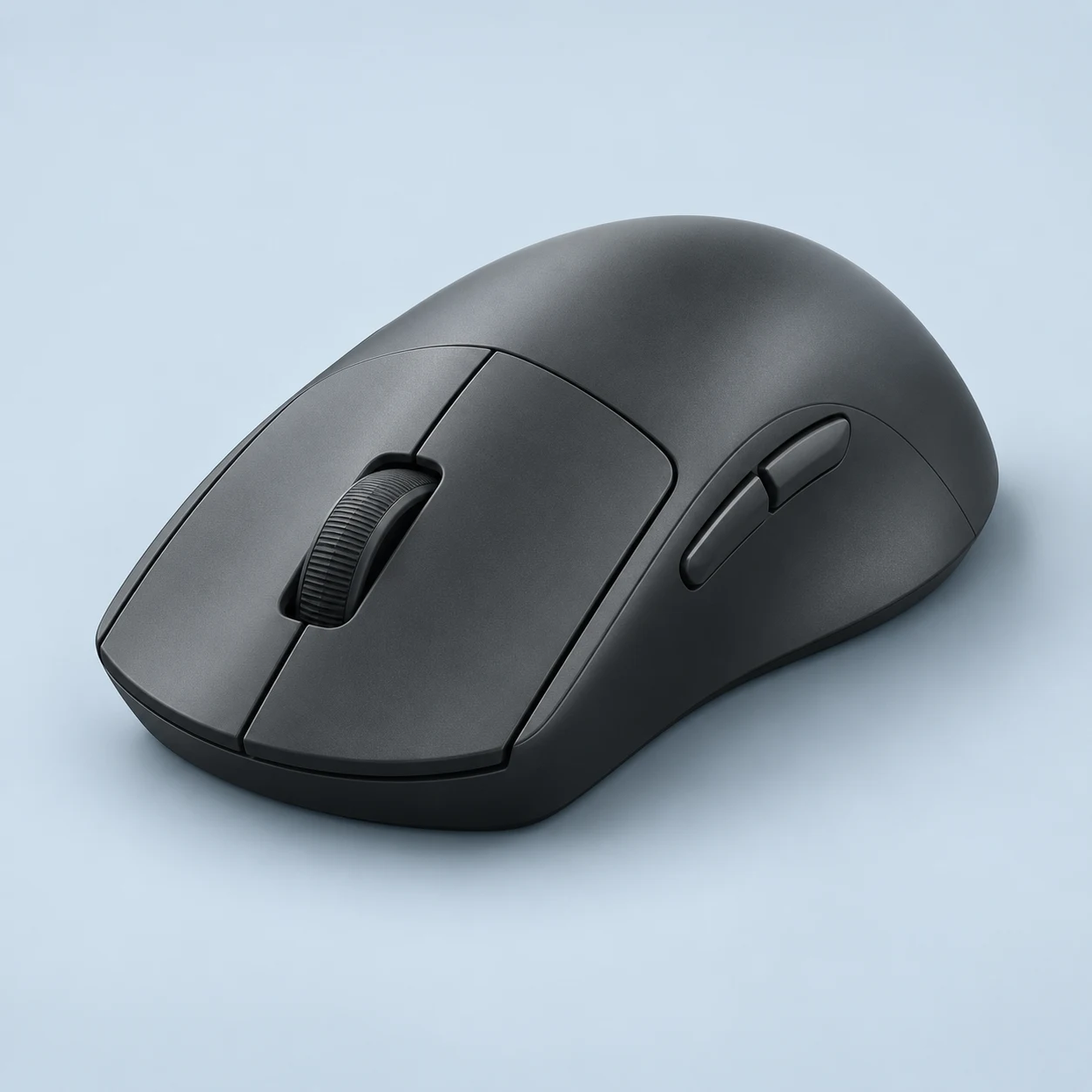
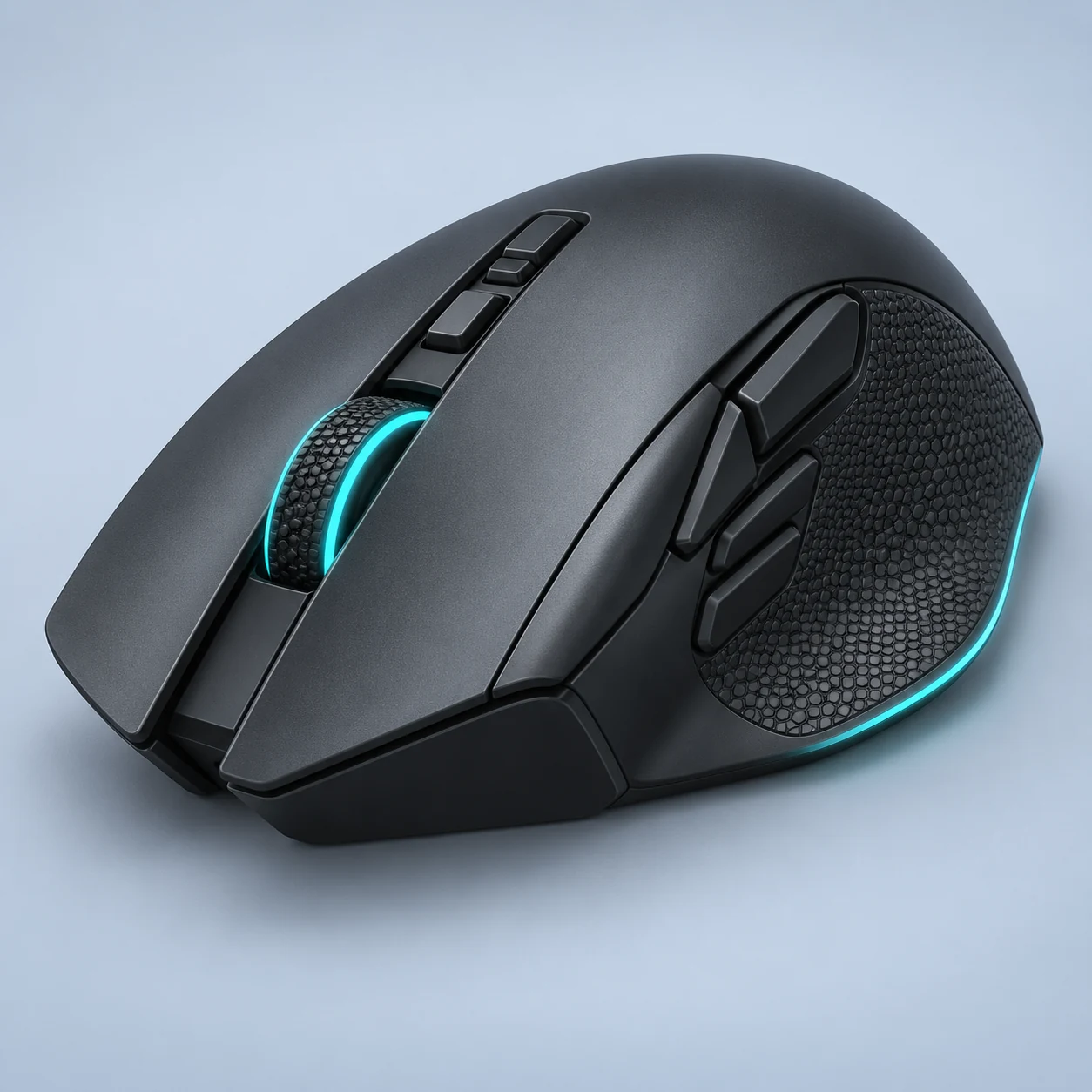
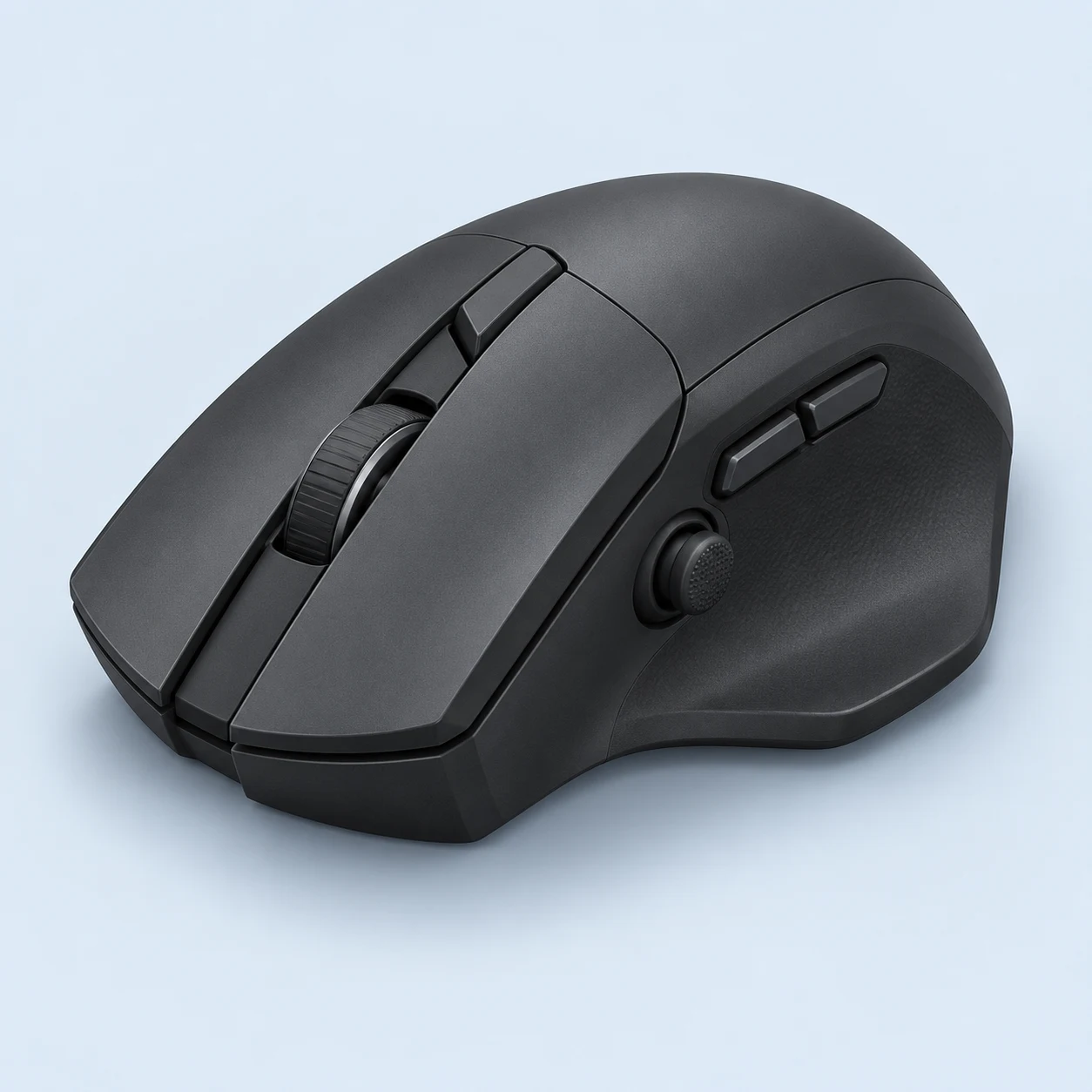
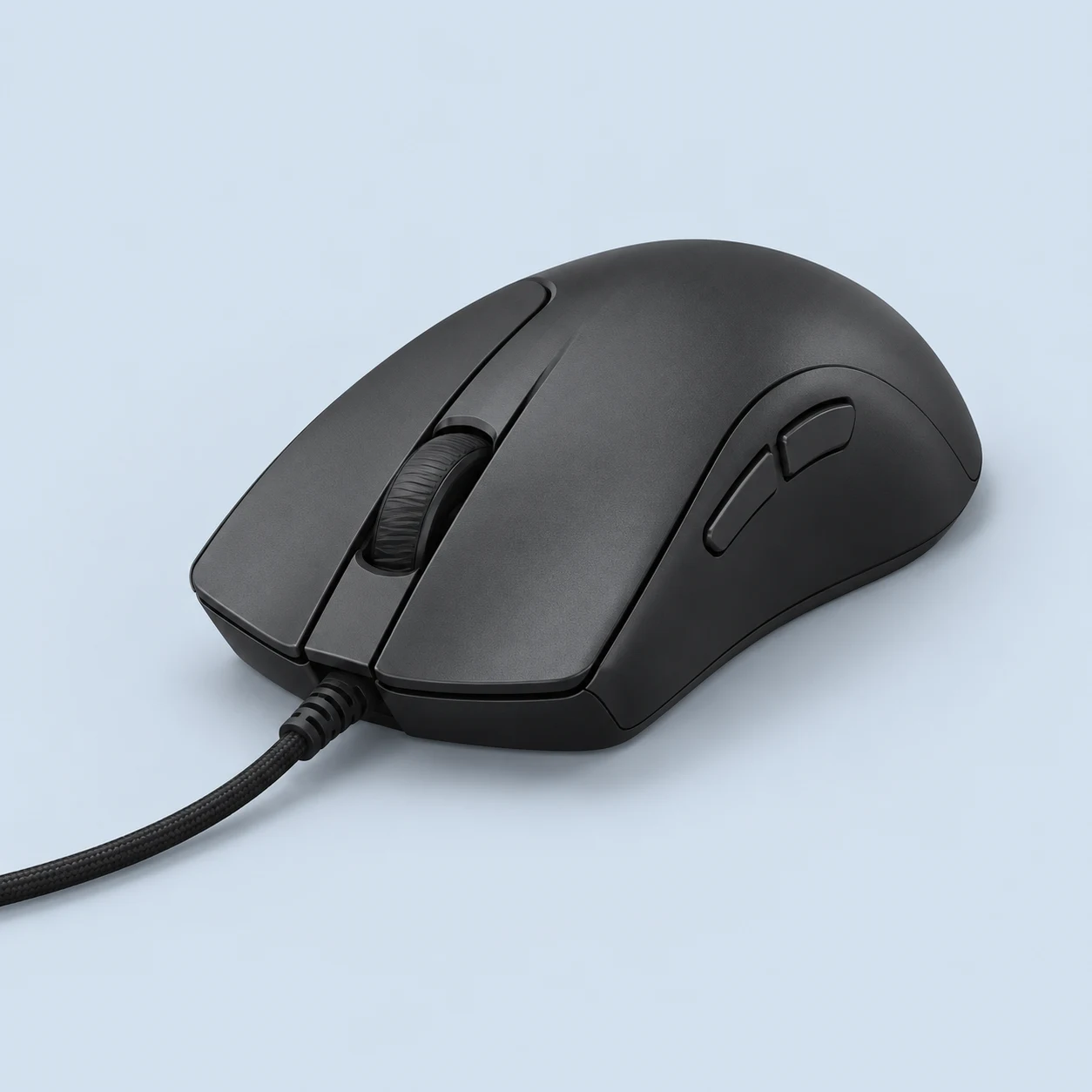
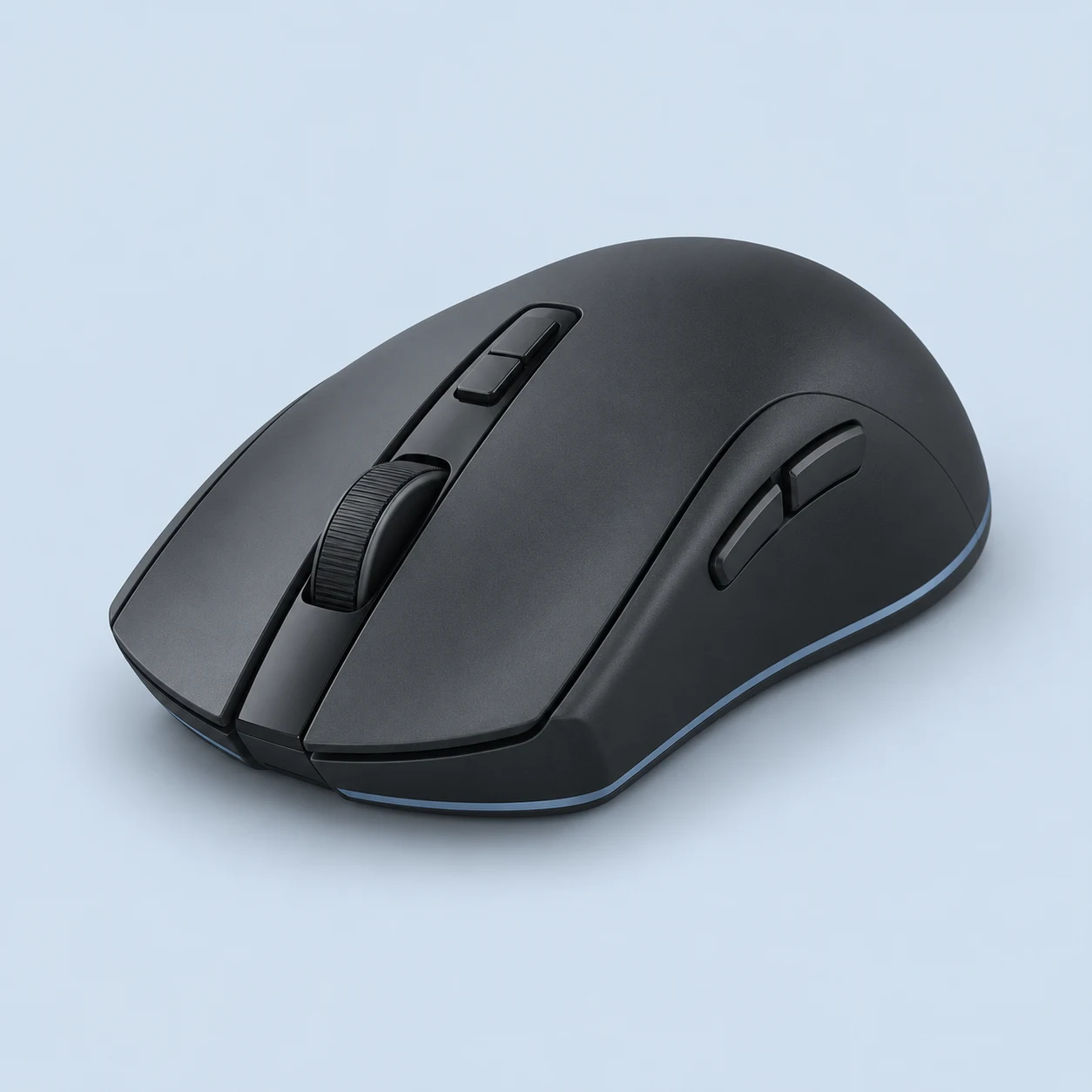
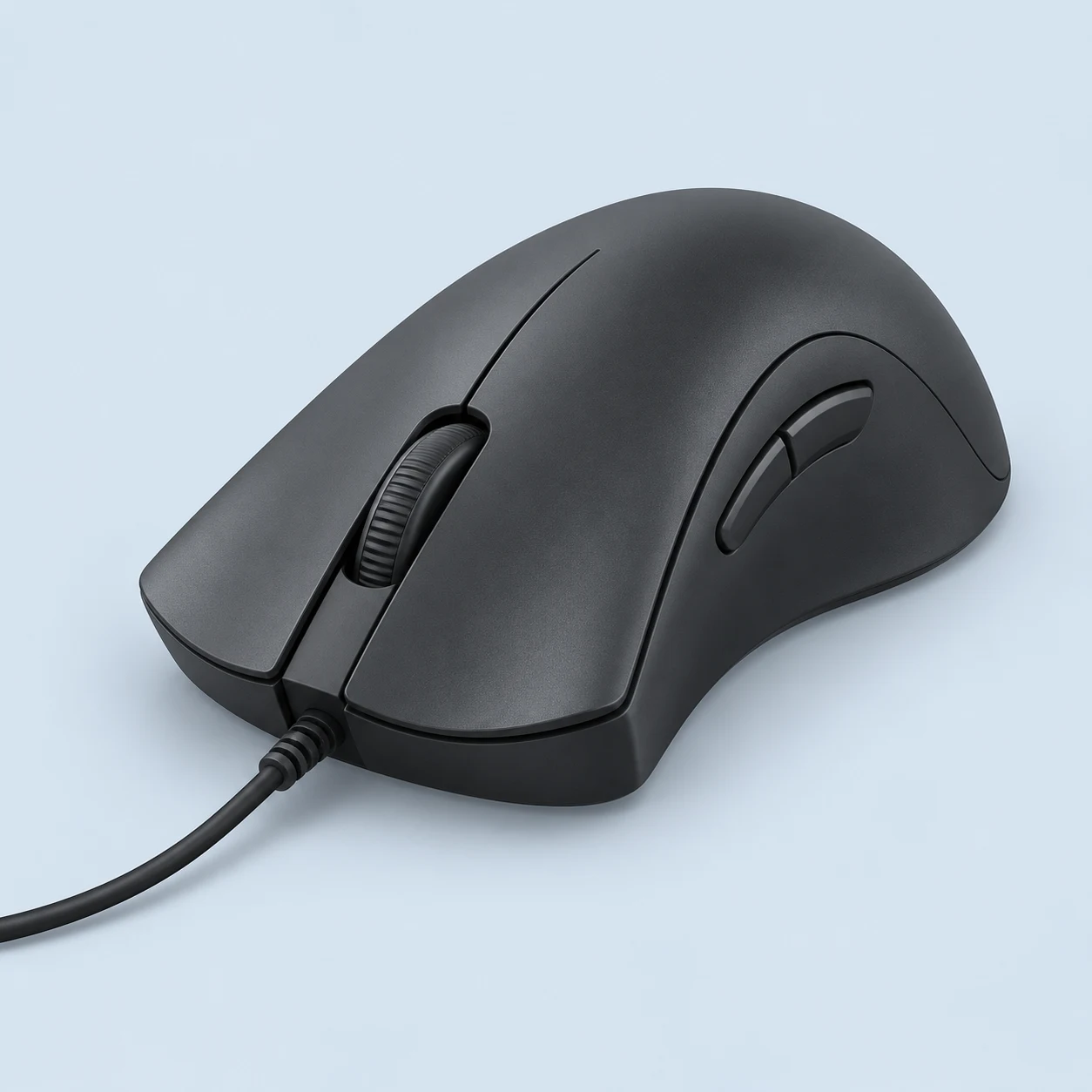
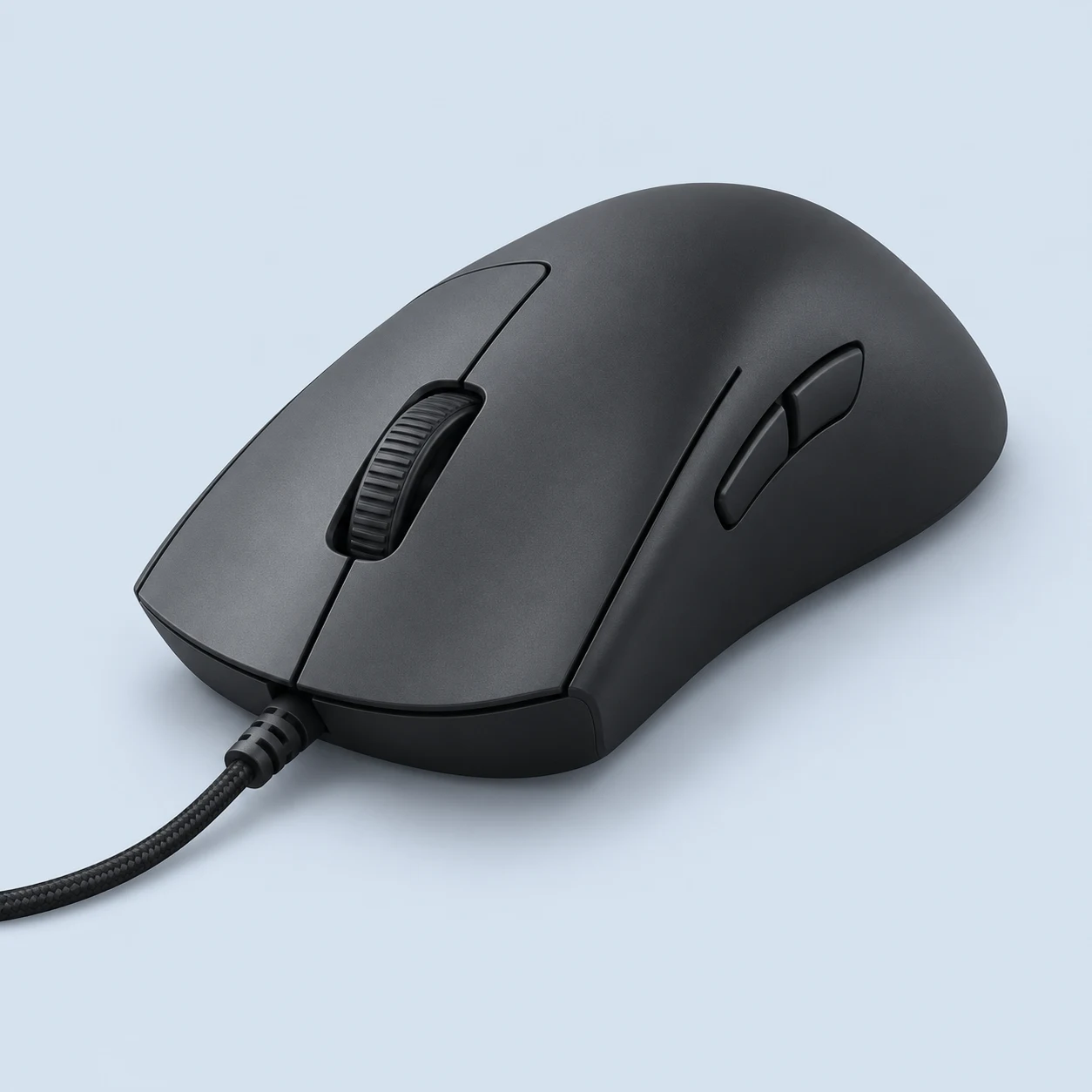
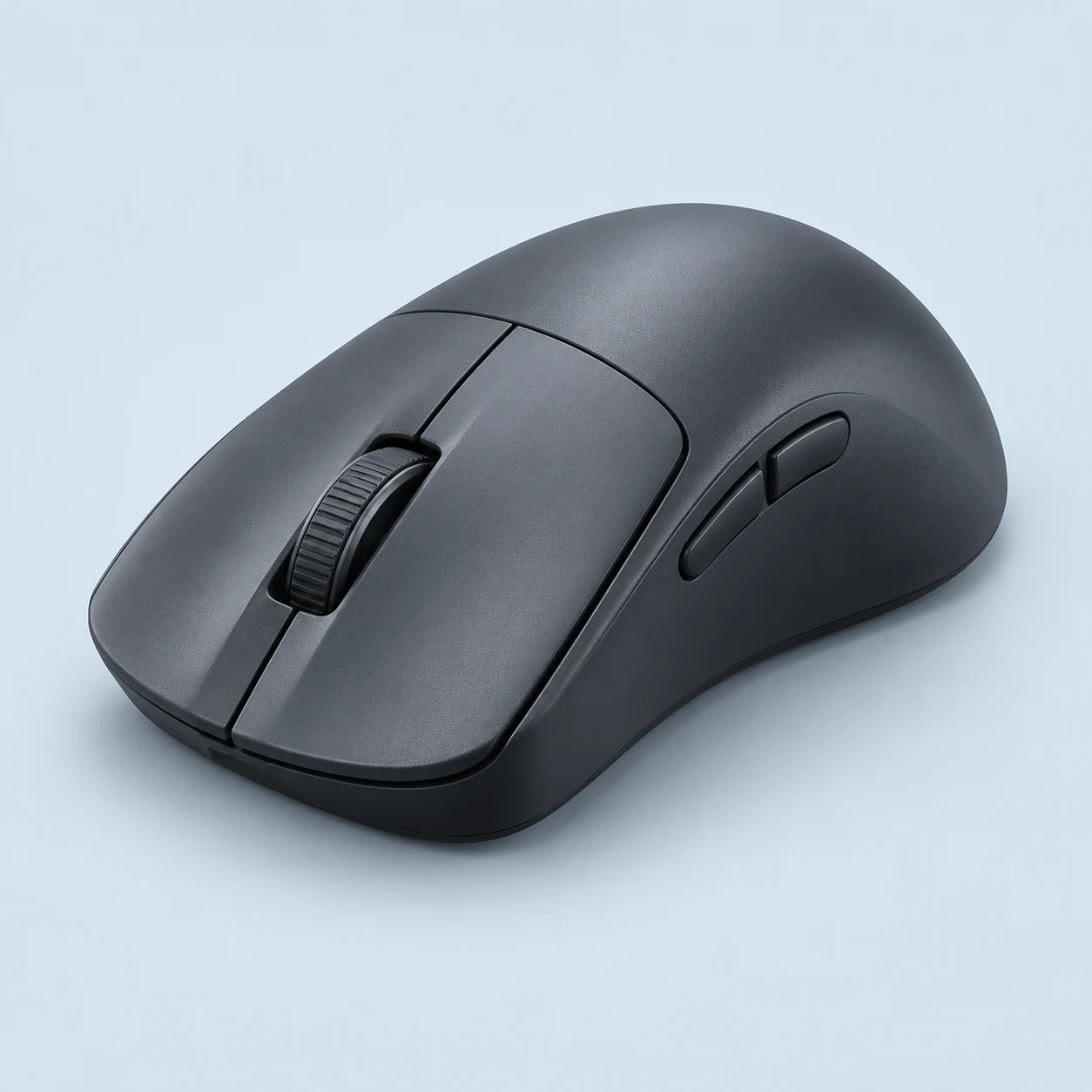
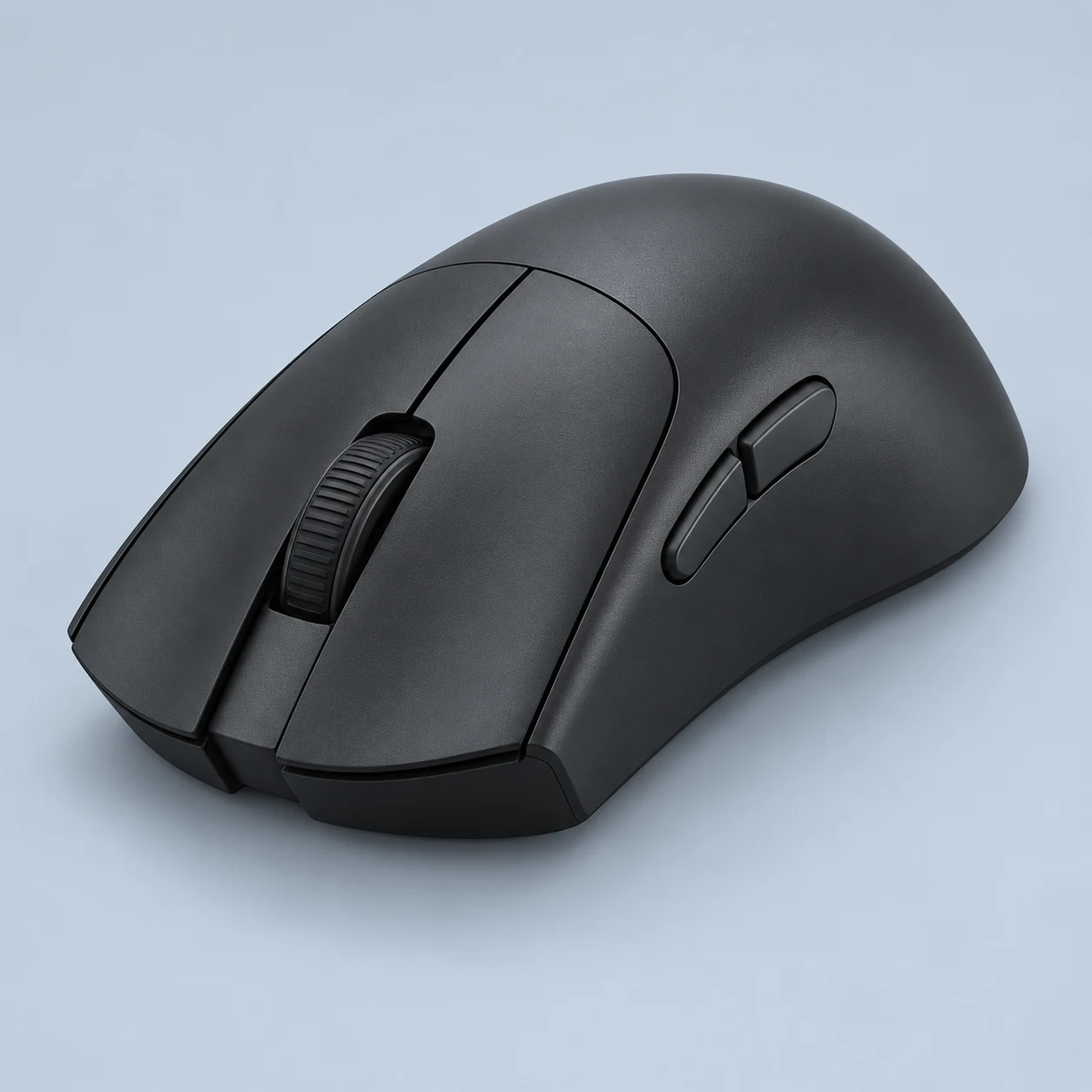
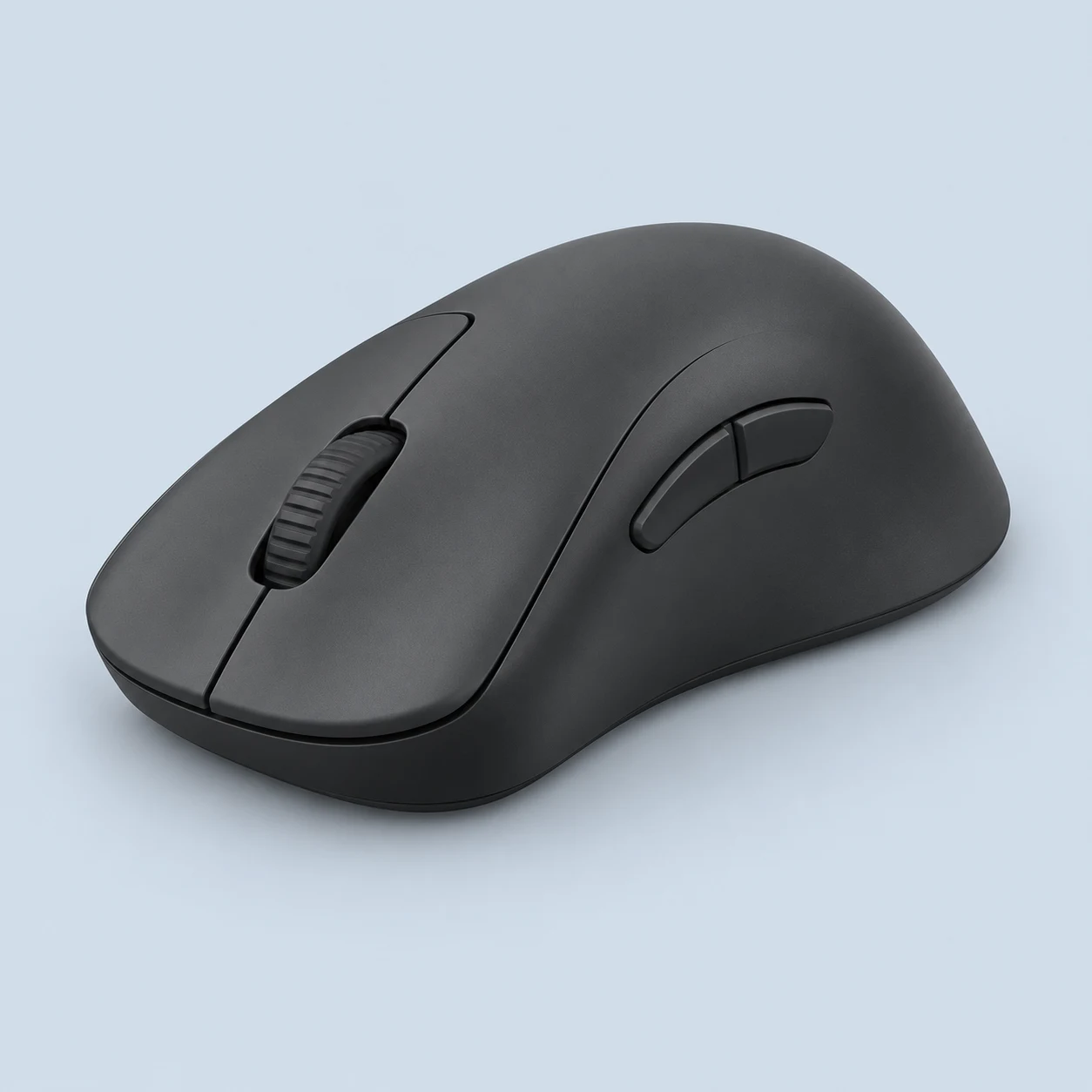
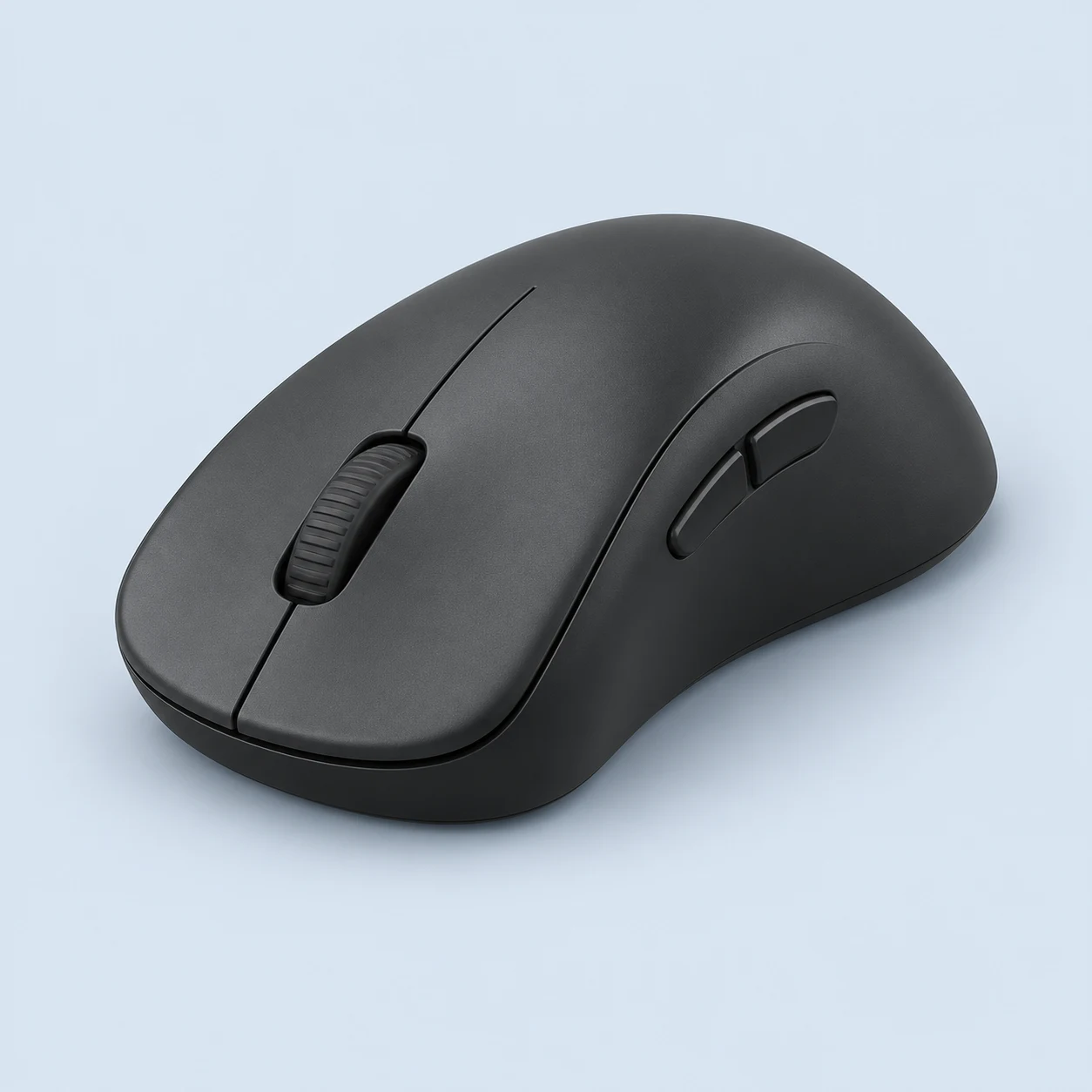
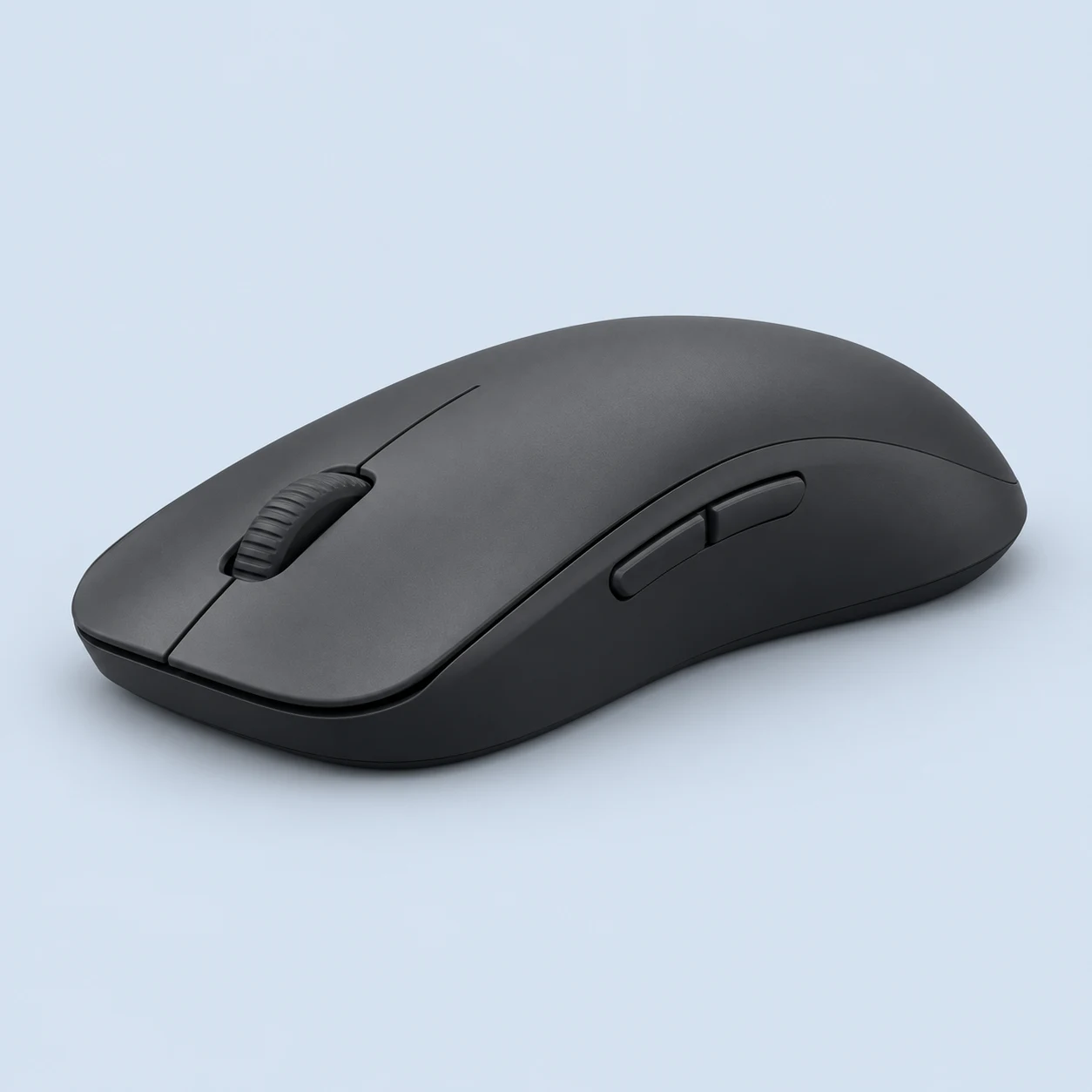
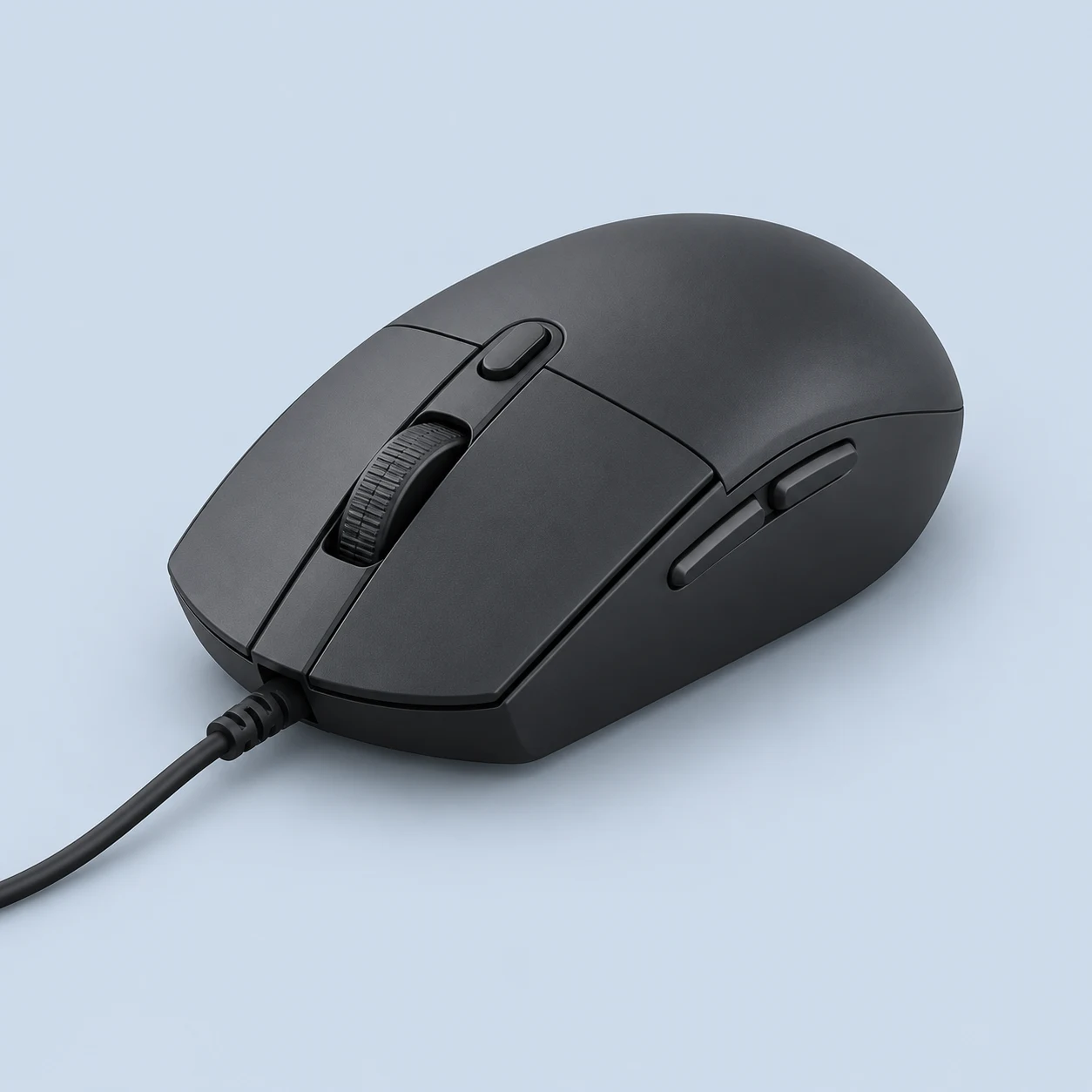
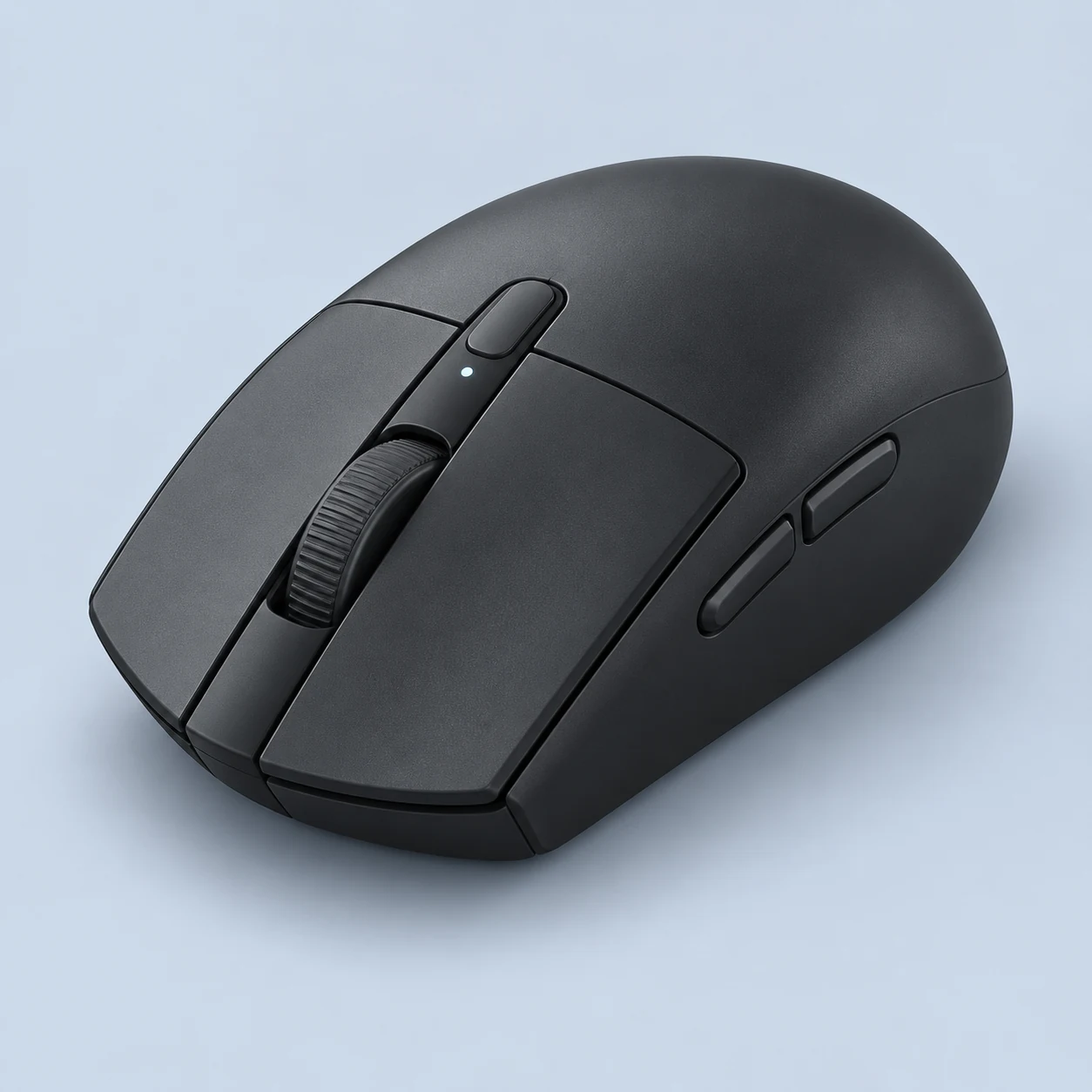
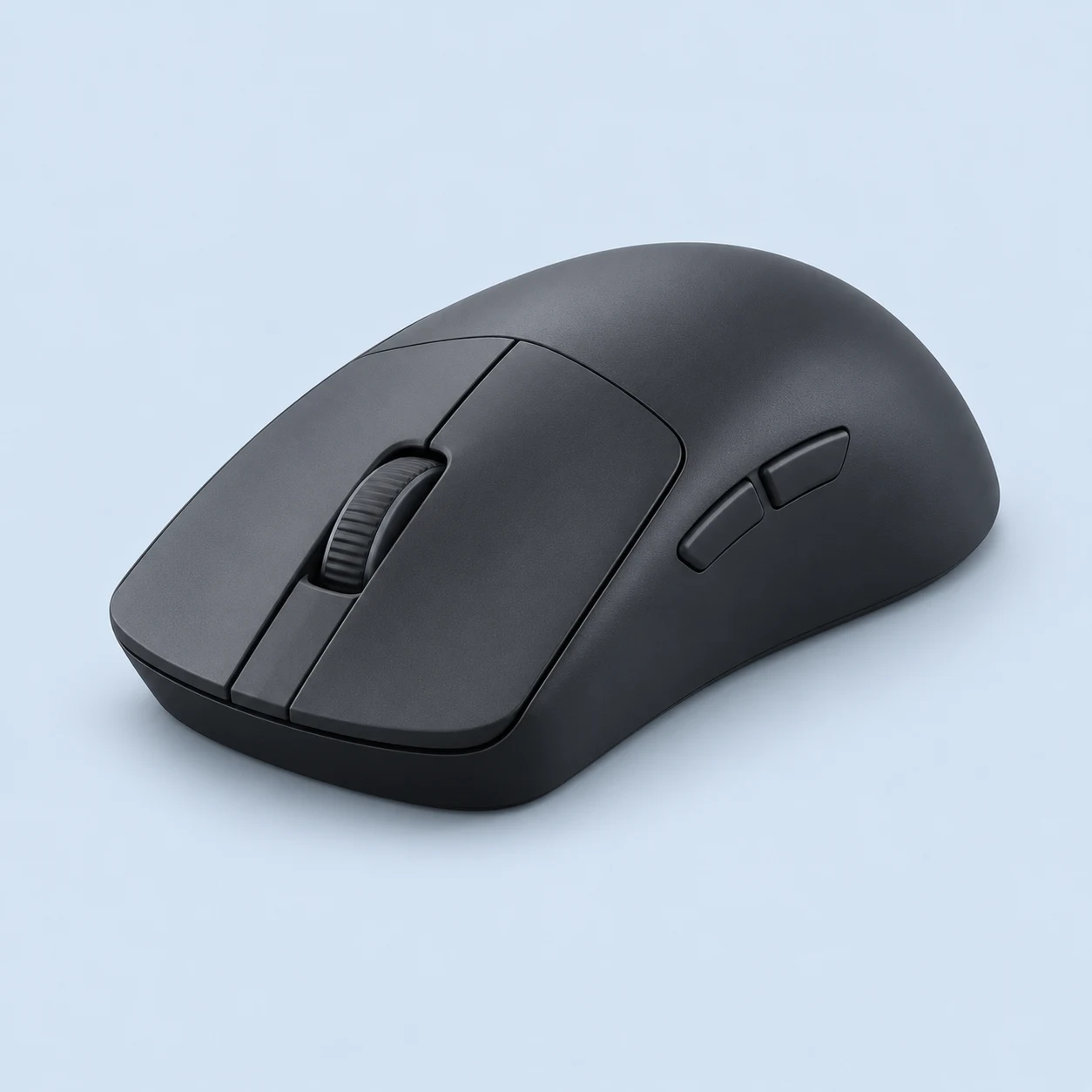
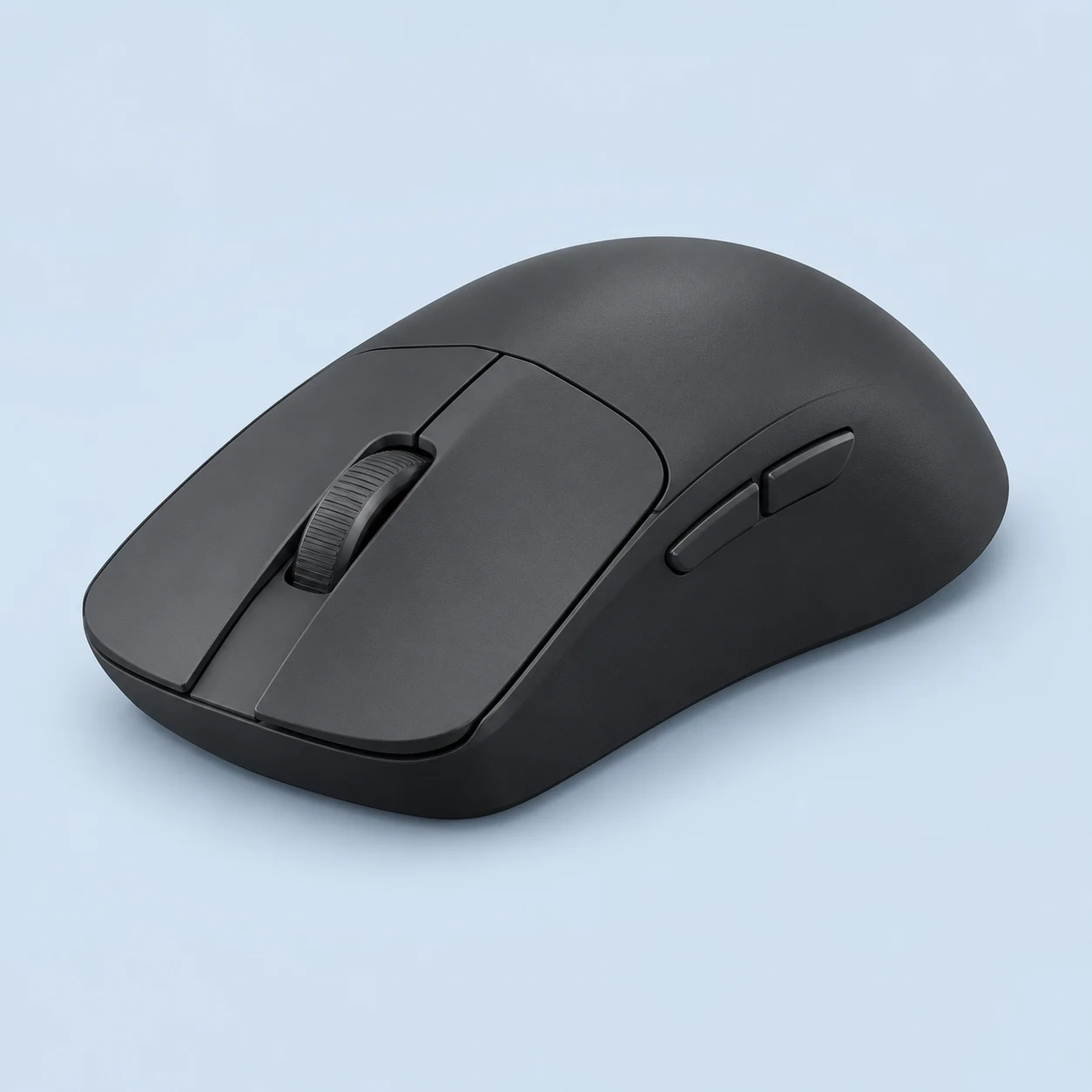
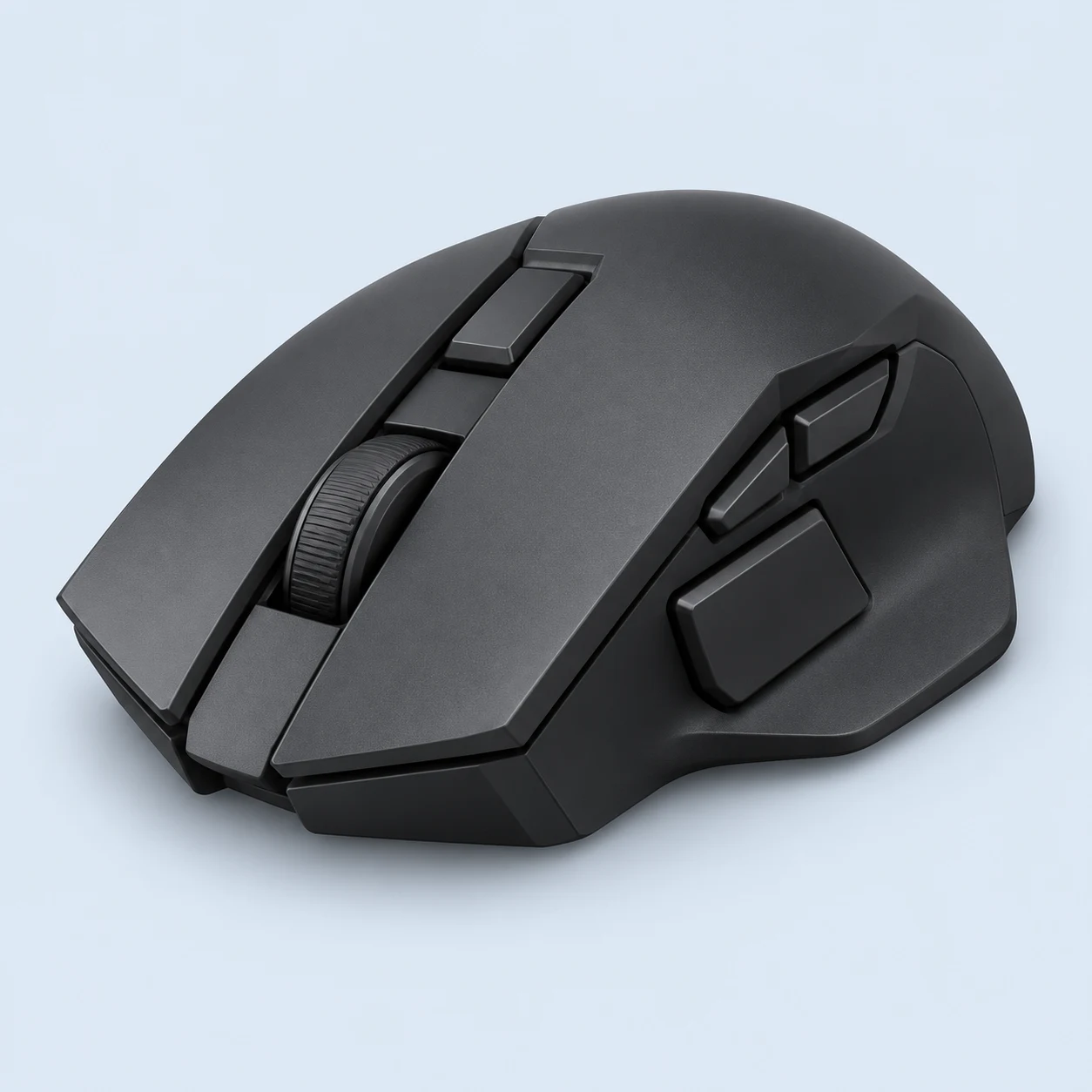
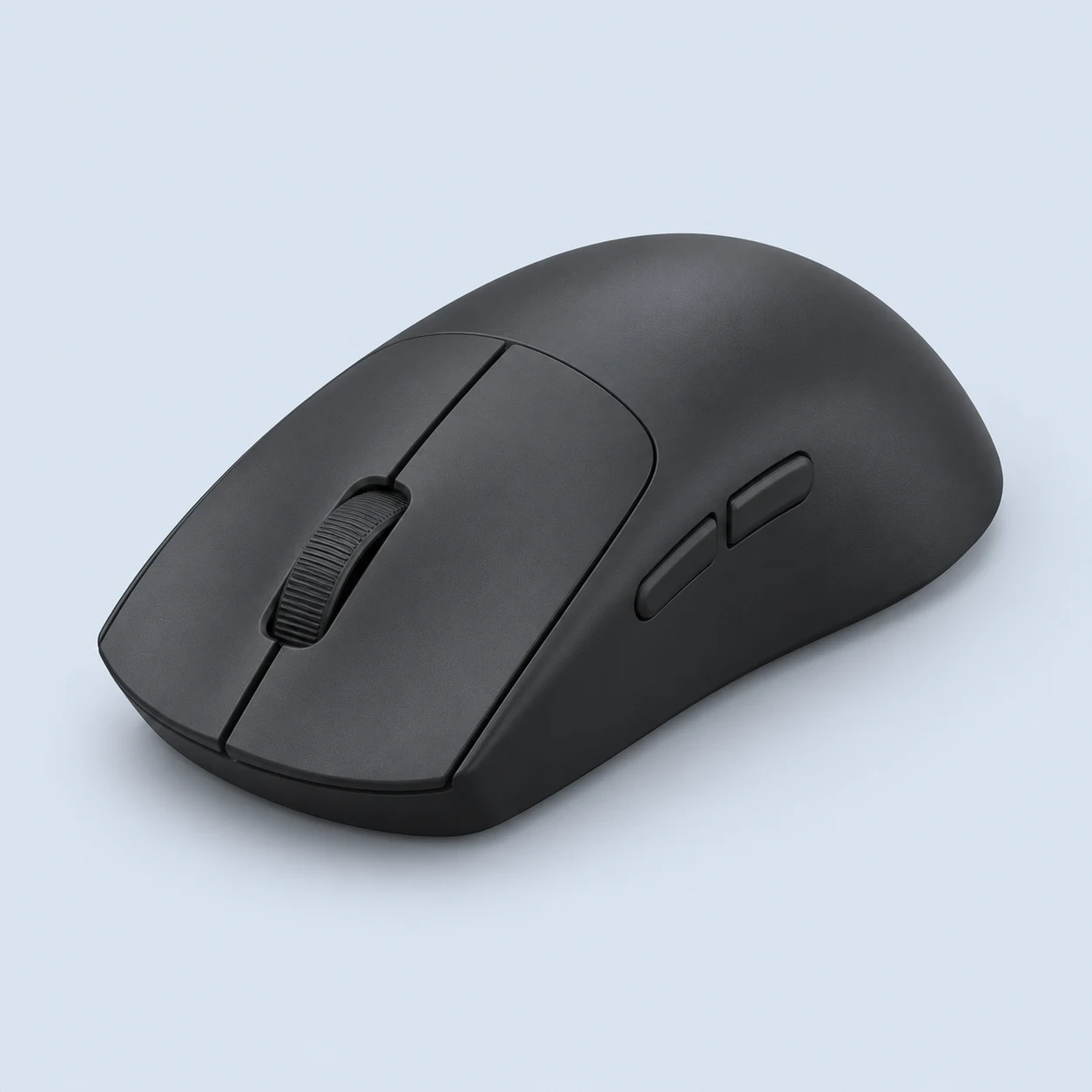
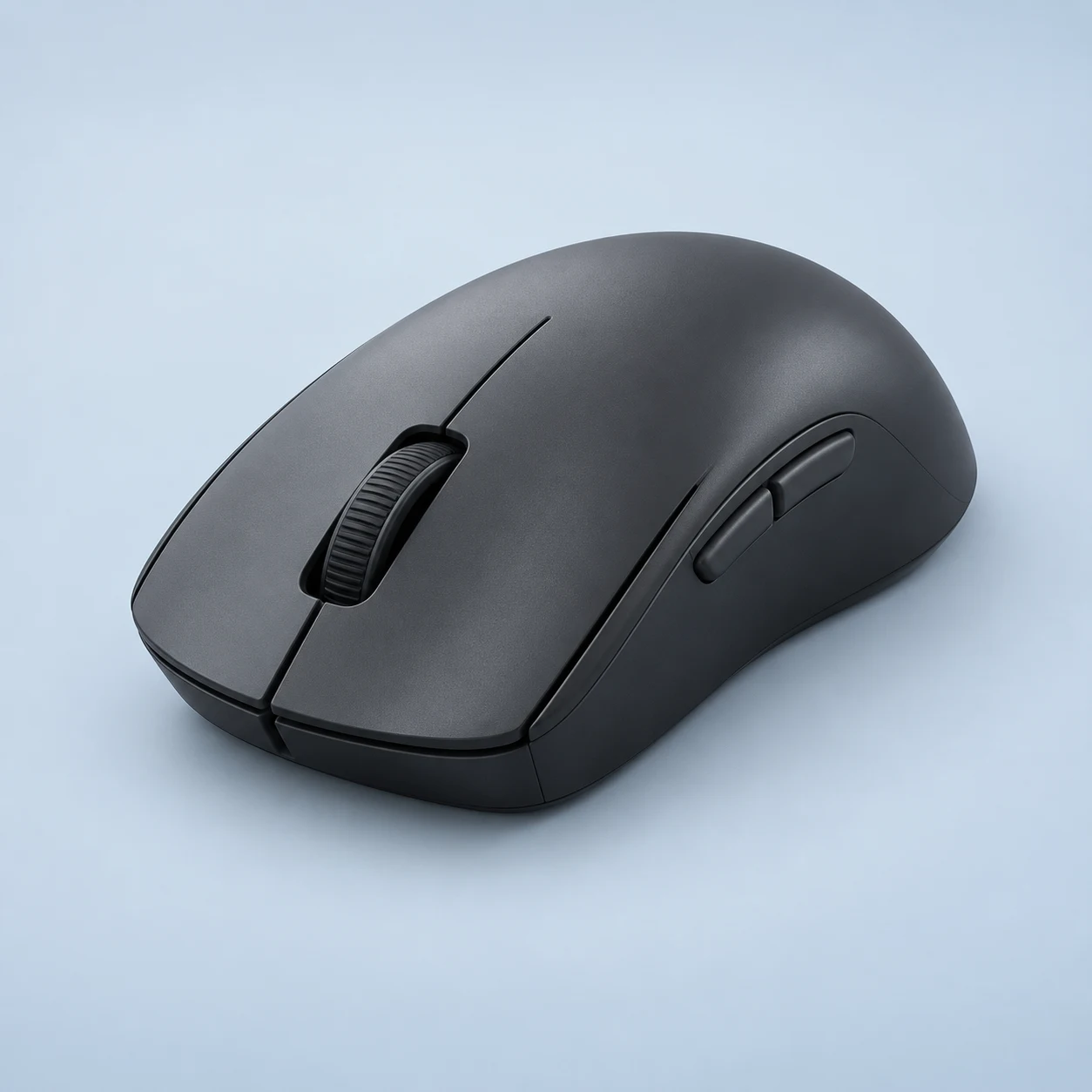
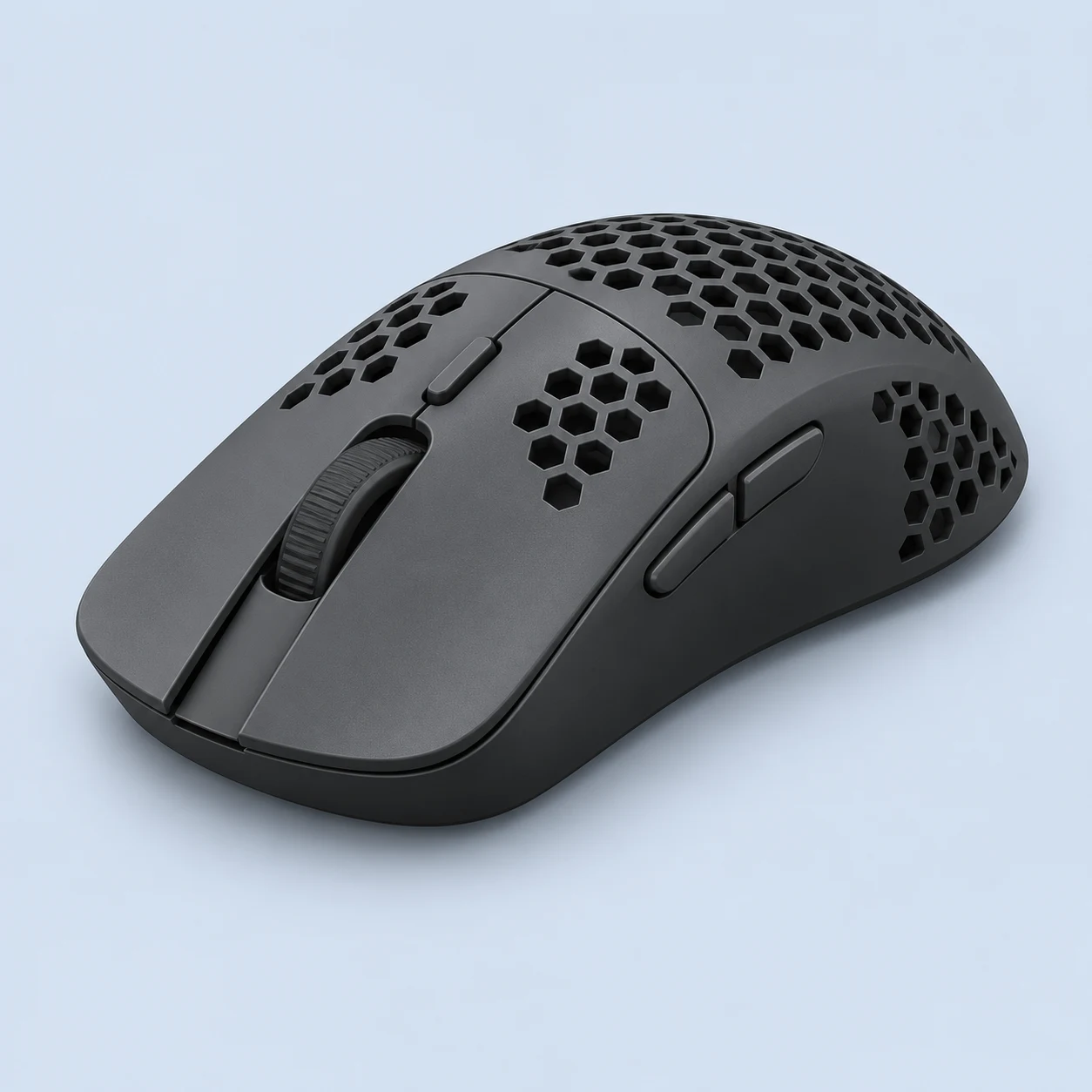
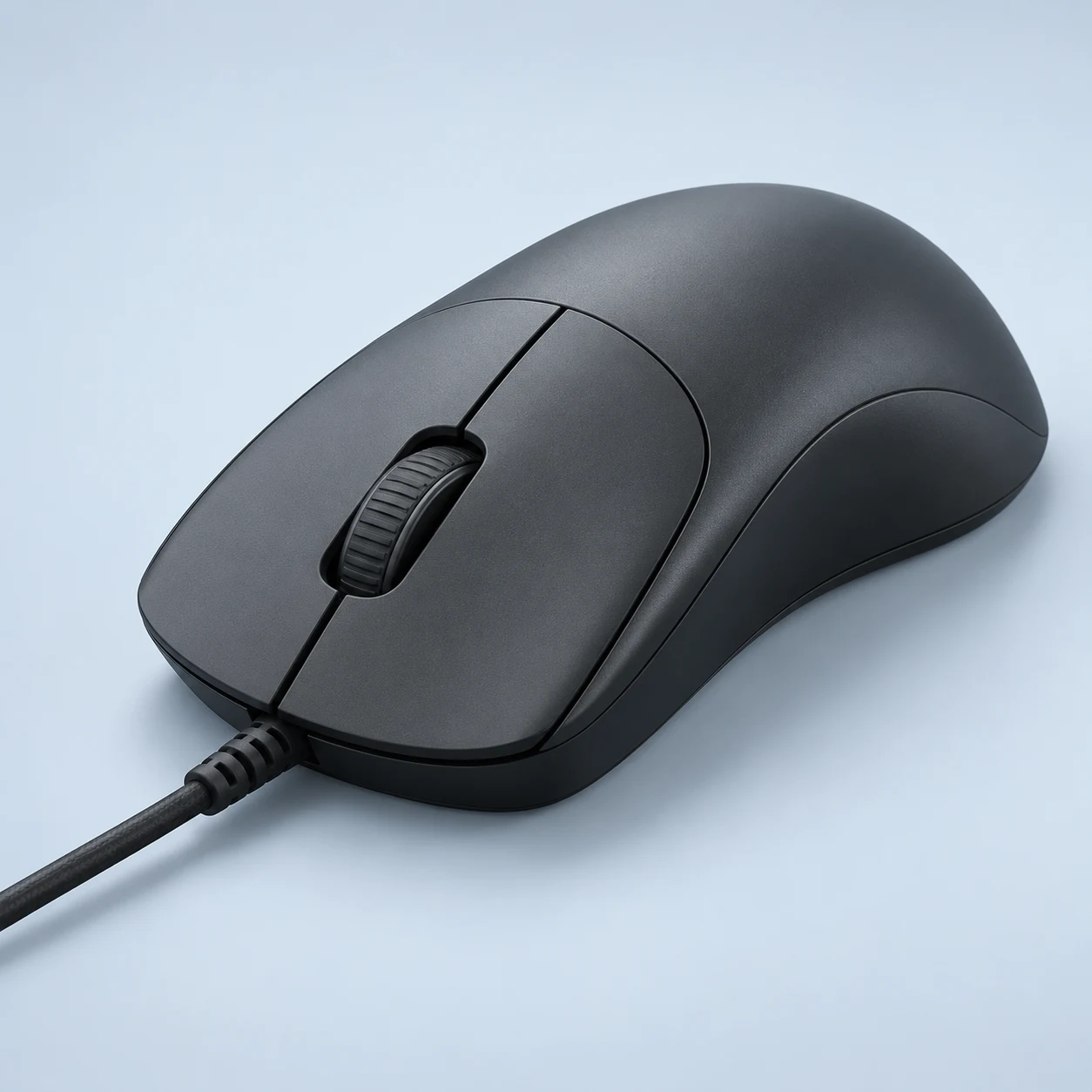
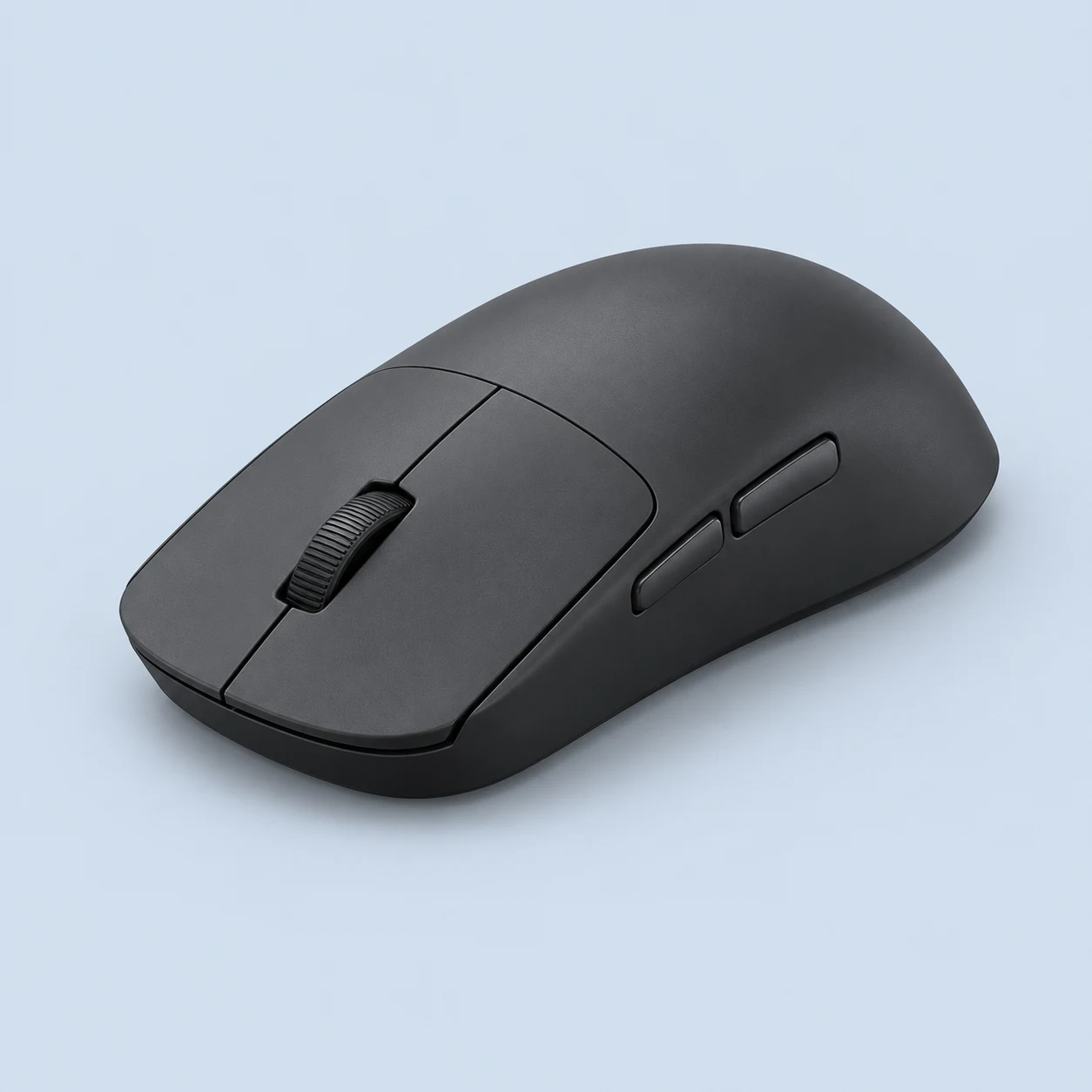
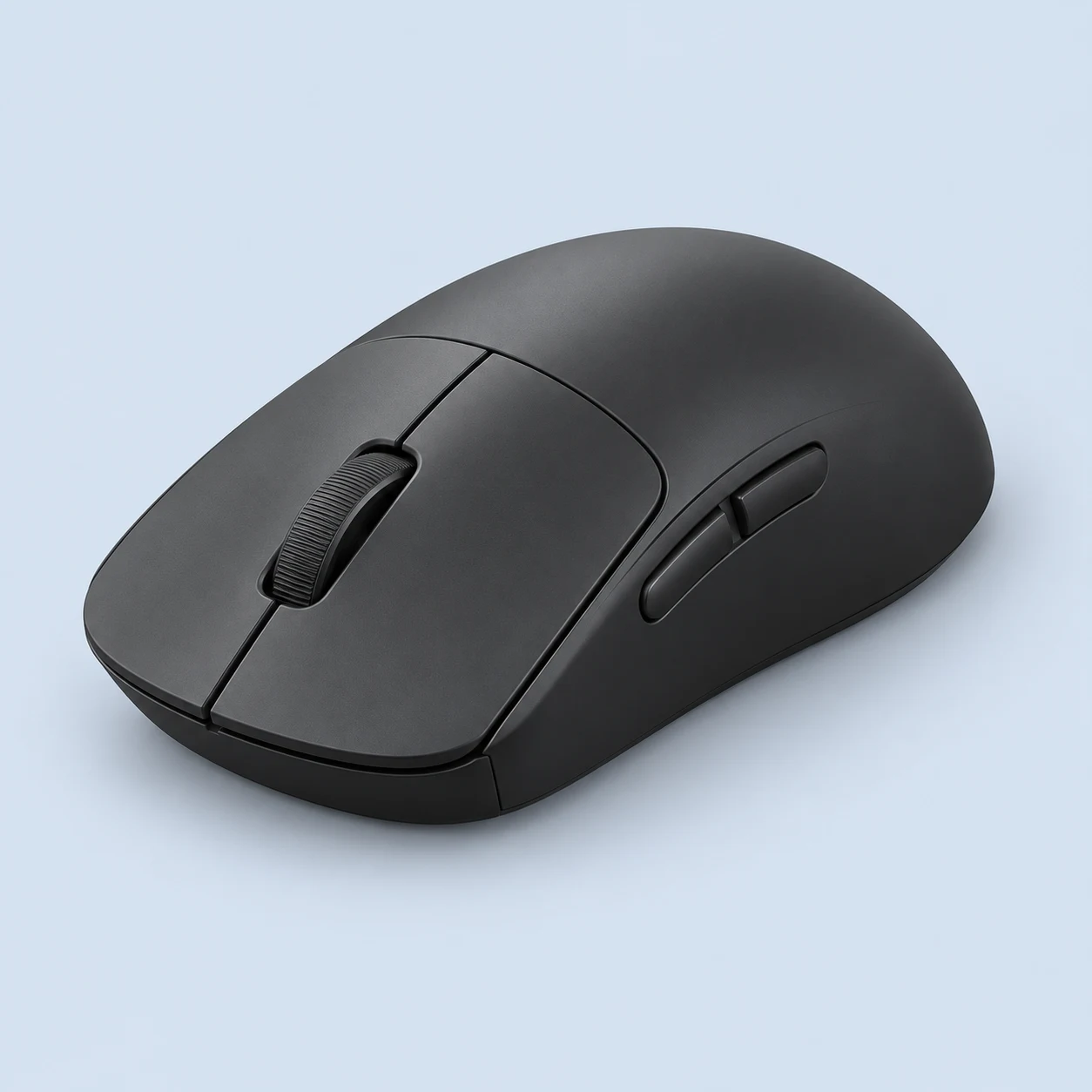
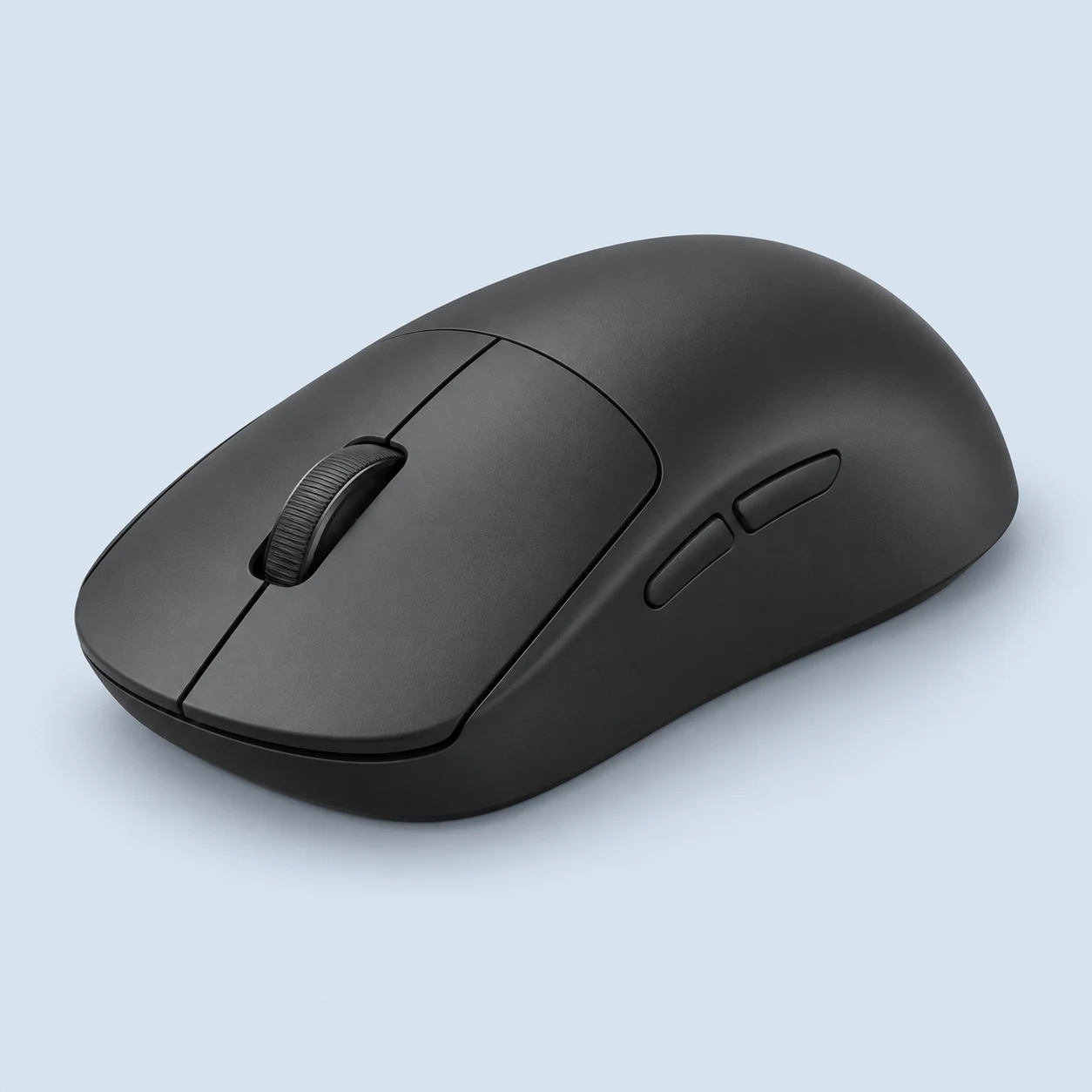
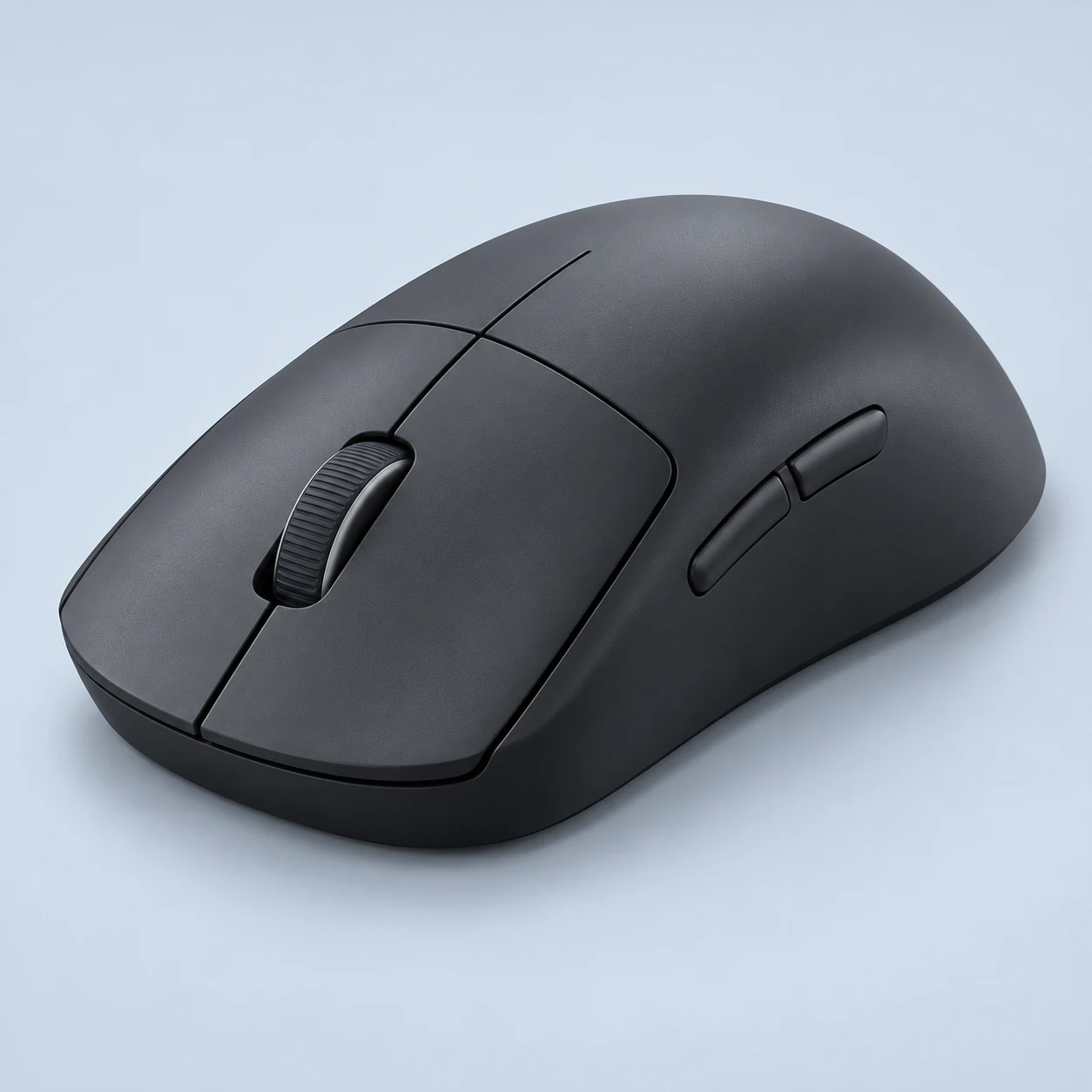
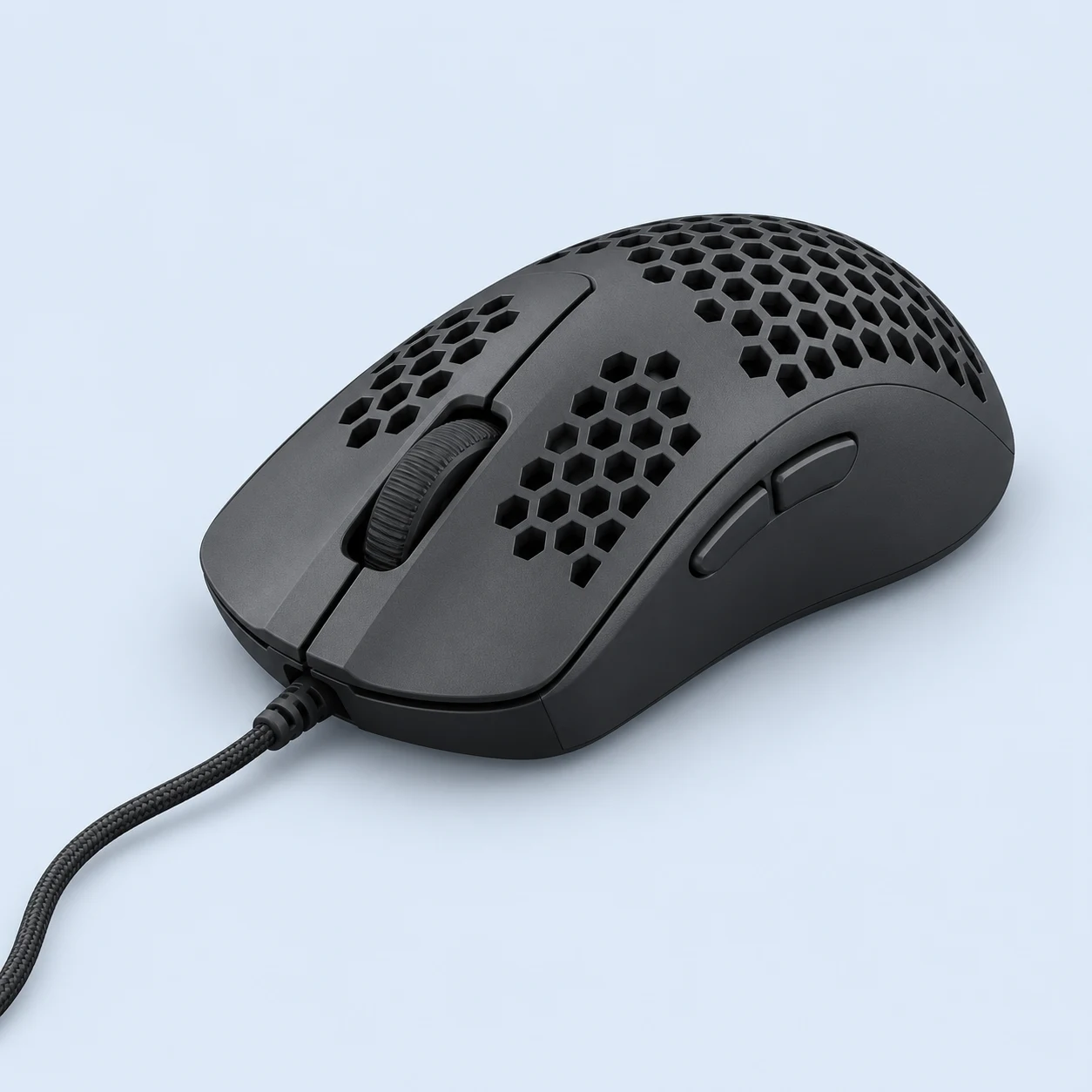
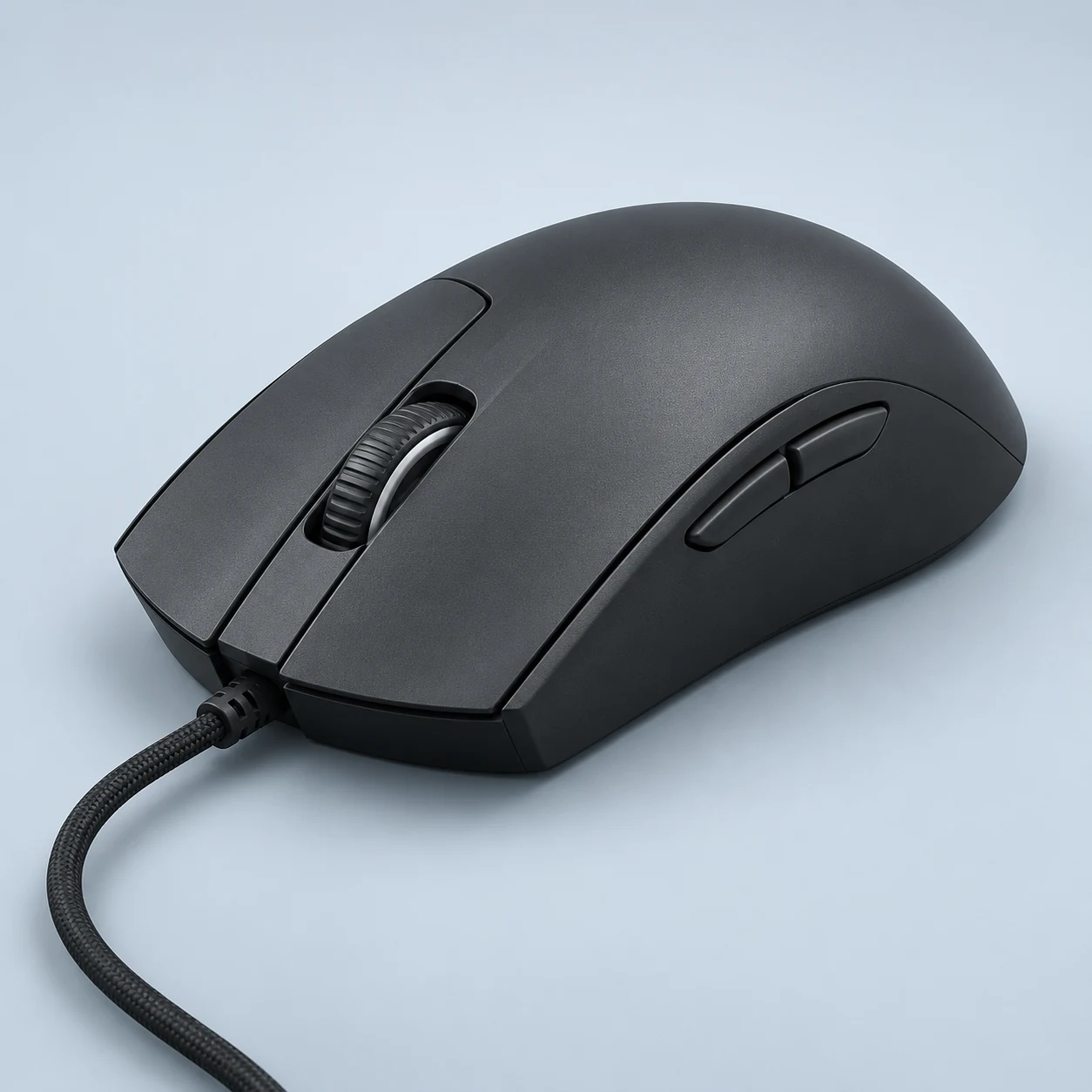
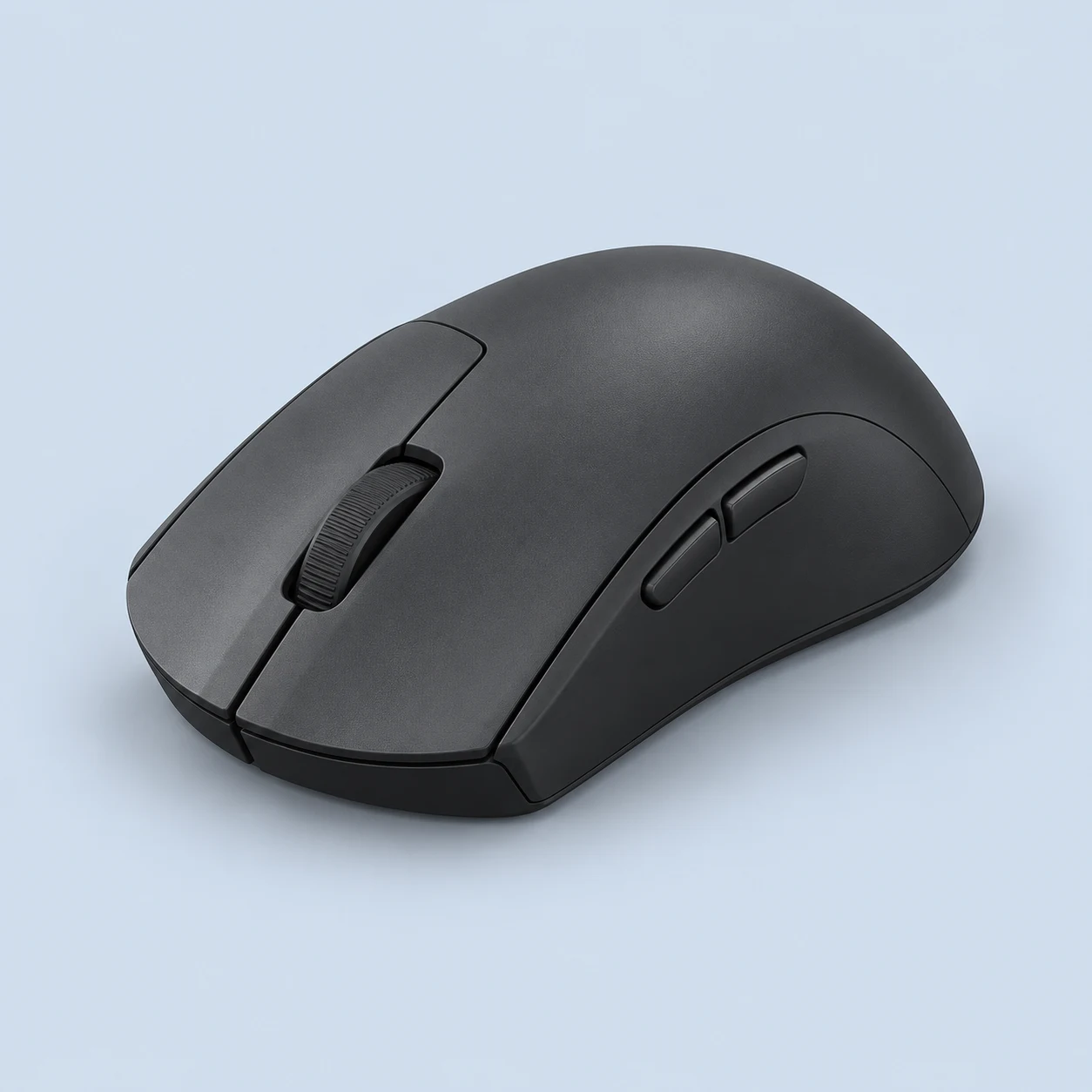
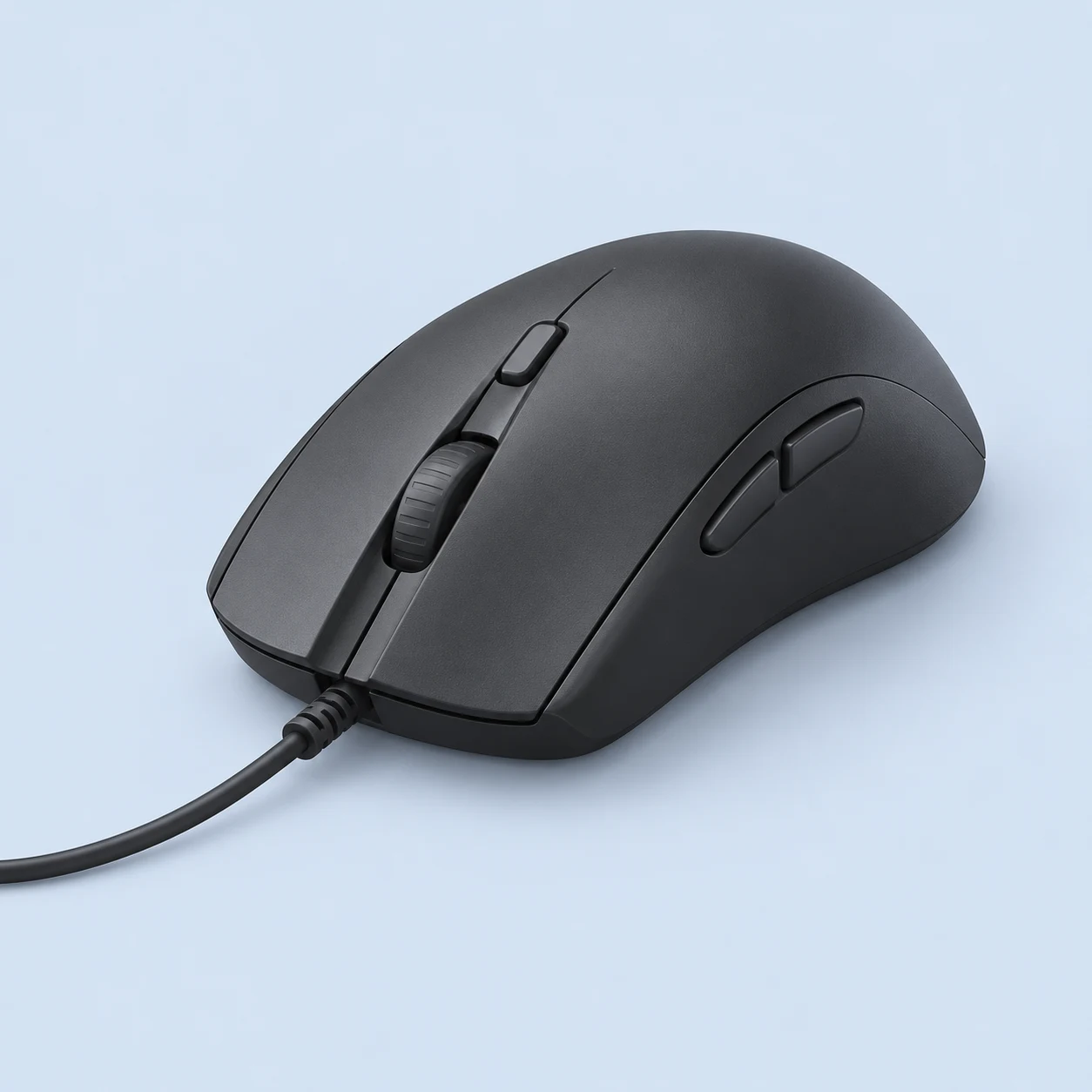
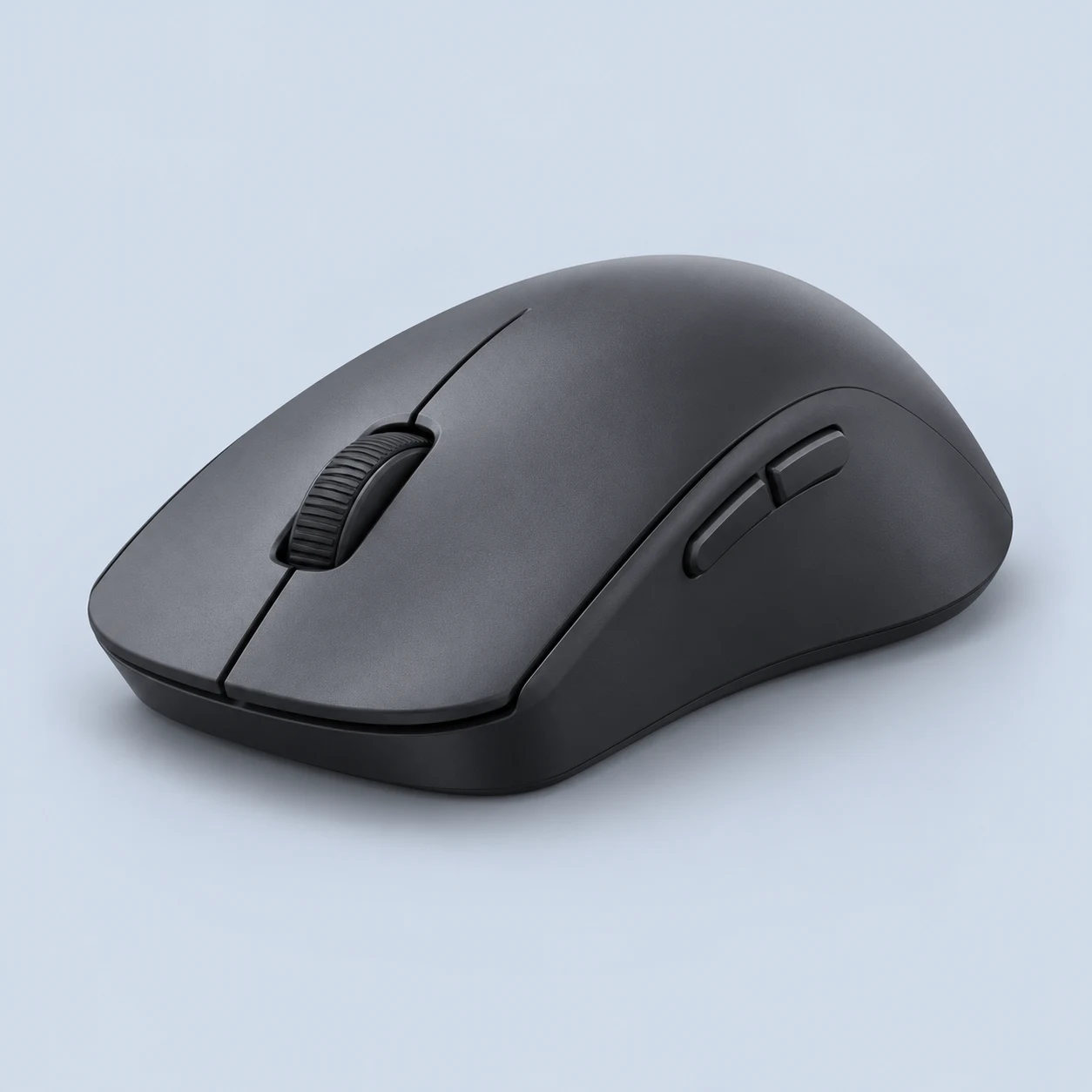
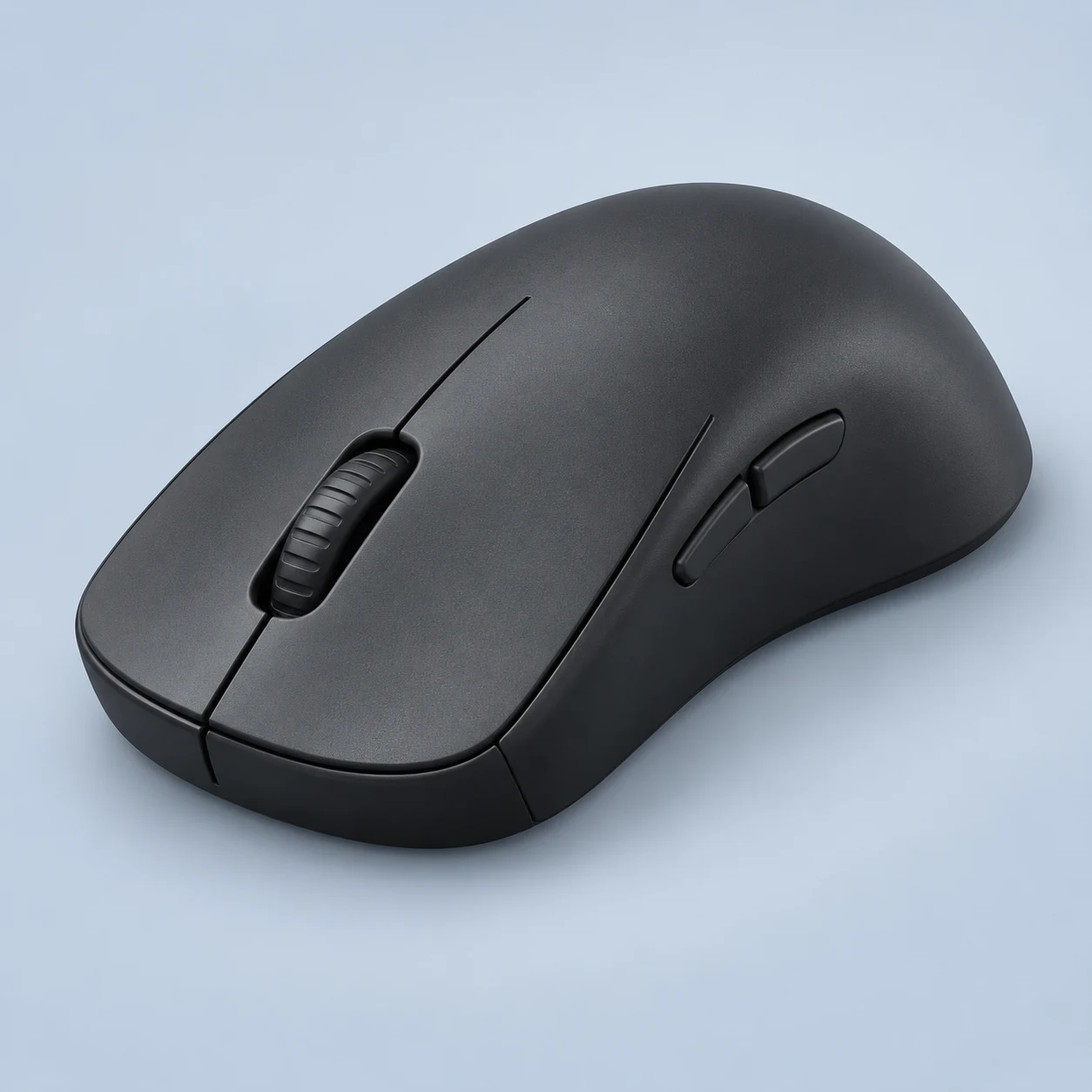
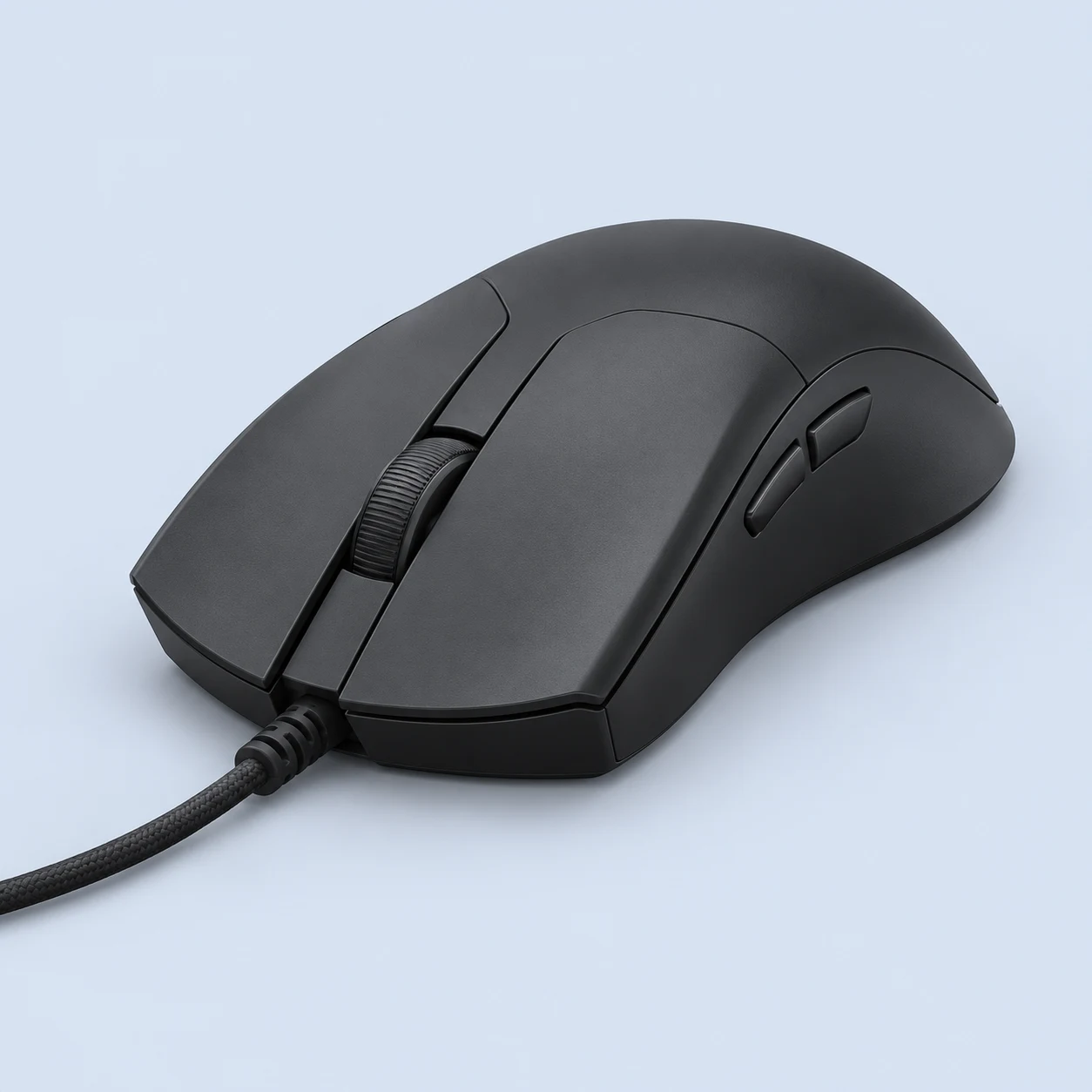
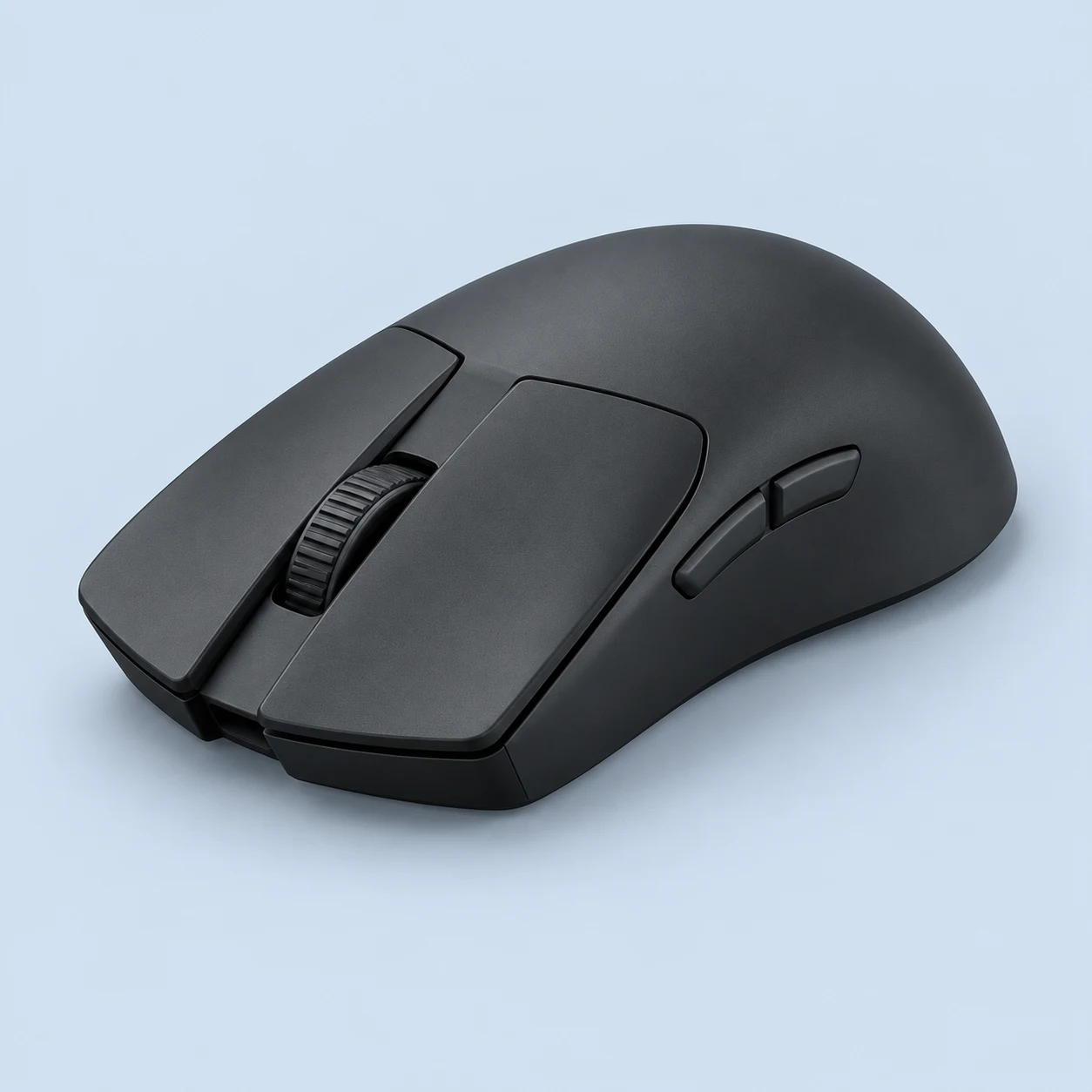
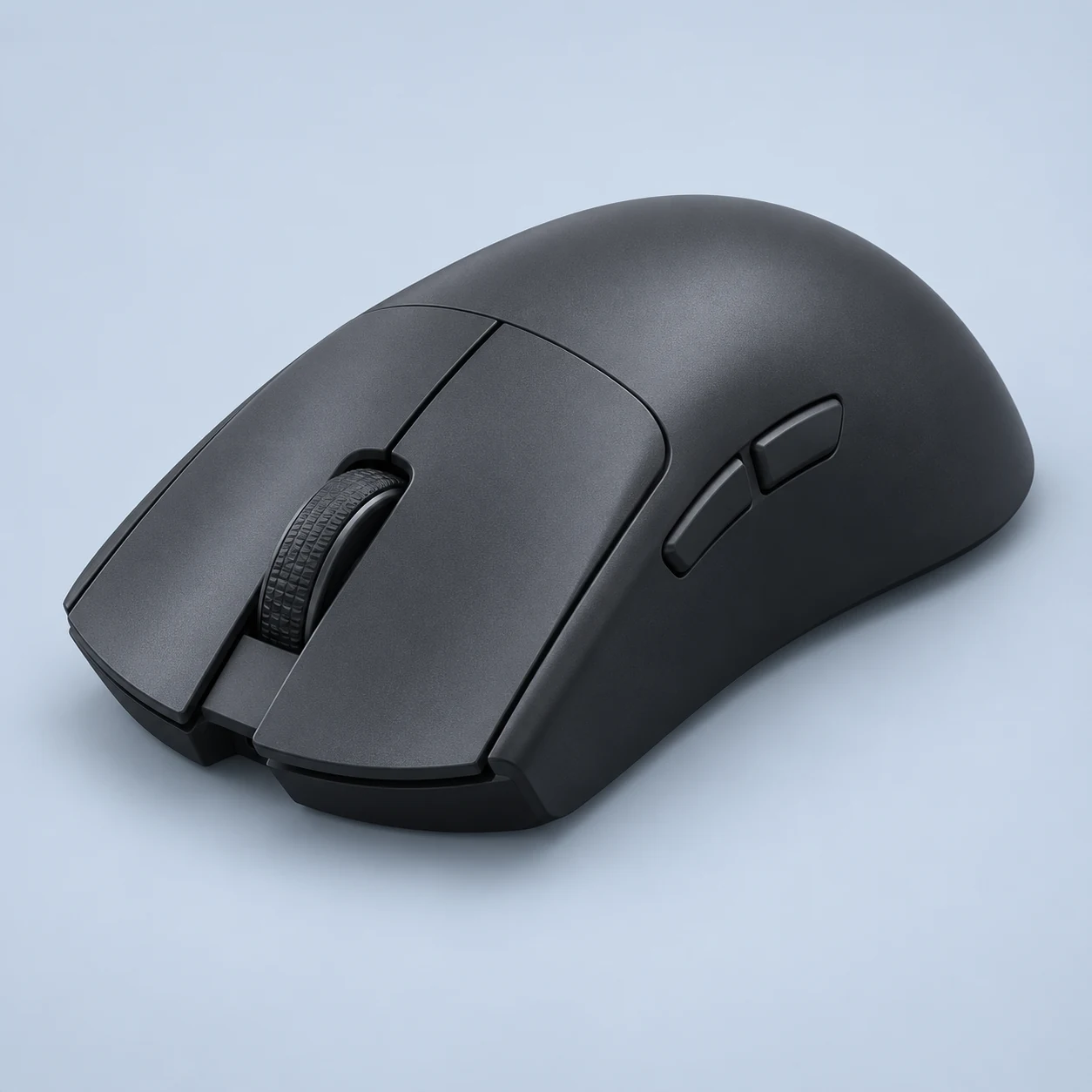
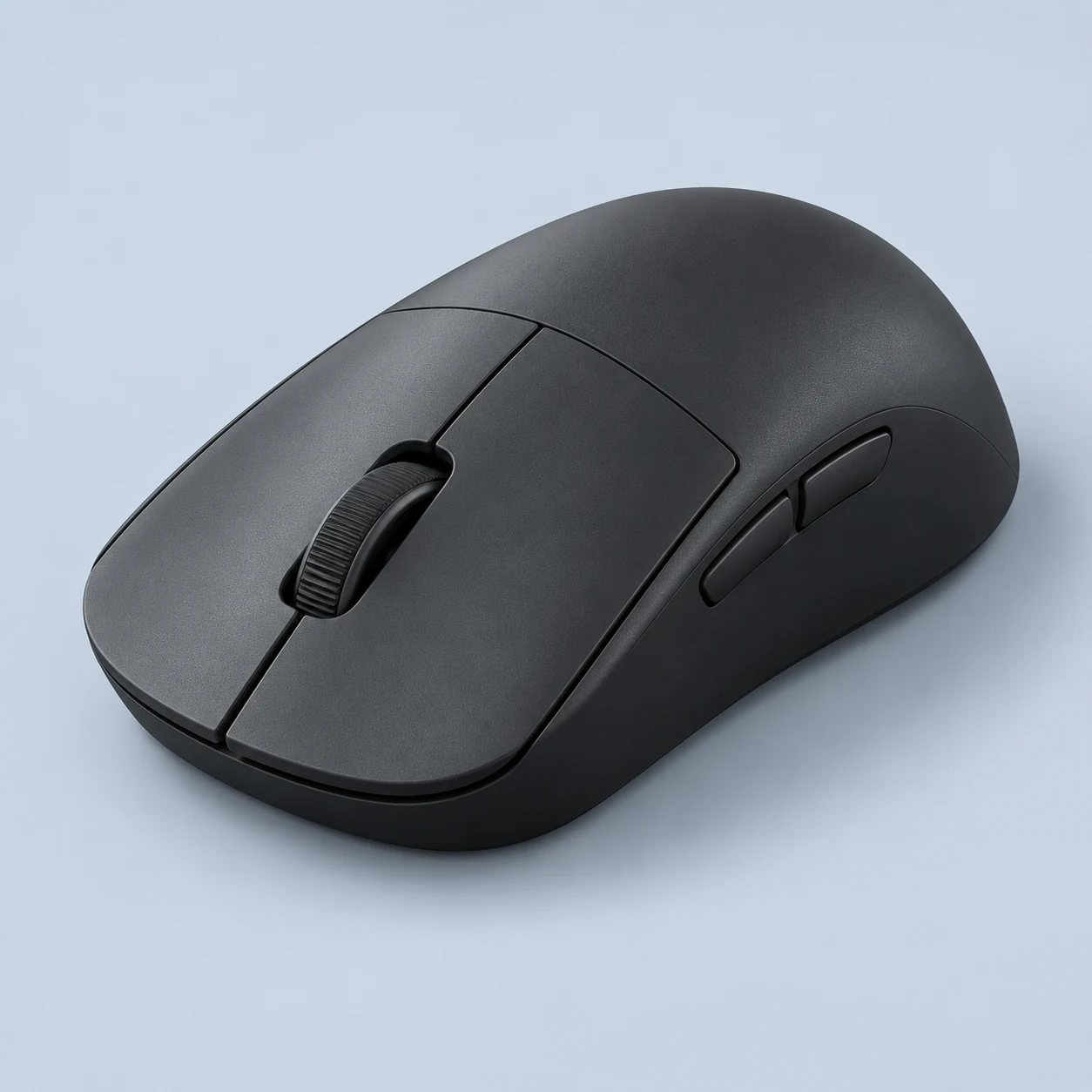
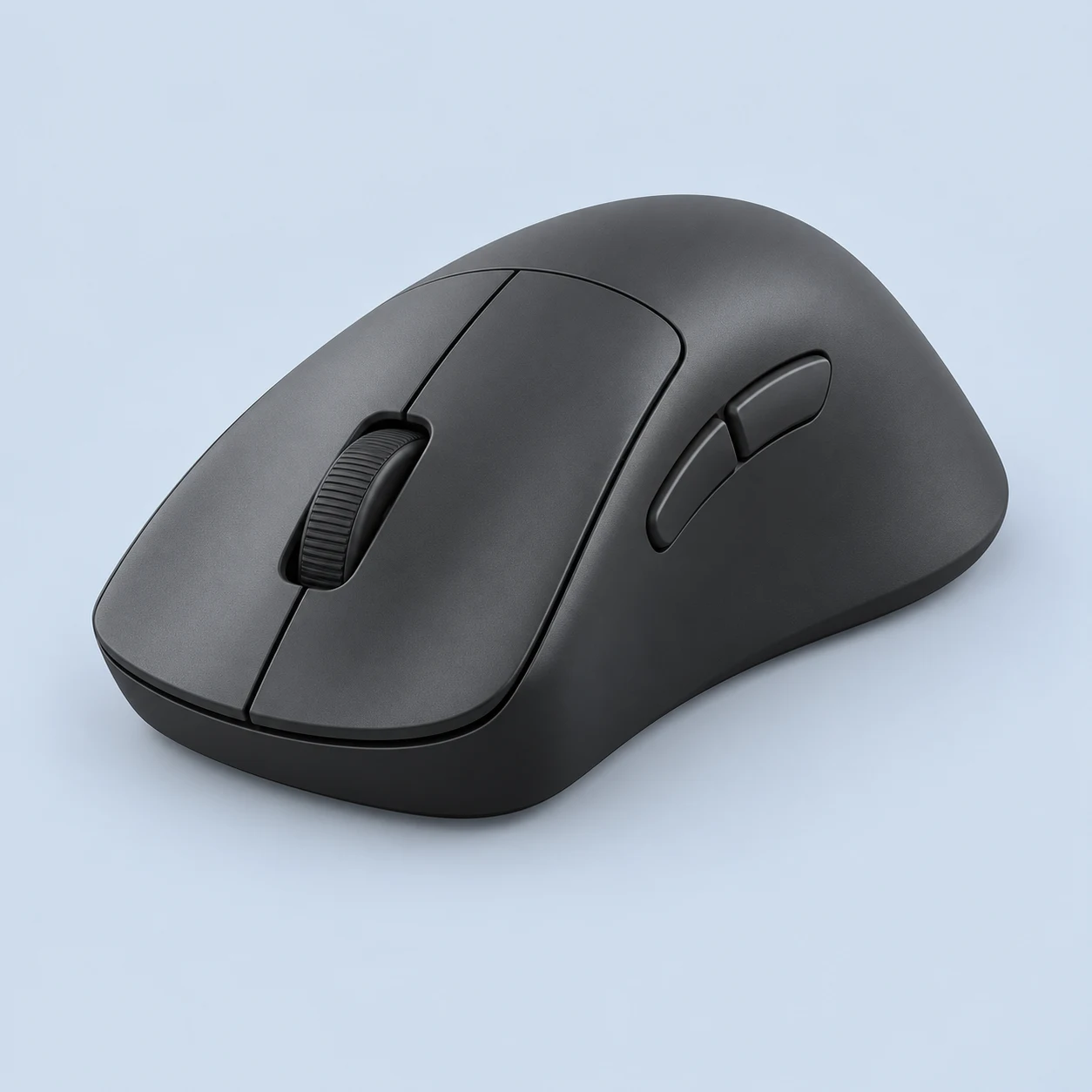
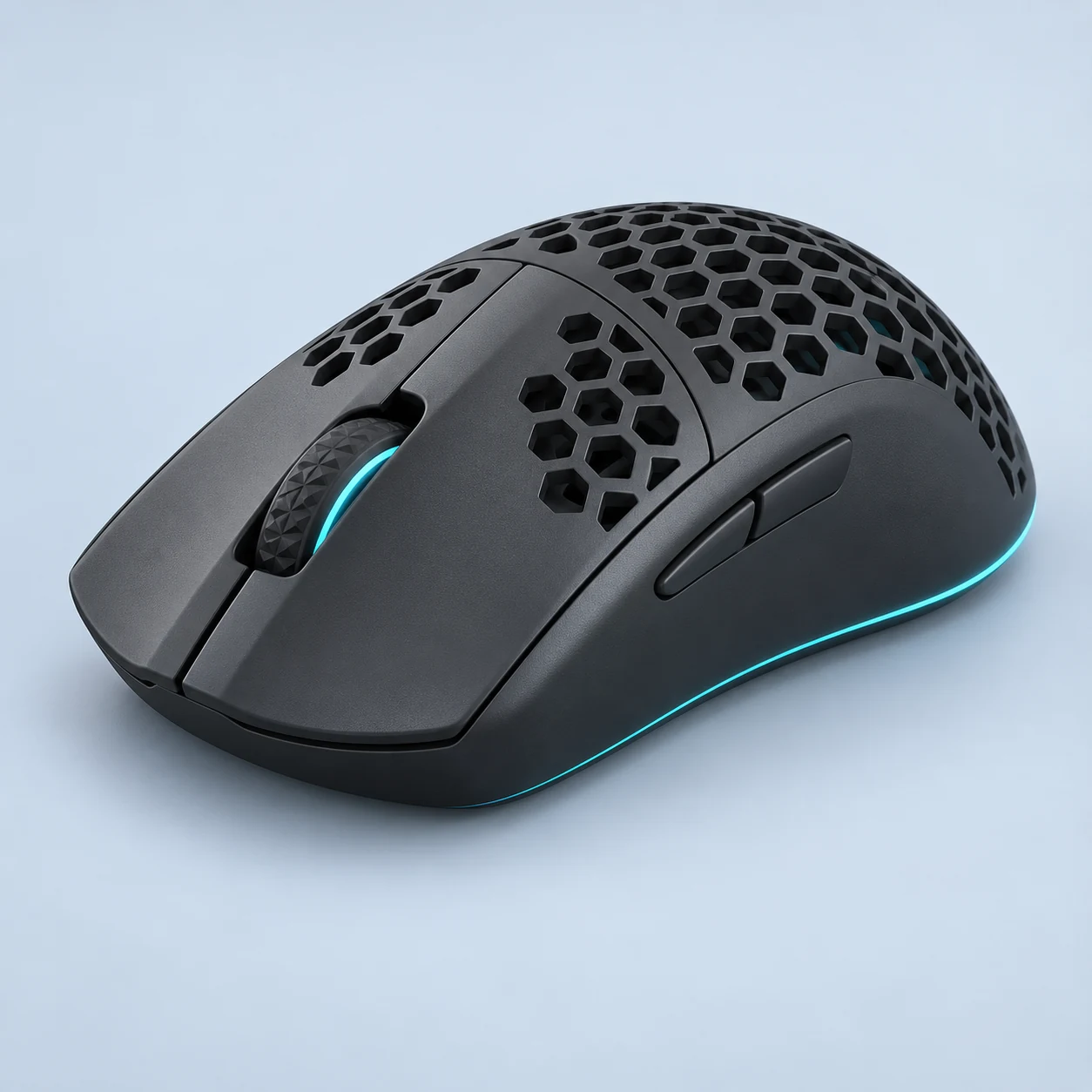
Aerox 3 Wireless 2022 pairs a honeycomb symmetrical shell with receiver, Bluetooth and USB-C charging. The exact 2022 RTINGS review confirms improved feet and a firmer body relative to the original release, while retaining a small-hand fingertip reach caveat. SteelSeries' 68 g claim is distinct from the original 66 g model. Six controls and 1K reporting fit keyboard-led gaming. The 200-hour maximum is a Bluetooth condition, not the stated 80-hour default receiver runtime.
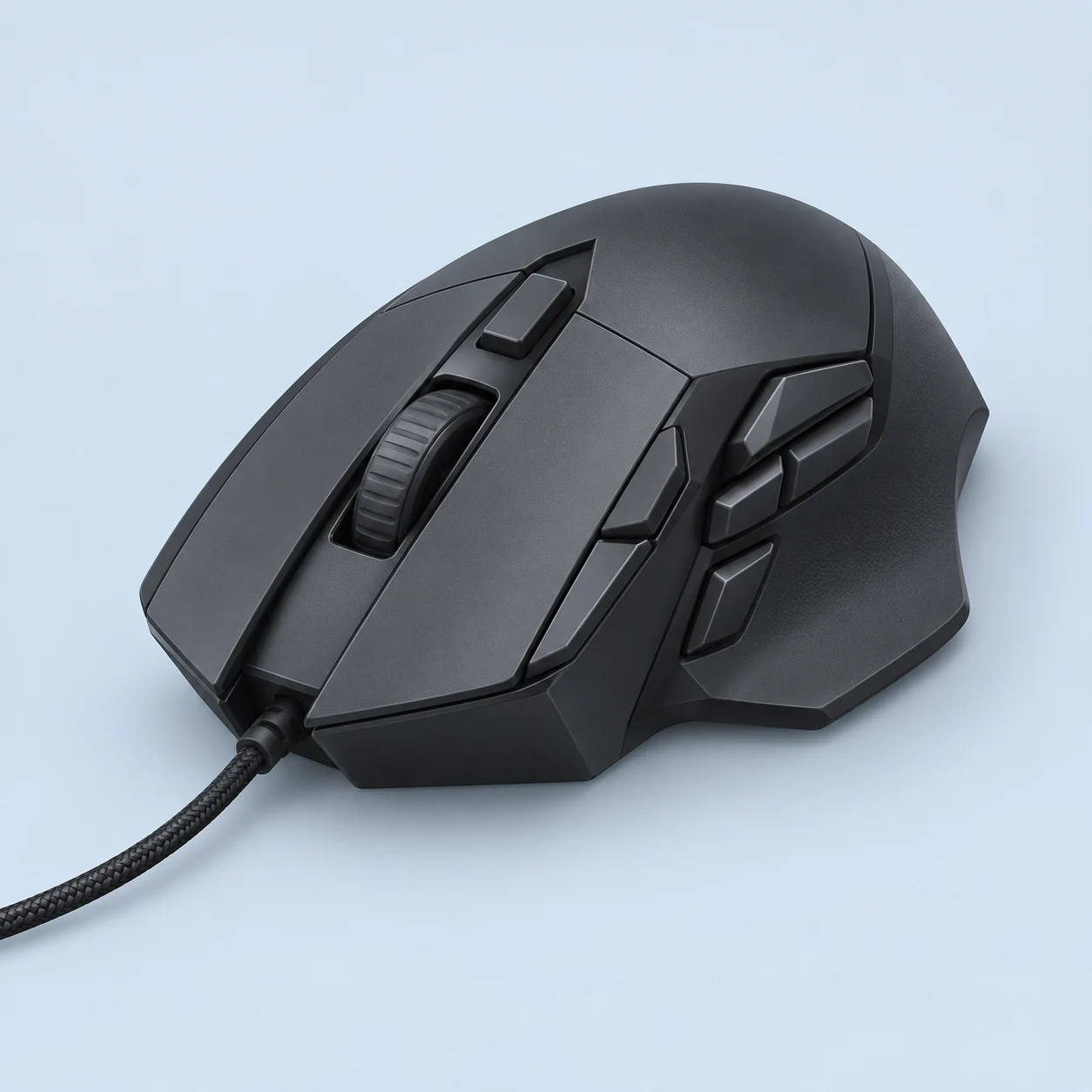
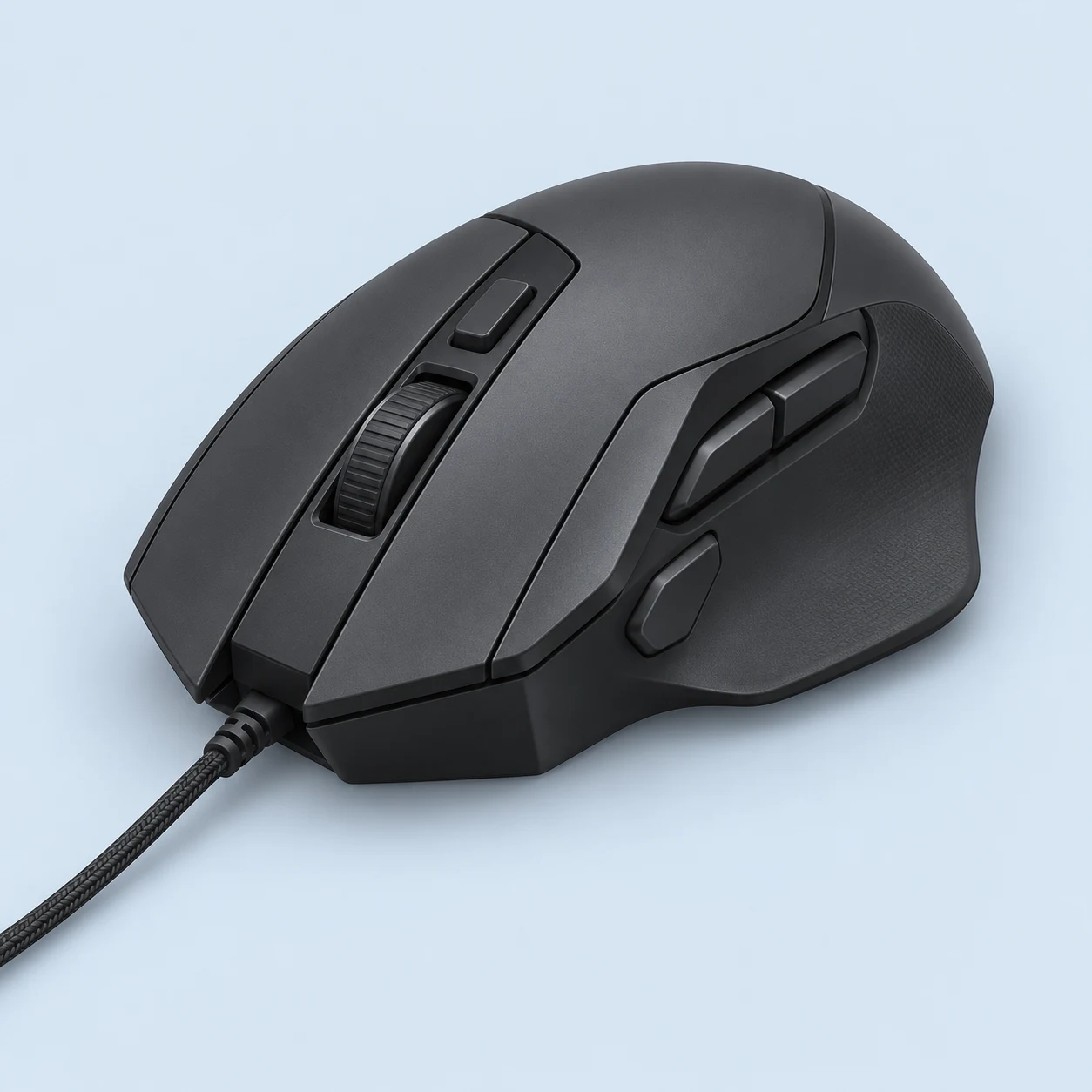
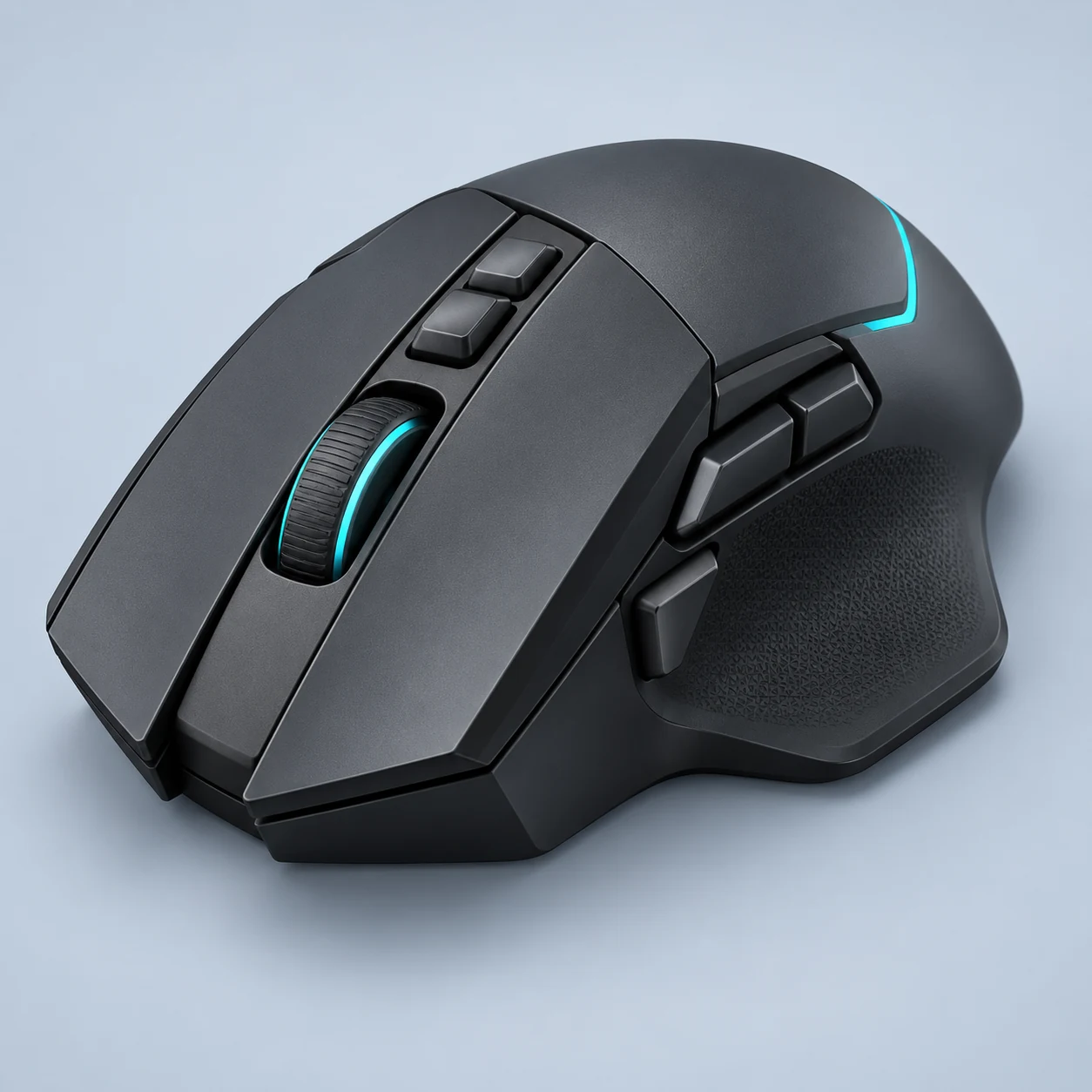
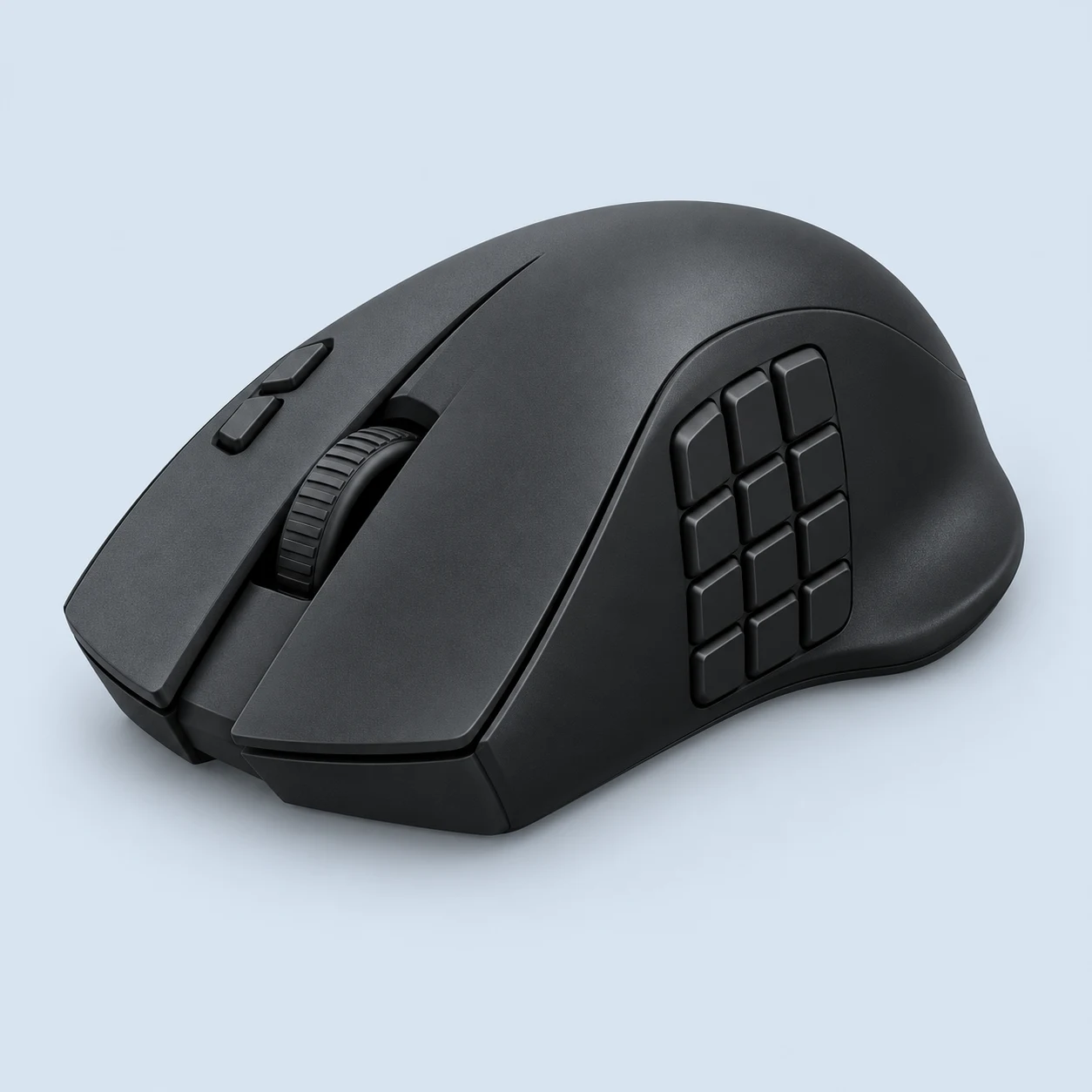
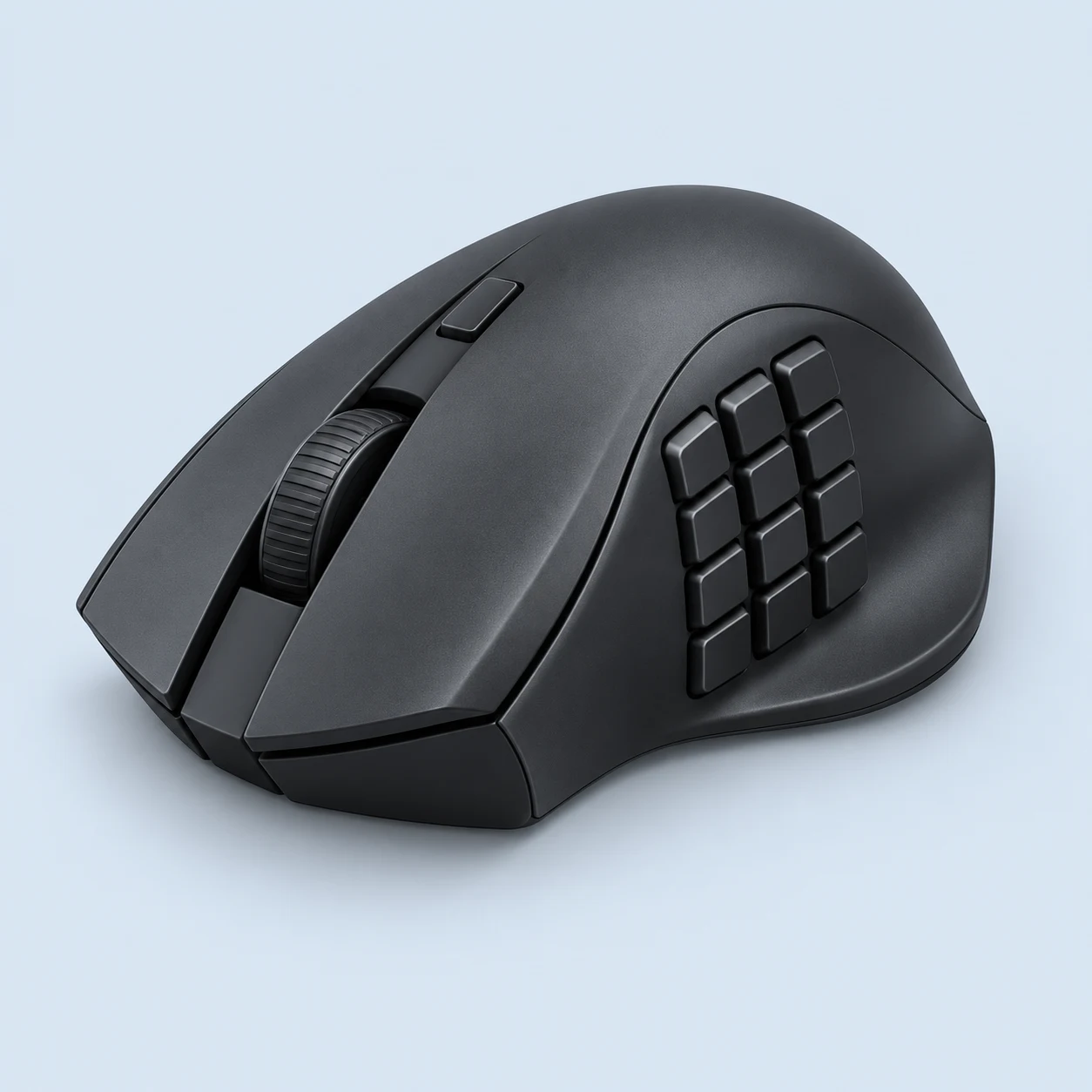
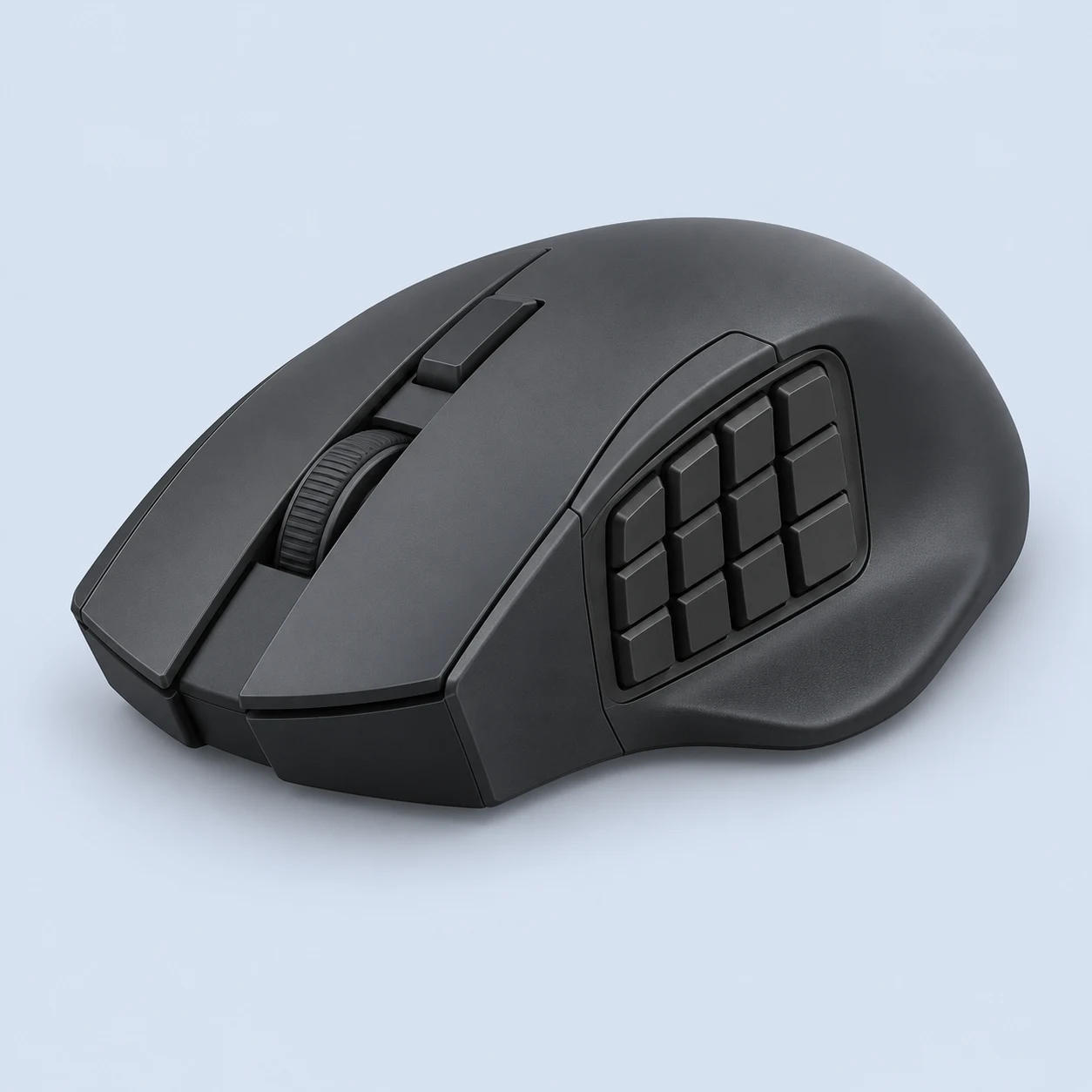
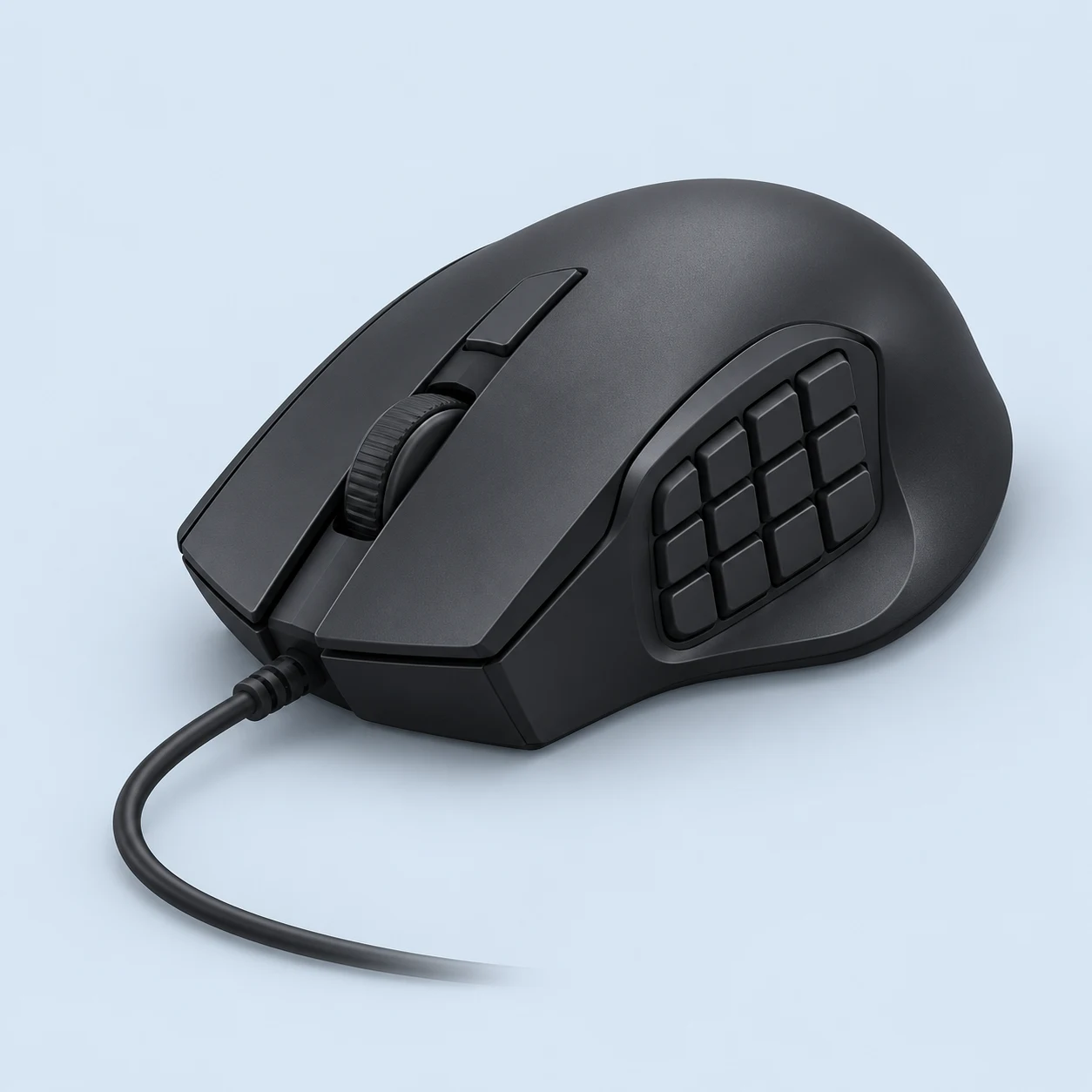
Aerox 9 Wireless is a rechargeable MMO/MOBA mouse with a twelve-button side panel and honeycomb construction. SteelSeries claims an 89 g body and distinguishes favorable 180-hour battery conditions from default receiver operation. Its tilt wheel and Bluetooth add navigation flexibility, while RTINGS warns that the large body is unsuitable for small hands. This is a lower-mass command-focused option relative to some grid mice, not a universal lightweight FPS recommendation. Manufacturer input counting remains distinct from physical-button totals.
Atlantis Mini 4K is the smaller documented Atlantis shell, at 117 by 63 by 37 mm and a manufacturer claim of 51 g plus or minus 2 g. Its included receiver enables 4K; an actual RTINGS review also confirms an optional separate 8K upgrade. The same exact review describes a wide rear suited to claw contact and an open underside exposed to debris. No Bluetooth is supported. Unconfirmed battery conditions remain empty, and weight basis is kept distinct from shipping metadata.
ATLANTIS OG V2 4K is the larger LAMZU Atlantis variant in this catalog, with retained official dimensions of 123 by 66 by 38 mm and a 57 g, plus or minus 2 g, weight claim. PAW3395, Huano mechanical switches and a Silver TTC encoder define the documented build. Its 4K bundle includes the relevant receiver. An older Atlantis family review is not treated as an exact V2 test. Missing runtime and secondary specifications remain empty, while possible later 8K upgrade compatibility needs exact-model confirmation.
This entry covers the original 30K Basilisk V3 Pro, a right-handed rechargeable mouse combining a thumb rest, configurable scrolling and three connection modes. It is distinct from the later 35K update. Razer documents a 112 g cable-excluded body and Focus Pro 30K sensor; the advertised 8K maximum needs a separately sold compatible accessory. Its standard receiver configuration and lighting-dependent ownership tradeoffs deserve attention before a sensor comparison. The command-oriented design suits mixed gaming and navigation more naturally than a low-weight-only FPS shortlist.
ROG Chakram X combines a right-handed gaming mouse with a programmable thumb joystick and replaceable main-switch sockets. ASUS documents a 127 g cable-excluded body, AimPoint sensor and an 8K maximum specifically for USB operation. Receiver and Bluetooth connections add flexibility, while Qi charging is another ownership option. These features make it a command-and-customization product rather than a minimal aiming shell. TechRadar's hands-on review cautions that crowded side controls and joystick use can require compromises, so additional inputs should answer a real workflow need.
The wired Cobra combines a compact symmetrical shell, Gen-3 optical main controls and RGB underglow in a 58 g cable-excluded design. Razer documents an 8,500 DPI optical sensor and a Speedflex cable rather than the wireless features of Cobra Pro. RTINGS places the low-profile shape toward smaller and medium hands and notes minor shell flex as a tradeoff. Six controls keep gaming bindings simple. Its appeal rests on size, cable and switch preferences, not a claim that decorative lighting improves performance.
Cobra Pro combines a compact symmetrical shell with RGB, rechargeable tri-mode connection and optional charging accessories. Razer documents 77 g excluding cable and dongle, Focus Pro 30K and third-generation optical main switches. Bluetooth makes it more versatile across devices than many stripped-down FPS mice, although its weight is higher than several aiming-focused alternatives of similar size. The supplied receiver is 1K; optional hardware unlocks the higher maximum. Its 170-hour headline is specifically a Bluetooth claim, not receiver runtime at 8K.
DeathAdder Essential is a full-size right-handed wired mouse with a 6,400 DPI optical specification and five controls. Its 96 g cable-excluded claim and tall sloped shell distinguish it from newer lightweight DeathAdder models. RTINGS describes useful ergonomic support while warning that smaller hands can struggle with claw or fingertip reach. The reviewed lighting is single-colour rather than programmable RGB. This entry favors a simple desktop control arrangement; polling and unconfirmed internal components stay empty instead of inheriting a later generation's specifications.
The wired DeathAdder V3 brings Razer's sloped right-handed shell into a 59 g cable-excluded competitive design. It uses a Focus Pro 30K sensor, third-generation optical main switches and configurable USB reporting up to 8K, with no receiver purchase or rechargeable upkeep. It is distinct from both the Pro and HyperSpeed models. The documented 128 mm body makes full-shell contact worth comparing, especially for smaller hands; buyers should choose it for the ergonomic profile and wired setup rather than assuming every DeathAdder shares this hardware.
DeathAdder V3 HyperSpeed is a smaller rechargeable ergonomic mouse than the V3 Pro, built around a 55 g advertised body and Focus X 26K sensor. Its standard receiver reports at 1K, with an optional dongle required for the 8K maximum. It has no Bluetooth or RGB. The compact right-handed shell is the main reason to compare it with other DeathAdders, while RTINGS cautions that its flared front edge can create a ring-finger pressure point for larger hands.
The DeathAdder V3 Pro combines a sloped right-handed shell with a lightweight rechargeable design for aim-focused gaming. This entry covers the original black Classic Base edition, specified at 63 g excluding its cable, with a Focus Pro 30K sensor and Gen-3 optical main switches. High-rate wireless reporting requires an optional HyperPolling receiver. Its relatively large shape and small button layout make it a different ergonomic choice from a symmetrical Viper or a multi-button Naga.
EC2-CW is the older medium wireless ergonomic ZOWIE, with a retained 77 g manufacturer weight and 1,000 Hz reporting ceiling. Its enhanced receiver also acts as a charging dock, and the documented battery claim is 70 hours of constant motion. RTINGS describes a right-handed shape with onboard settings and no Bluetooth. Complete dimensions and sensor identity remain unconfirmed in accessible sources for this exact CW variant. Regional availability varies, so buyers should verify the model rather than treating EC2-DW as an interchangeable listing.
The medium EC2-DW combines ZOWIE's sloped right-handed shape with a documented 60 g body and included high-rate charging receiver. RTINGS identifies PAW3950 and confirms the absence of Bluetooth in this specific DW model. Its 4K option and lower mass distinguish it from EC2-CW, despite the familiar ergonomic outline. Physical settings avoid a software requirement, while battery claims range from 80 hours at 1K to 24 at 4K. Buyers should distinguish the narrower waist from the shell's maximum width.
FK2-DW combines ZOWIE's low-profile symmetrical shape with a documented 65 g body and an included 4K charging receiver. ProSettings identifies PAW3950 and Huano mechanical switches in its specific DW examination. The flatter contact is a different proposition from the more pronounced U2 rear support. Driverless controls simplify setup but do not provide intricate macros. Exact dimension axes remain under review because the independent table's units and width convention are not sufficiently clear to overwrite missing manufacturer fields.
G203 LIGHTSYNC is a compact wired gaming mouse with six buttons, an 8,000 DPI specification and three-zone lighting. Its documented 116.6 mm length makes button reach a more relevant buying question than the RGB effects. RTINGS describes a shape that works particularly well for smaller hands, while larger hands can investigate fingertip use. The permanent cable and restrained side layout suit a straightforward gaming desk. Unknown sensor identity and internal component details remain empty rather than being borrowed from another G203 generation.
The G305 LIGHTSPEED uses a single replaceable AA battery and a USB receiver, making its power routine different from rechargeable esports mice. Logitech specifies a HERO sensor, six buttons and a 1 ms report interval, with a playable weight of 99 g including the battery. Its compact egg-shaped body suits buyers comparing a smaller shell and straightforward wireless controls. It lacks Bluetooth and onboard charging, so the low-maintenance appeal depends on accepting replaceable power and receiver-based connectivity.
G502 HERO is a wired feature-focused gaming mouse with a thumb rest, removable weights and a wheel that offers tilt and free scrolling. Logitech's121 g nominal claim excludes the optional added weights but has no explicit cable basis in the retained record. RTINGS warns about small-hand reach and a stiff cable. Its layout suits mixed gaming and navigation more directly than a minimum-mass FPS setup. Manufacturer tracking limits expressed as greater-than values remain empty rather than being treated as exact maxima.
The wired G502 X redesign reduces the manufacturer's nominal mass to 89 g while retaining a thumb-supported feature layout. LIGHTFORCE hybrid optical-mechanical main controls, an adjustable sensitivity button and a tilt/free-scroll wheel distinguish it from minimal aiming mice. RTINGS still cautions about small-hand reach and bulk. This entry is separate from rechargeable X PLUS. Physical-button convention and contradictory independent RGB descriptions remain unconfirmed, rather than choosing attractive claims from another variant.
The G502 X PLUS is a rechargeable, right-handed multi-command mouse with LIGHTFORCE main switches and configurable RGB. Its tilting, free-spinning wheel and additional controls make it a different shortlist choice from a stripped-down FPS shell. Logitech documents 106 g, 1K reporting and sharply different battery claims with lighting on or off. Current official sensor descriptions differ by presentation and SKU, so sensor name and maximum DPI stay unconfirmed here. RTINGS also confirms that Bluetooth is absent despite wireless receiver operation.
Harpe Ace Aim Lab Edition is a 54 g symmetrical gaming mouse with mechanical ROG70M controls and AimPoint36K. Exact official dimensions are 127.5 by 63.7 by 39.6 mm, and weight excludes cable and dongle. Receiver, Bluetooth and USB-C modes make it usable across different desk roles. The official battery claims are 90 hours without lighting and 79 with default breathing. RTINGS supports broad grip comparison but notes sparse controls and a basic wheel. Aim Lab integration is configuration assistance, not evidence that the mouse improves a player's aim.
Harpe Ace Extreme uses a carbon-fibre upper shell, optical controls and AimPoint Pro42K in a documented approximately 47 g body. Its included Polling Rate Booster enables the official high-rate path, while Bluetooth and USB add connection options. ASUS distinguishes 98-hour Bluetooth and 70-hour receiver claims with lighting off. Tom's Hardware highlights a stiff wheel and premium pricing as tradeoffs. Physical-button totals and conflicting wired high-rate descriptions remain unconfirmed, rather than equating programmable inputs with every underside control.
M65 RGB ULTRA WIRELESS uses an aluminum frame, adjustable weights and a dedicated sensitivity button rather than pursuing minimum mass. Corsair documents a 110–128 g tuning range and optical main controls. Custom PC highlights an unusual shell that buyers should try for fit, plus Bluetooth and gesture controls for navigation. Receiver and Bluetooth battery claims differ. A single fixed weight remains empty, and the exact independent review confirms a corrected 1K maximum rather than the wired counterpart’s8K setting.
M75 AIR is a larger symmetrical wireless mouse with a 60 g manufacturer claim, MARKSMAN26K sensor and optical QUICKSTRIKE main controls. It offers receiver, Bluetooth and USB-C modes, but its runtime claims differ sharply:34 hours on SLIPSTREAM and 100 via Bluetooth. RTINGS' public correction establishes a current 1K ceiling rather than older 2K descriptions. Its medium-large contact can suit buyers wanting more shell than compact competitors. Physical-button counting remains unsettled, while no decorative RGB is confirmed in the exact independent comparison.
The smaller Fnatic x LAMZU MAYA 8K uses a documented 45 g body, PAW3950 and Omron optical main switches. Its Fnatic bundle includes the 8K wireless receiver, while official runtime changes from 80 hours at 1K to 20 at 8K. ProSettings' exact collaboration review favours claw and fingertip contact over a fully filled palm. Full axis dimensions remain unconfirmed in unambiguous official form. The open bottom and configuration software are practical tradeoffs, and current official sale availability should be checked separately.
MAYA X 8K is the larger documented Fnatic/LAMZU shell, with a 47 g manufacturer claim, PAW3950 and Omron optical switches. Official support specifies wired and wireless modes, USB-C charging and 80 hours at 1K versus 20 at 8K. The larger outline is intended to provide more contact than MAYA 8K. A related non-collaboration X review offers clearly limited context, rather than exact-bundle test findings. Full dimensions remain empty until measurement units and conventions are clear.
Model D Wireless V1 uses a sloped right-handed honeycomb shell with six controls and receiver or wired USB-C operation. Its official 69 g claim has a 2 g tolerance, with 71 hours specified when RGB is off. RTINGS describes broad grip possibilities but warns about small-hand claw and fingertip reach. Conflicting published dimension conventions remain unresolved instead of combining axes from different reviews. No Bluetooth is available, and this entry stays separate from Model D Minus and later generations.
Original Model O Wired V1 is a honeycomb symmetrical mouse with PMW3360, Omron mechanical main controls and six buttons. The official guide documents 67 g with tolerance and 1K reporting. RTINGS describes a flexible cable and a fuller body that can be too large for small hands. Precise axes remain unconfirmed, while the manufacturer's250+ IPS language is kept as a lower bound rather than a fabricated exact ceiling. This platform has no battery or wireless mode.
The original full-size Model O Wireless combines a low symmetrical honeycomb shell with receiver input and USB-C wired use. Its official V1 guide gives 69 g with tolerance, BAMF19K and 1K reporting, plus a 71-hour lighting-off battery claim. RTINGS directs the shape toward medium and larger hands and notes no Bluetooth or internal receiver slot. This older platform should be selected for its particular contact and controls, not confused with Model O Minus or newer generations.
Naga V2 HyperSpeed is a wireless command-focused mouse with a fixed twelve-button thumb grid, mechanical main switches and replaceable AA power. Razer's guide distinguishes 250-hour receiver and 400-hour Bluetooth estimates with alkaline power. RTINGS confirms tilt and free-scrolling wheel functions, making the layout useful beyond action bars. It is a substantial alternative to a minimal FPS mouse. Conflicting official size and weight captures remain unresolved; this entry does not borrow the modular Naga Pro's dimensions or rechargeable features.
The Naga V3 Pro is a rechargeable MMO mouse built around interchangeable two-, six- and twelve-button side plates. Its right-handed finger rest, lockable ring-finger input and configurable scrolling offer more command access than a compact aiming mouse. Razer advertises up to 23 programmable controls and an optional 8K upgrade, while the supplied receiver configuration is 1K. Official battery claims remain inconsistent, so no single runtime is published here. Independent reviews also identify substantial weight and width as tradeoffs, especially for smaller hands.
OP1 8k v2 Raw Input Edition is a narrow wired competitive mouse with replaceable Kailh GX mechanical main switches, PAW3950 and a dustproof Kailh encoder. Official dimensions are approximately 118.2 by 60.5 by 37.2 mm, with a 49.5 g claim whose cable basis is unstated. The standard v2 review provides related shape context; official support confirms shared core hardware. The inspected standard official page contradicts itself on maximum CPI, so that field remains empty. Wired8K avoids a receiver or battery purchase, but retains the practical requirement to manage a cable.
The OP1w 4k v2 puts a narrow claw-oriented shell and replaceable mechanical main switches ahead of extra controls. It combines receiver-based wireless input with a documented maximum 4,000 Hz reporting rate. EloShapes' hands-on review describes flat sides and a rearward palm contact point, while the existing manufacturer record gives an approximately 59.5 g body. Sensor identity and maximum DPI remain unconfirmed because the earlier official specification capture contradicted itself; that uncertainty should be resolved before a sensor-led purchase.
PRO Wireless pairs a rounded symmetrical shell with removable side buttons on either side, giving left- and right-handed users a meaningful control-placement choice. Logitech documents an 80 g nominal body, HERO 25K sensor and 1K LIGHTSPEED input. It retains RGB and a rechargeable battery, with separate lighting-on and lighting-off runtime claims. Its variable installed controls prevent one fixed physical-button total here. The design is heavier than SUPERLIGHT descendants but more adaptable in side-button placement, and Bluetooth is not supported.
The original PRO X SUPERLIGHT is a five-button rechargeable mouse built around Logitech's HERO 25K sensor and 1K LIGHTSPEED reporting. Its restrained, symmetrical shell is still relevant to competitive players who care about contact shape and simple controls more than newer high-rate features. This generation charges through Micro-USB rather than USB-C. The manufacturer describes weight below 63 g while a specification table rounds to 63 g, so no exact weight scalar is imposed. Bluetooth is absent, and small-hand fingertip reach deserves attention.
The PRO X SUPERLIGHT 2 concentrates on low-weight wireless control rather than a large command layout. Logitech documents a 60 g shell, HERO 2 sensor and LIGHTFORCE main switches, with current support information confirming 8,000 Hz wireless reporting and USB-C charging. Its broadly symmetrical shape makes it a starting point for players comparing grip preferences. Five buttons and receiver-only wireless connectivity keep the purpose clear: competitive aiming, with fewer conveniences for extensive macros or multi-device work.
The original wired Pulsefire Haste uses a honeycomb shell, PAW3335 sensor and TTC Golden mechanical main controls. HyperX's official newsroom records 59 g without the cable and 80 g with it, alongside six controls and 1K reporting. RTINGS describes broad grip suitability and included grip tape, with configuration limitations for macOS users. An official length discrepancy remains unresolved rather than choosing a convenient number. Its open construction and permanent cable distinguish it from the later solid-shell Haste 2 generation.
The wired Pulsefire Haste 2 keeps a solid symmetrical shell while prioritizing low mouse-only weight and high-rate USB input. This record uses black SKU 6N0A7AA, specified at 52 g without its cable and 75 g including it. The HyperX 26K sensor, six programmable buttons and up to 8,000 Hz polling serve aim-focused gaming without a charging schedule. Cable routing remains part of the purchase decision, and the similarly named wireless version must be evaluated as separate hardware.
The Pulsefire Haste 2 Wireless adds receiver and Bluetooth modes to a solid symmetrical shell, making it a more flexible everyday connection choice than many esports-focused mice. HyperX documents a 26K sensor, six buttons and 1,000 Hz reporting, with a 100-hour battery claim tied to lighting-off receiver operation. Its exact colour-dependent weight remains unconfirmed in this record. RTINGS' public review also raises click-latency tradeoffs against competing wireless models, so the connection convenience should not be mistaken for a universal competitive-performance advantage.
The wired Rival 3 Gen 2 is a moderate-weight, RGB-equipped gaming mouse with an improved paracord-style cable and PTFE feet. SteelSeries identifies a 77 g symmetrical body, TrueMove Core 8.5K sensor and mechanical main switches. RTINGS' public review supports a claw or fingertip direction, particularly for medium hands, and confirms 1,000 Hz reporting. This is the wired model: the Wireless Gen 2 has a different power arrangement and must not supply missing measurements for this page.
Rival 3 Wireless Gen 2 uses replaceable AAA power with receiver and Bluetooth connections. SteelSeries documents up to 450 hours in Bluetooth, while gaming-receiver runtime has different conditions and claims. Its 95 g one-cell and 106 g two-cell figures make battery choice part of the mass decision. RTINGS describes a substantial shell and medium-hand claw or fingertip suitability. Confirmed 1K reporting and six controls support general gaming, while precise receiver-runtime reconciliation remains under editorial review.
The original 26K SCIMITAR ELITE WIRELESS combines an adjustable twelve-button thumb panel with receiver, Bluetooth and USB-C operation. Its cable-excluded 114 g review record describes a substantial command-focused body rather than a lightweight FPS design. Corsair's current specification is 1K after an earlier reporting claim was revised. The 150-hour battery maximum applies to Bluetooth with RGB off. Physical-button counting remains unconfirmed because programmable inputs and underside controls use different conventions.
The wired SCIMITAR RGB ELITE concentrates seventeen controls around an adjustable twelve-button thumb panel. Corsair's Key Slider changes the panel's reach without exchanging the mouse's main shell, making command placement its defining purchase question. A PMW3391 sensor and mechanical Omron main switches support the documented hardware platform. APH Networks reports a 122 g cable-excluded measurement, substantially different from a low-weight aiming mouse. This is the wired RGB ELITE SKU, so wireless charging and runtime claims belong to a different product.
ZOWIE's U2-DW is a 60 g wireless mouse built around a narrow waist, pronounced rear support and physical configuration controls. Its included enhanced receiver enables reporting up to 4,000 Hz and doubles as a charging dock. ProSettings' specific DW review identifies a PAW3950 sensor and mechanical Huano switches, while emphasizing claw contact. The driverless approach removes a configuration-software dependency, but also limits elaborate software macros. Reported runtime changes substantially between 1K and 4K, making receiver placement and charging habits meaningful purchase considerations.
The Viper 8KHz is a wired competitive mouse distinguished by high-rate reporting and actual side buttons on both sides. Razer documents a 71 g cable-excluded body, Focus+ 20K sensor and second-generation optical main switches. That ambidextrous control arrangement differs from newer symmetrical-looking Vipers with left-side controls only. The retained launch specification supplies dimensions where the current page has inconsistent labels. RTINGS reports a low profile that can challenge a large-hand palm grip and a cable less flexible than some alternatives.
Viper V2 Pro is a rechargeable low-profile FPS mouse that removes RGB and right-side controls in favour of a lighter, five-button design. Razer identifies a 58 g black body excluding cable and dongle, Focus Pro 30K sensor and third-generation optical switches. Optional HyperPolling hardware and firmware enable the advertised 8K maximum; the standard receiver is a different configuration. Earlier and later official battery descriptions conflict, so runtime remains unconfirmed. Its symmetrical shape should not be confused with fully ambidextrous side-button access.
Razer's Viper V3 Pro is a receiver-based esports mouse centered on a light, symmetrical right-handed shell. The black edition weighs 54 g excluding cable and dongle, with a Focus Pro 35K Gen-2 sensor and third-generation optical main switches. Its included HyperPolling receiver enables up to 8,000 Hz wireless reporting. The design favors aiming and a small command layout; Bluetooth and lighting are absent, and the official battery figures change substantially with report rate.
The medium X2 v3 combines a wide-waist, low-hump symmetrical shell with Pulsar's XS-1 sensor and optical main switches. Manufacturer dimensions are 120.4 by 63 by 38 mm, with 52 g plus or minus 1 g excluding cable. Standard reporting is 1K; 8K requires the separately purchased compatible receiver. Pulsar positions the shape toward claw and fingertip use and provides Windows configuration. Exact battery, physical-button and additional connection details remain unconfirmed rather than being copied from X2 Mini, eS or CrazyLight variants.
Pulsar's medium Xlite v4 is a right-handed wireless design with a 54 g, plus or minus 1 g, cable-excluded specification. The manufacturer recommends palm contact and lists a 122 by 66 by 43 mm shell. XS-1, optical main switches and the Blue encoder define its platform. Standard receiver operation is 1K; advertised 8K requires separate compatible hardware. Battery conditions and some additional connection fields remain unconfirmed. This entry separates official grip positioning from independent comfort evidence, which was not established for the exact medium version.
XM2 8k v2 is Endgame Gear's broader wired claw-oriented design, with approximate 122 by 66 by 38 mm dimensions and a 51.5 g manufacturer claim. PAW3950, Kailh GX mechanical switches and a dustproof Kailh encoder are documented for this generation. Its58.8 mm grip width is distinct from the 66 mm maximum shell width. Wired8K eliminates battery scheduling, while cable routing remains part of the setup. The official page's stray wireless-family wording is not treated as evidence that this particular mouse operates wirelessly.
 Illustration