Amazon
Check Price
US · USD
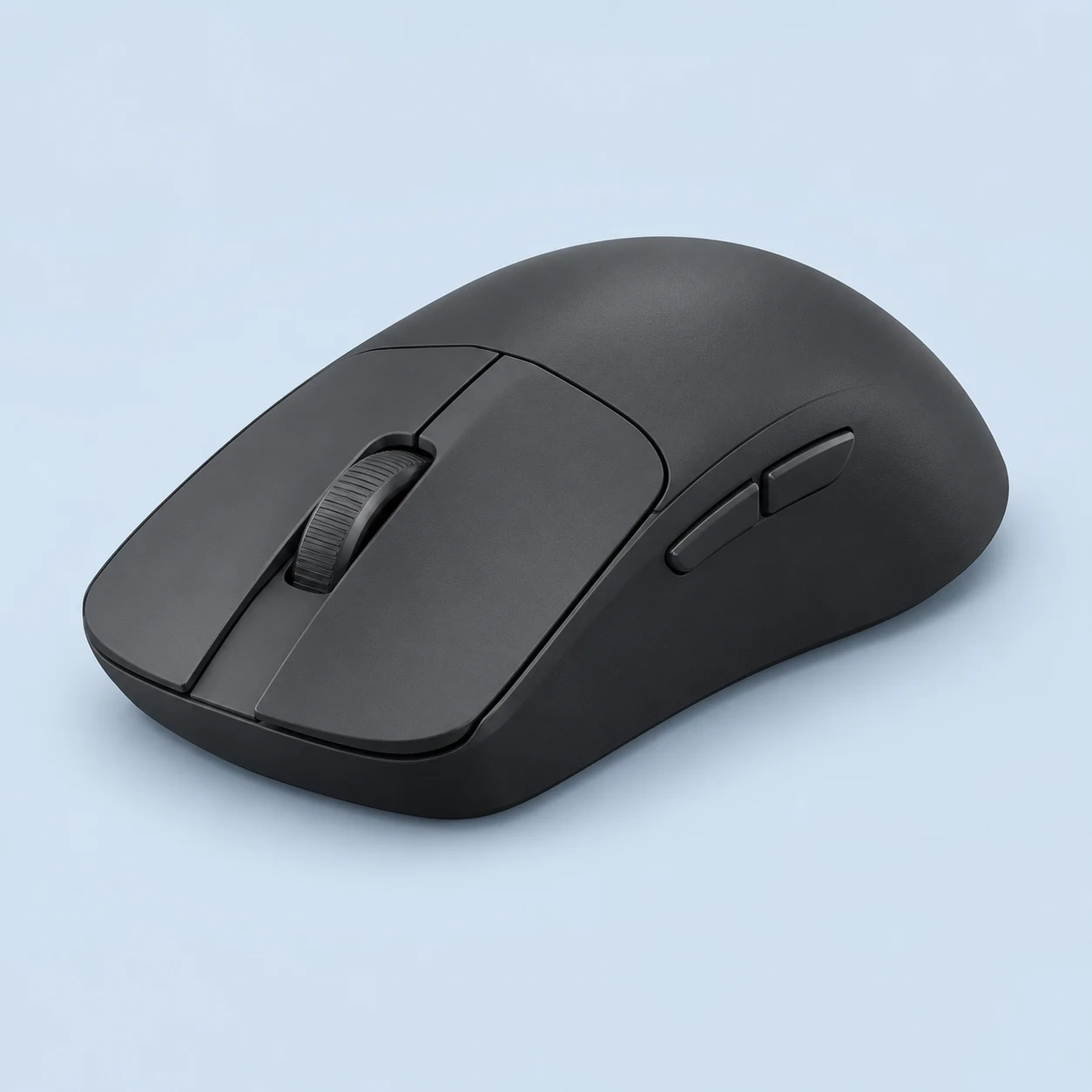 Illustration
Illustrative image for visual reference. Actual product appearance may vary.
Harpe Ace Extreme uses a carbon-fibre upper shell, optical controls and AimPoint Pro42K in a documented approximately 47 g body. Its included Polling Rate Booster enables the official high-rate path, while Bluetooth and USB add connection options. ASUS distinguishes 98-hour Bluetooth and 70-hour receiver claims with lighting off. Tom's Hardware highlights a stiff wheel and premium pricing as tradeoffs. Physical-button totals and conflicting wired high-rate descriptions remain unconfirmed, rather than equating programmable inputs with every underside control.
Research-based reviewResearch-based coverage. Specifications, sourced assessments, and editorial views are kept distinct. No hands-on testing is claimed on this page. How we review ↗
EVIDENCE BEFORE VERDICTS
Extreme is a separate Harpe Ace platform with a carbon-fibre upper shell and optical main controls. ASUS records approximately 47 g and a 127.5 by 63.7 by 39.6 mm envelope. Tom's Hardware describes a mild central hump and inward-curving sides relevant to claw or fingertip contact. That external observation helps explain the outline, but does not prove that lower mass or premium materials will improve a player's aim.
AimPoint Pro42K and an included Polling Rate Booster define the documented wireless high-rate path. The official page and inspected review do not agree on high-rate wired operation, so no 8K-over-USB claim is made here. Physical-button totals also stay empty: the review separates five programmable top/side/wheel buttons from two underside controls, while directional inputs create yet another total.
ASUS claims 98 hours in Bluetooth with lighting off,67 with default lighting,70 hours on 2.4GHz with lighting off and 53 with default lighting. These modes must remain distinct;98 hours is not the gaming-receiver condition. Tom's Hardware's physical review identifies a stiff wheel and questions value at the original premium asking price. It also notes the lack of internal dongle storage. The product is therefore an enthusiast material-and-accessory choice with a restrained gaming layout, rather than a command-heavy productivity mouse. Exact current price, personal contact and tolerance for the configuration suite matter more than the sensor headline.
A buyer specifically interested in premium shell materials and included high-rate accessories can consider Extreme with those priorities stated clearly. Its documented low mass is relevant to competitive movement, while the mild central hump and side curvature deserve comparison against a familiar claw or fingertip hold. Bluetooth can serve a secondary device without a gaming receiver. The carrying accessory bundle may also matter to someone transporting the entire setup rather than storing a dongle inside the mouse. These are concrete ownership preferences, not a performance-based reason to spend more. Battery planning should use the selected mode and lighting condition, and actual current price must be weighed against simpler symmetrical alternatives.
A cost-focused buyer should compare Aim Lab Edition or another documented competitive platform before paying for the carbon-top bundle. Someone doing extensive scrolling may prefer a less stiff or dual-mode wheel. Internal receiver storage is unavailable, so a frequent traveller should plan to use the supplied case or another safe accessory location. Buyers requiring confirmed 8K wired input should wait for the official/review discrepancy to be resolved. Finally, a many-button MMO user will not gain a thumb grid from Extreme's premium construction; the control layout remains restrained despite programmable directions and underside configuration buttons.
The exact physical review describes a not-small shell with a mild central hump. No size-specific score is inferred from premium materials or low mass.
Tom’s Hardware discusses claw/fingertip contact from inward sides and a modest central hump. The observation is attributed independent evidence rather than universal comfort.
Competitive input is the primary context. Materials and high-rate support do not establish an advantage in a particular game; command-heavy play needs more side controls.
Bluetooth, receiver andUSB are documented. ASUS claims 98/67 hours Bluetooth and 70/53 hours receiver with lighting off/default respectively. Wireless8K uses the included booster; wired-rate disagreement remains open.
OfficialBluetooth98 h off/67 h default;receiver 70 h off/53 h default. Approximate47 g. Wireless8K booster included;USB rate disagreement andphysical count unresolved.
| Brand | ASUS ROG |
|---|---|
| Model | Harpe Ace Extreme |
| Series | Harpe |
| Release date | Not verified |
| Weight | 47 g |
| Length | 127.5 mm |
| Width | 63.7 mm |
| Height | 39.6 mm |
| Sensor | ROG AimPoint Pro |
| Maximum DPI | 42000 |
| IPS | 750 |
| Acceleration | 50 G |
| Polling rate | 8000 Hz |
| Switch type | ROG optical micro switches |
| Encoder | TTC Gold |
| Connection | Wired / Wireless receiver / Bluetooth |
| Wired | Yes |
| Wireless | Yes |
| Bluetooth | Yes |
| Buttons | Not verified |
| Battery life | 98 hours |
| Charging | USB-C |
| Handedness | ambidextrous shape |
| RGB | Yes |
| MSRP | Not verified |
This page contains affiliate links. We may earn a commission if you make a purchase, at no additional cost to you.
As an Amazon Associate I earn from qualifying purchases.
Read our affiliate disclosure ↗Check Price
US · USD
 Illustration
ASUS ROG
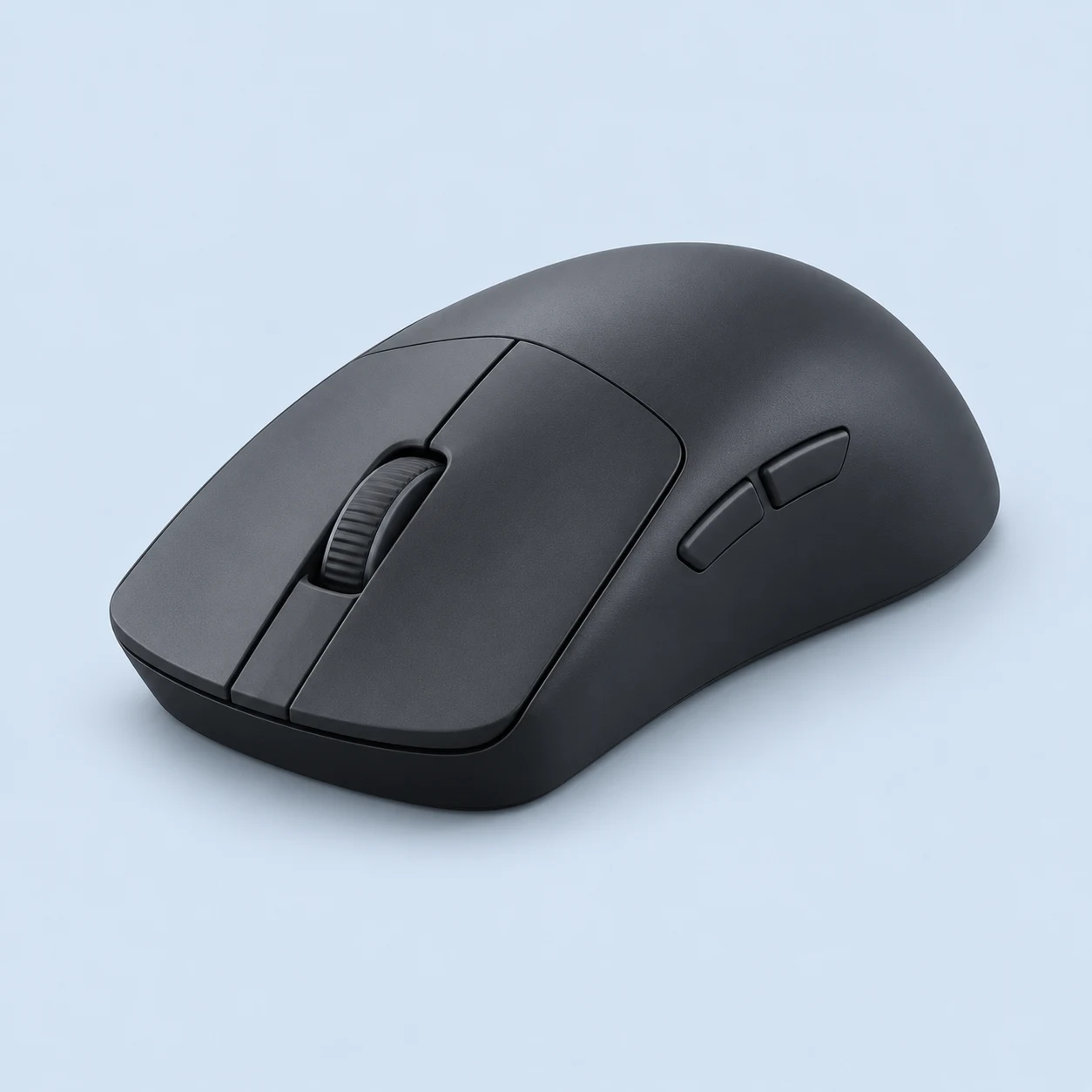
Harpe Ace Aim Lab Edition is a 54 g symmetrical gaming mouse with mechanical ROG70M controls and AimPoint36K. Exact official dimensions are 127.5 by 63.7 by 39.6 mm, and weight excludes cable and dongle. Receiver, Bluetooth and USB-C modes make it usable across different desk roles. The official battery claims are 90 hours without lighting and 79 with default breathing. RTINGS supports broad grip comparison but notes sparse controls and a basic wheel. Aim Lab integration is configuration assistance, not evidence that the mouse improves a player's aim.
A different mechanical platform avoids treating premium carbon materials as mandatory.
 Illustration
Razer
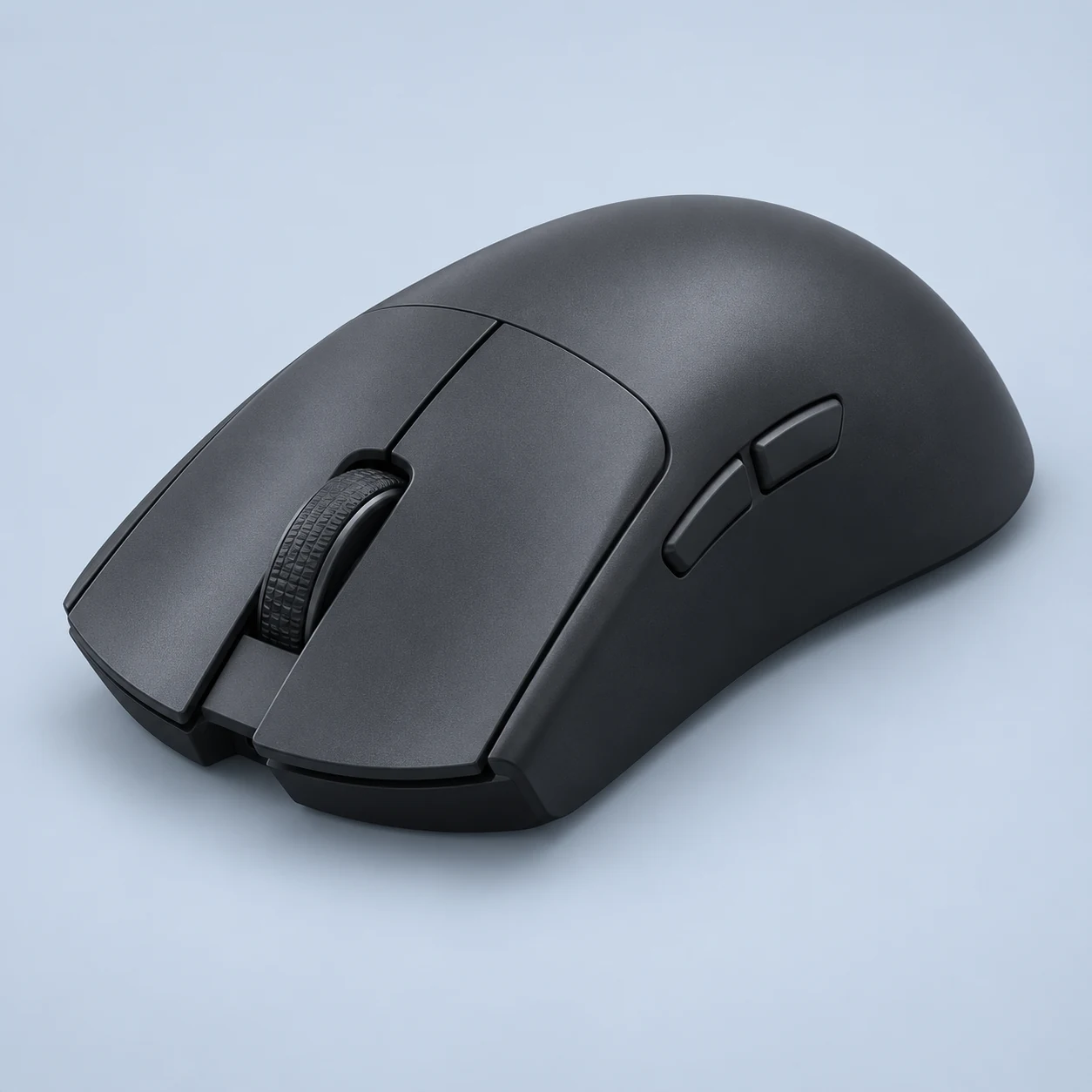
Razer's Viper V3 Pro is a receiver-based esports mouse centered on a light, symmetrical right-handed shell. The black edition weighs 54 g excluding cable and dongle, with a Focus Pro 35K Gen-2 sensor and third-generation optical main switches. Its included HyperPolling receiver enables up to 8,000 Hz wireless reporting. The design favors aiming and a small command layout; Bluetooth and lighting are absent, and the official battery figures change substantially with report rate.
Compare another documented optical high-rate wireless bundle with different shape and battery conditions.
 Illustration
Logitech G
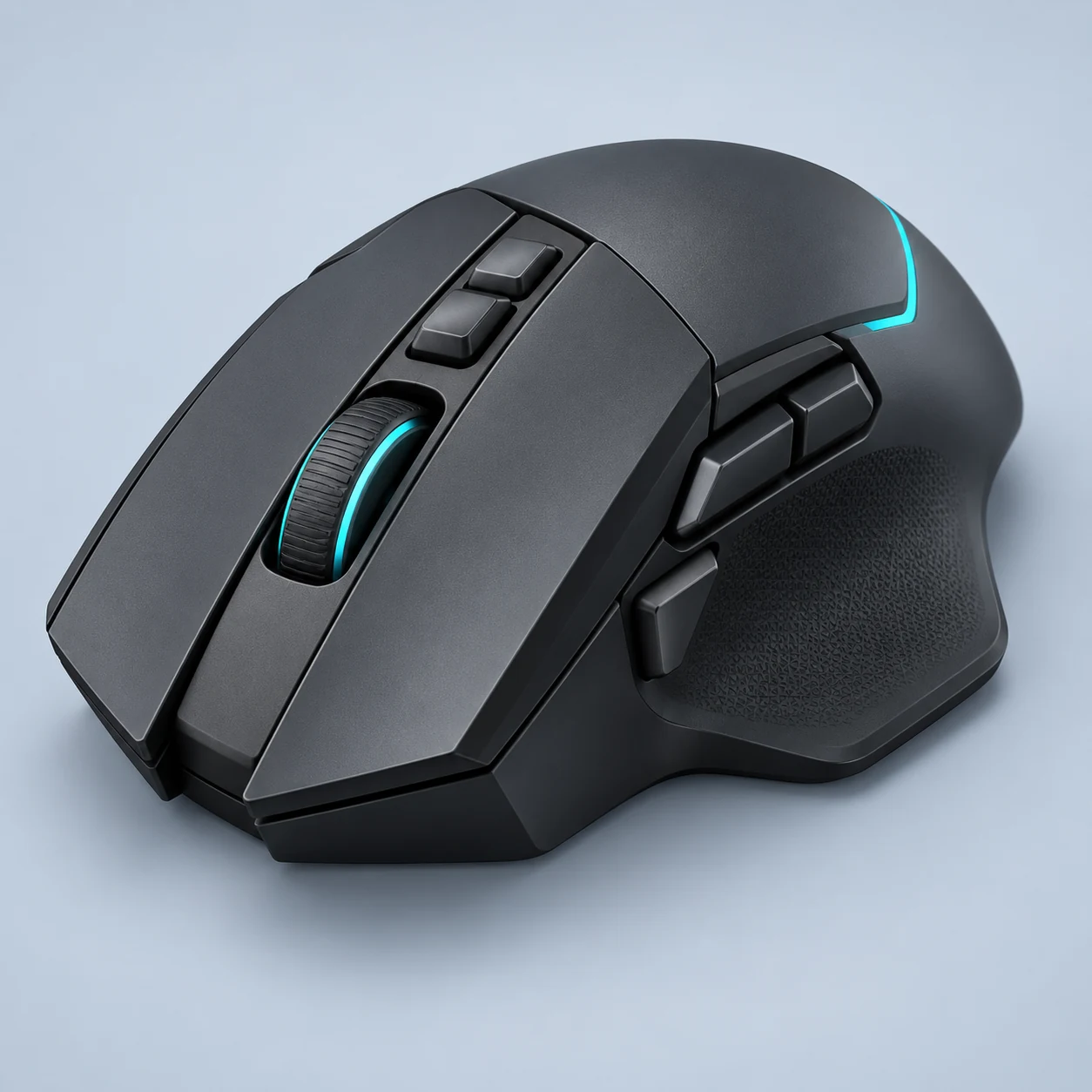
The G502 X PLUS is a rechargeable, right-handed multi-command mouse with LIGHTFORCE main switches and configurable RGB. Its tilting, free-spinning wheel and additional controls make it a different shortlist choice from a stripped-down FPS shell. Logitech documents 106 g, 1K reporting and sharply different battery claims with lighting on or off. Current official sensor descriptions differ by presentation and SKU, so sensor name and maximum DPI stay unconfirmed here. RTINGS also confirms that Bluetooth is absent despite wireless receiver operation.
More accessible controls and a dual-mode wheel serve a different mixed gaming/productivity need.
Tom's Hardware · PROFESSIONAL_REVIEW · Accessed 10/3/2026
Source checked: 10/3/2026 · Verified
Published: 2024-11-23
Actual physical review inspected for wheel stiffness,shape,receiver storage and programmable versus underside controls. Review says wired1K versus official high-rate wording;official53 h default receiver claim takes priority over review58 h. No images copied.
ASUS ROG · OFFICIAL · Accessed 10/3/2026
Source checked: 10/3/2026 · Verified
Exact specs reopened;USB connectivity and envelope confirmed. USB high-rate wording conflicts with review.
ASUS ROG · OFFICIAL · Accessed 10/3/2026
Source checked: 10/3/2026 · Verified
Actually reopened: carbon upper shell,booster and Bluetooth98/67 versus receiver70/53 hour conditions. Onboard macros limitation retained.
No. ASUS assigns 98 hours to Bluetooth with lighting off; receiver lighting-off runtime is 70 hours.
Yes. The documented Extreme bundle includes its Polling Rate Booster.
Five programmable upper controls, underside buttons and wheel directions use different conventions; a single physical total is not yet reconciled.