Amazon
Check Price
US · USD
Planning a seasonal purchase? See this model’s Black Friday watchlist.
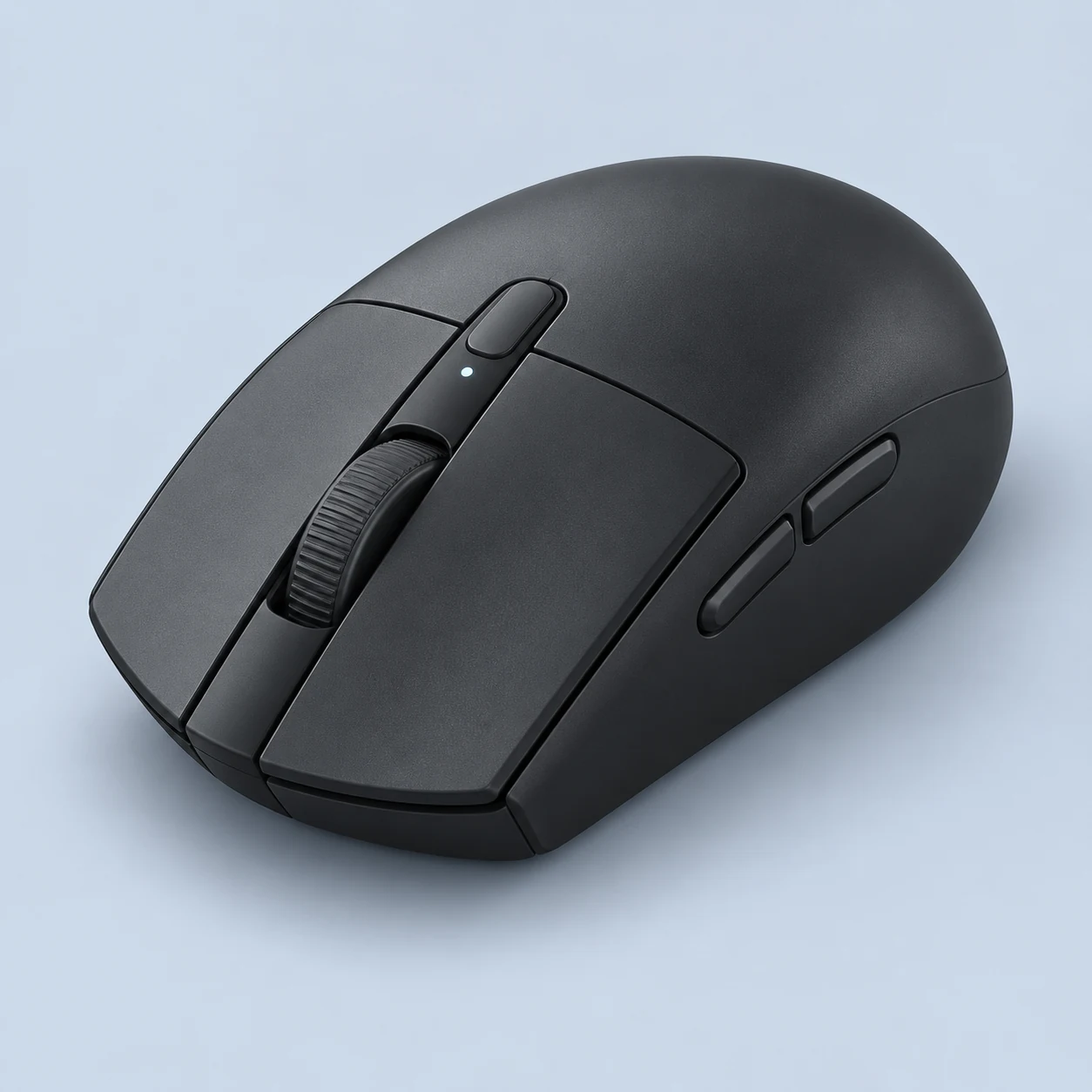 Illustration
Illustrative image for visual reference. Actual product appearance may vary.
The G305 LIGHTSPEED uses a single replaceable AA battery and a USB receiver, making its power routine different from rechargeable esports mice. Logitech specifies a HERO sensor, six buttons and a 1 ms report interval, with a playable weight of 99 g including the battery. Its compact egg-shaped body suits buyers comparing a smaller shell and straightforward wireless controls. It lacks Bluetooth and onboard charging, so the low-maintenance appeal depends on accepting replaceable power and receiver-based connectivity.
Research-based reviewResearch-based coverage. Specifications, sourced assessments, and editorial views are kept distinct. No hands-on testing is claimed on this page. How we review ↗
EVIDENCE BEFORE VERDICTS
The G305 LIGHTSPEED is an established wireless gaming mouse whose most important distinction is power management. It runs from one replaceable AA battery rather than an internal rechargeable pack. Logitech's 99 g published weight includes that battery; the separate 75 g bare-shell figure is not a usable like-for-like comparison with a ready-to-play mouse. Buyers comparing low-weight designs should keep that difference explicit.
A 116.6 mm body and nearly symmetrical egg-shaped profile make it a compact option. RTINGS notes that very large hands may find it awkward depending on grip, while also describing a solid build. That evidence is more useful than assigning a universal size score. Six programmable buttons include two left-side controls and a dedicated sensitivity control, giving a modest command layout rather than a thumb grid. The HERO sensor's documented 12,000 DPI ceiling is not a reason to assume it is unsuitable for ordinary gaming sensitivity settings.
LIGHTSPEED uses a USB receiver and a 1 ms reporting interval. There is no Bluetooth fallback and no USB charging/play cable, because the battery is replaceable. Logitech rates performance-mode battery life up to 250 hours under stated usage conditions. The tradeoff is therefore a relatively substantial moving weight in exchange for a different maintenance schedule. A buyer may reasonably choose it for receiver-based general gaming and a smaller body without treating it as equivalent to a 50–60 g rechargeable competitive model. Actual current pricing remains a merchant question rather than a fabricated price on this page.
The G305 is relevant to a buyer who wants a compact receiver-based gaming mouse and prefers replacing an AA cell to managing a charging cable. Its six-button arrangement can cover common FPS or general-game actions while leaving an extensive ability layout on the keyboard. RTINGS's comments on the smaller shell make it worth comparing for users who find full-size ergonomic mice cumbersome, although that does not establish a guaranteed small-hand fit. For mixed gaming, the practical benefit is the documented long performance-mode battery ceiling and straightforward receiver connection. The buyer should be comfortable with the battery-inclusive weight and should not expect the moving mass or high report-rate options of a modern ultralight esports model.
Players whose first requirement is the lowest moving weight should compare the rechargeable SUPERLIGHT 2 or a wired Haste 2 instead of using the G305's battery-free figure in the comparison. Very large-hand palm users also have a reason to seek a longer shell. If a second device requires Bluetooth, receiver-only LIGHTSPEED cannot satisfy that connection requirement. A buyer who wants to charge through USB must choose a rechargeable design, because the G305 has no onboard charging. For many mouse-led MMO commands, six buttons remain a much smaller layout than the database's dedicated Naga and Scimitar options.
The public RTINGS introduction calls the G305 smaller and highlights possible difficulty for very large hands. Logitech's 116.6 × 62.15 × 38.2 mm support dimensions help compare it with a familiar device; current shop rounding does not replace that model-specific precision. No small/medium/large numerical ratings are derived from these dimensions.
An egg-shaped nearly symmetrical shell creates different contact points from a wide, sloped right-handed design. Published commentary makes grip choice especially relevant for very large hands. Palm, claw and fingertip fit remain conditional on reach and how much palm contact is desired, with no formula turning the G305's length into a grip score.
For FPS and general gaming, the six-button layout offers a handful of accessible commands without a bulky side grid. The battery-inclusive weight is the meaningful movement comparison. MOBA or MMO users who keep the action bar on the keyboard may still consider it, but a thumb-driven command layout is not this model's defining feature.
The G305 connects through its LIGHTSPEED USB receiver and has no Bluetooth or cable-play option. A single AA cell provides power; there is no charging port or internal charging function. The official maximum of 250 hours refers to performance mode, not an unconditional lifespan for any battery or use pattern. Endurance-mode advertising is a separate operating condition and is not substituted for the gaming report rate.
99 g includes one AA battery; the 75 g bare-shell weight is not the playable configuration. Dimensions use the model-specific support table. Battery life up to 250 hours is performance-mode advertising and depends on the battery and usage. The support report-rate MHz label is a unit typo; the documented 1 ms interval is retained as 1,000 Hz.
| Brand | Logitech G |
|---|---|
| Model | G305 LIGHTSPEED |
| Series | G305 |
| Release date | Not verified |
| Weight | 99 g |
| Length | 116.6 mm |
| Width | 62.15 mm |
| Height | 38.2 mm |
| Sensor | HERO |
| Maximum DPI | 12000 |
| IPS | 400 |
| Acceleration | 40 G |
| Polling rate | 1000 Hz |
| Switch type | Not verified |
| Encoder | Not verified |
| Connection | Wireless receiver |
| Wired | No |
| Wireless | Yes |
| Bluetooth | No |
| Buttons | 6 |
| Battery life | 250 hours |
| Charging | Replaceable single AA battery; no onboard charging |
| Handedness | Not verified |
| RGB | No |
| MSRP | Not verified |
This page contains affiliate links. We may earn a commission if you make a purchase, at no additional cost to you.
As an Amazon Associate I earn from qualifying purchases.
Read our affiliate disclosure ↗Check Price
US · USD
Compare this fit with a Mouse Finder shortlist ↗
 Illustration
Logitech G
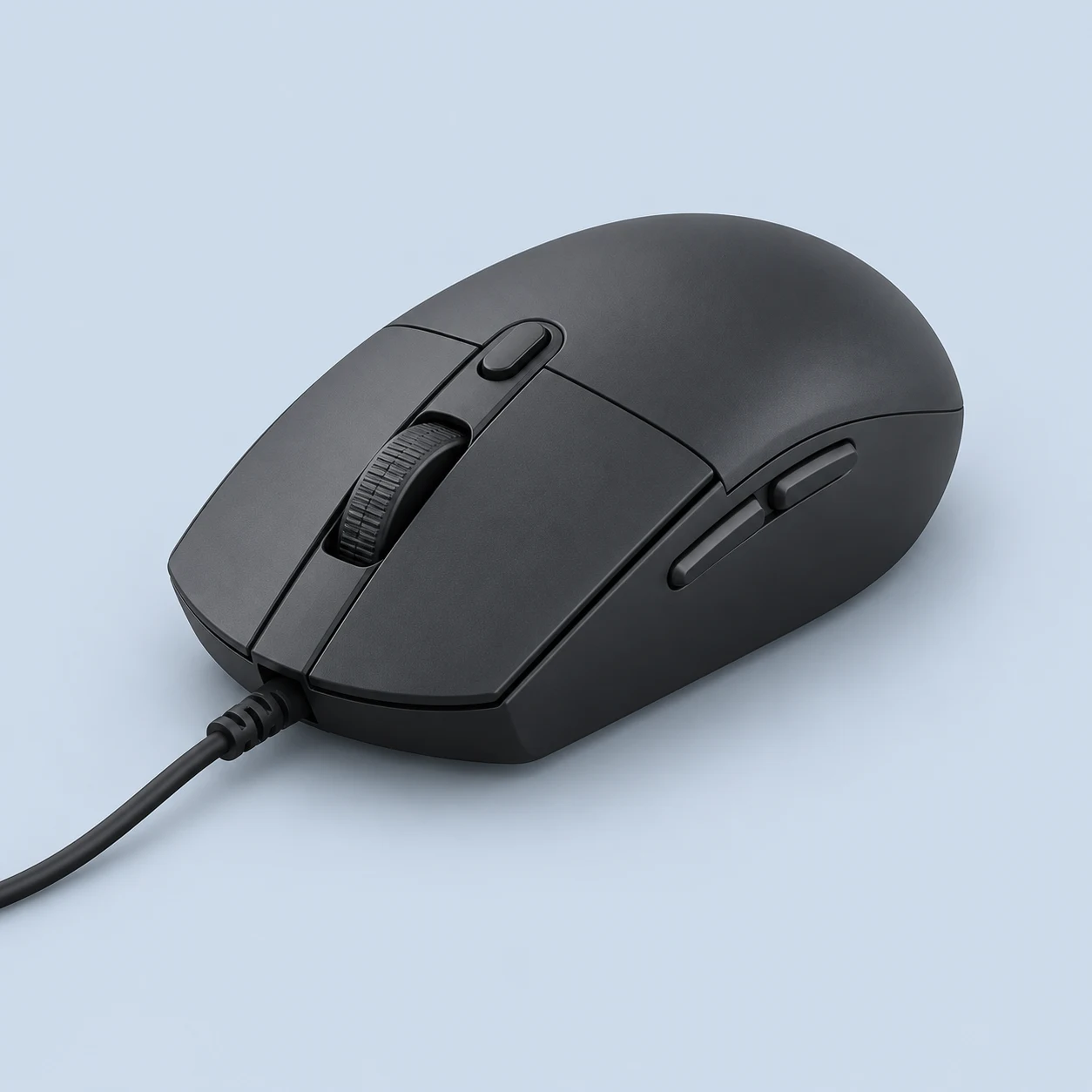
G203 LIGHTSYNC is a compact wired gaming mouse with six buttons, an 8,000 DPI specification and three-zone lighting. Its documented 116.6 mm length makes button reach a more relevant buying question than the RGB effects. RTINGS describes a shape that works particularly well for smaller hands, while larger hands can investigate fingertip use. The permanent cable and restrained side layout suit a straightforward gaming desk. Unknown sensor identity and internal component details remain empty rather than being borrowed from another G203 generation.
The G203 changes the maintenance tradeoff to a wired connection and RGB, while retaining a compact general-gaming layout.
 Illustration
Logitech G
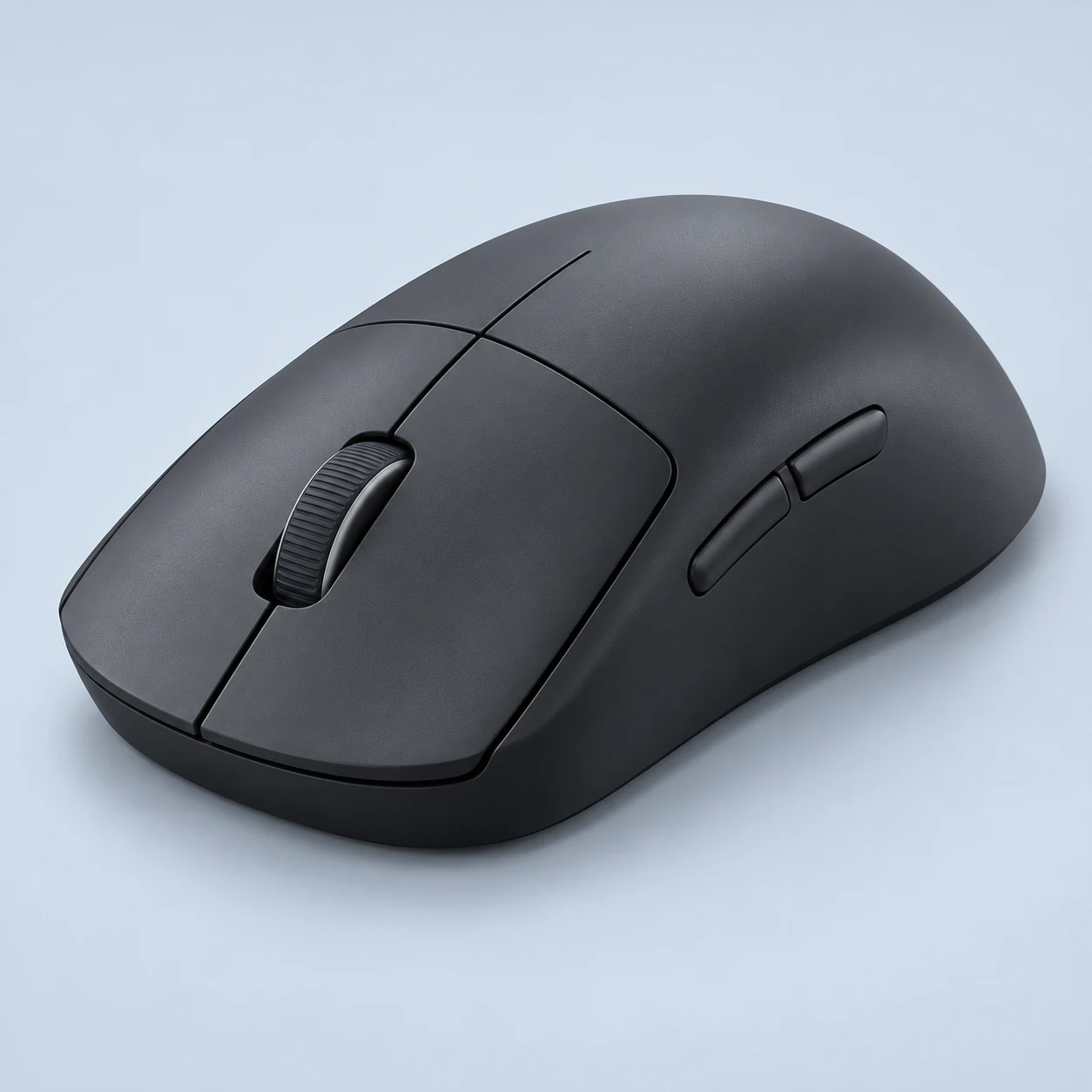
The PRO X SUPERLIGHT 2 concentrates on low-weight wireless control rather than a large command layout. Logitech documents a 60 g shell, HERO 2 sensor and LIGHTFORCE main switches, with current support information confirming 8,000 Hz wireless reporting and USB-C charging. Its broadly symmetrical shape makes it a starting point for players comparing grip preferences. Five buttons and receiver-only wireless connectivity keep the purpose clear: competitive aiming, with fewer conveniences for extensive macros or multi-device work.
The SUPERLIGHT 2 provides a documented 60 g rechargeable shell if reducing moving weight is the priority.
 Illustration
HyperX
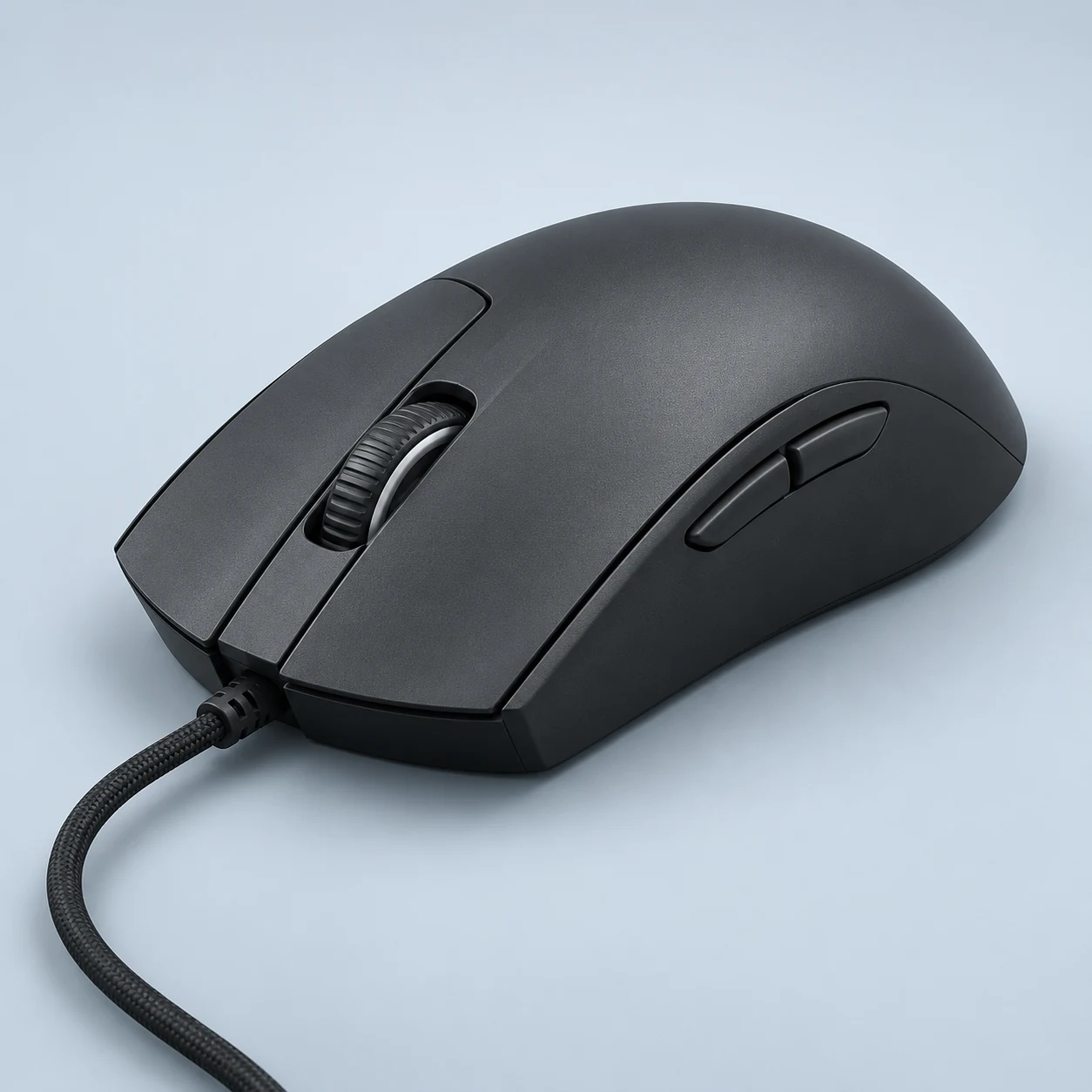
The wired Pulsefire Haste 2 keeps a solid symmetrical shell while prioritizing low mouse-only weight and high-rate USB input. This record uses black SKU 6N0A7AA, specified at 52 g without its cable and 75 g including it. The HyperX 26K sensor, six programmable buttons and up to 8,000 Hz polling serve aim-focused gaming without a charging schedule. Cable routing remains part of the purchase decision, and the similarly named wireless version must be evaluated as separate hardware.
The wired Haste 2 avoids both AA replacement and receiver use, at the cost of routing a permanently attached cable.
RTINGS.com · LAB_TEST · Accessed 10/3/2026
Source checked: 10/3/2026 · Verified
Public independent shape/grip and connectivity commentary supports the qualitative analysis. Measurements and scores behind the membership gate were not used; no imagery was copied.
Logitech G · OFFICIAL · Accessed 10/3/2026
Source checked: 10/3/2026 · Verified
99 g includes one AA battery; the 75 g bare-shell weight is not the playable configuration. Dimensions use the model-specific support table. Battery life up to 250 hours is performance-mode advertising and depends on the battery and usage. The support report-rate MHz label is a unit typo; the documented 1 ms interval is retained as 1,000 Hz.
Logitech · OFFICIAL · Accessed 10/3/2026
Source checked: 10/3/2026 · Verified
99 g includes one AA battery; the 75 g bare-shell weight is not the playable configuration. Dimensions use the model-specific support table. Battery life up to 250 hours is performance-mode advertising and depends on the battery and usage. The support report-rate MHz label is a unit typo; the documented 1 ms interval is retained as 1,000 Hz.
No. It uses a replaceable single AA battery and has no onboard charging function.
Logitech lists 75 g without the battery and 99 g with an AA battery. This page uses the battery-inclusive figure for a playable configuration.
No. LIGHTSPEED wireless operation needs the USB receiver.
It is Logitech’s performance-mode battery maximum, subject to battery and usage conditions. It is not a measured PeriphPick runtime or a guarantee for every AA cell.