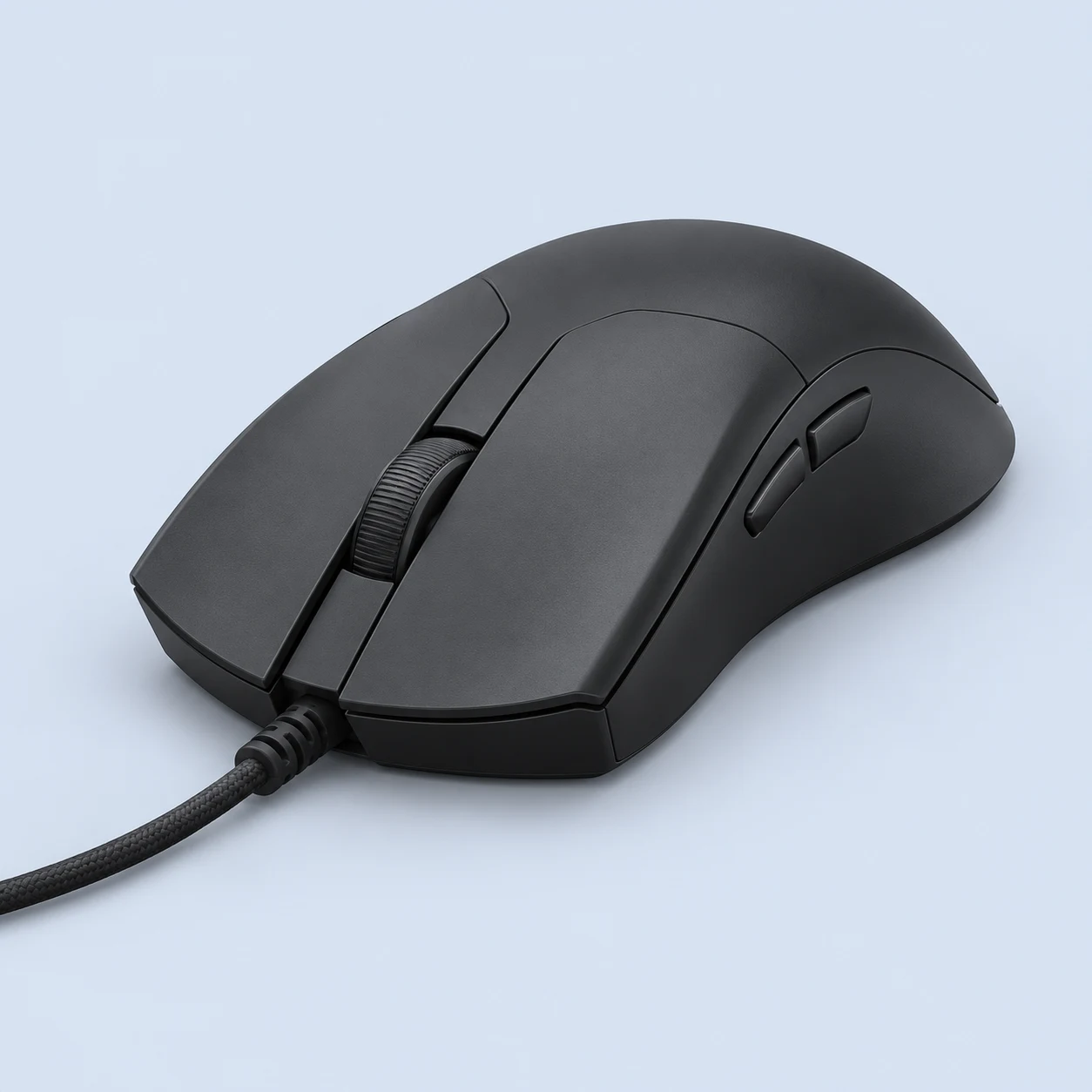
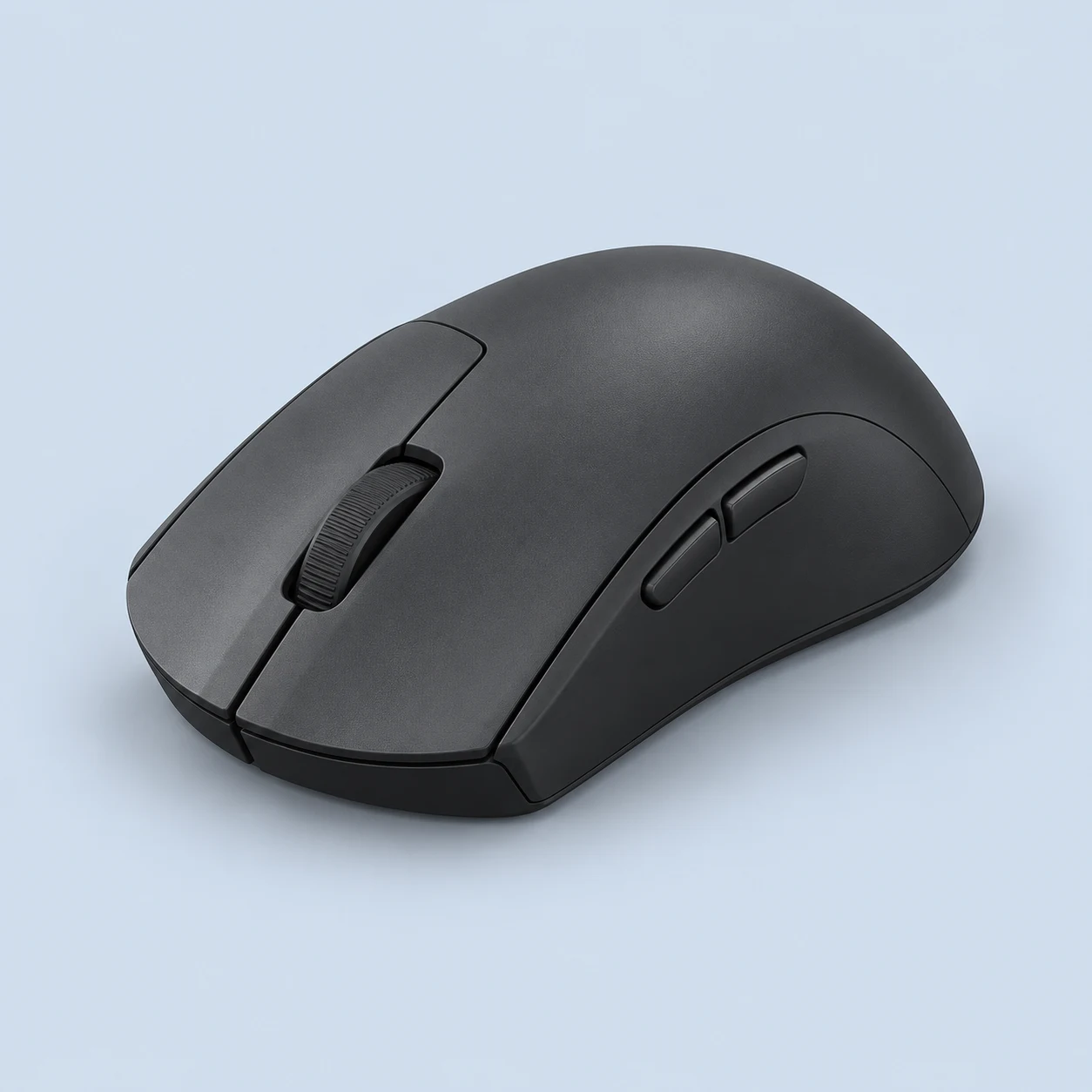
AI illustration of Logitech G PRO Wireless; visual reference, not an official product photoIllustration

Illustrative image for visual reference. Actual product appearance may vary.

Logitech G

Logitech G PRO Wireless

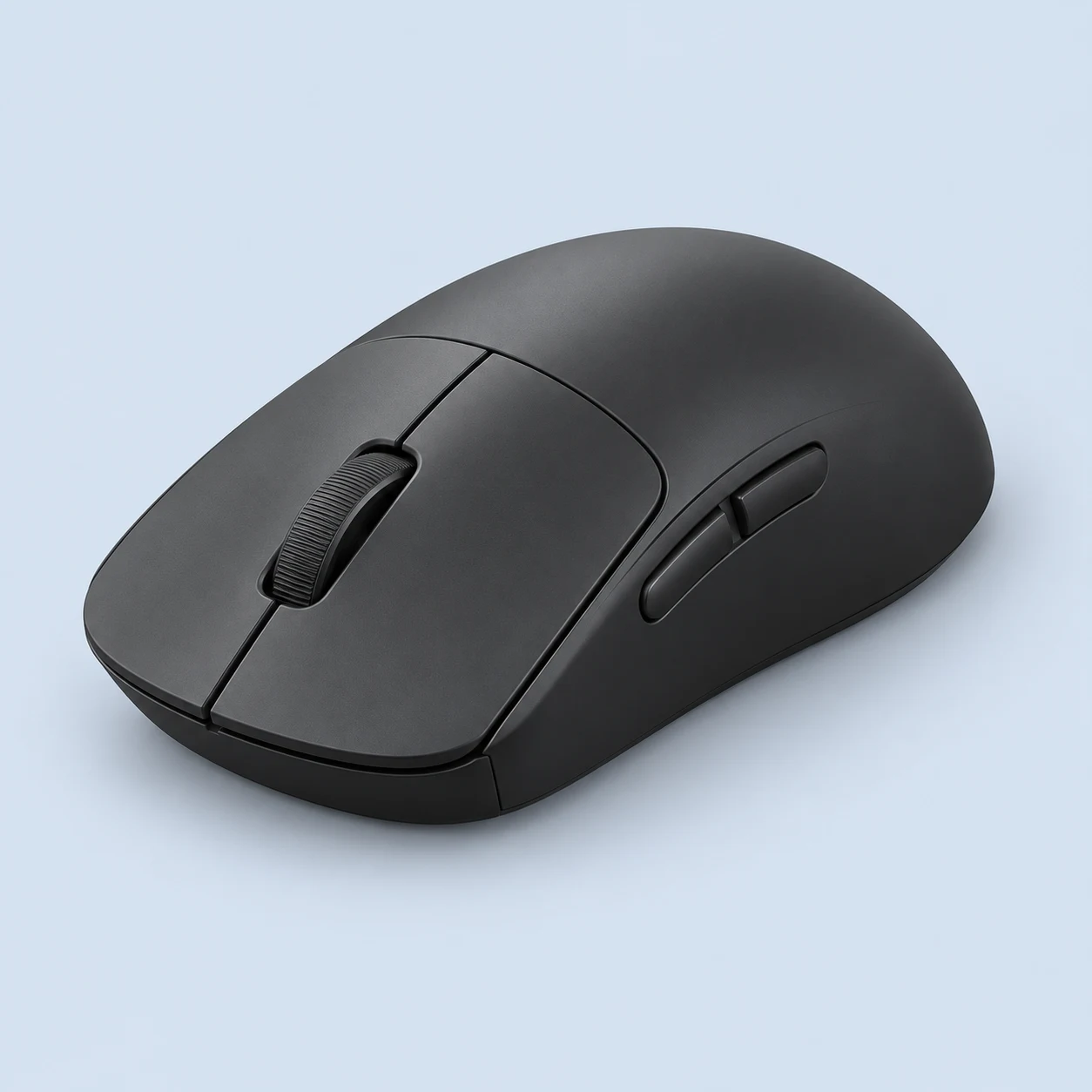
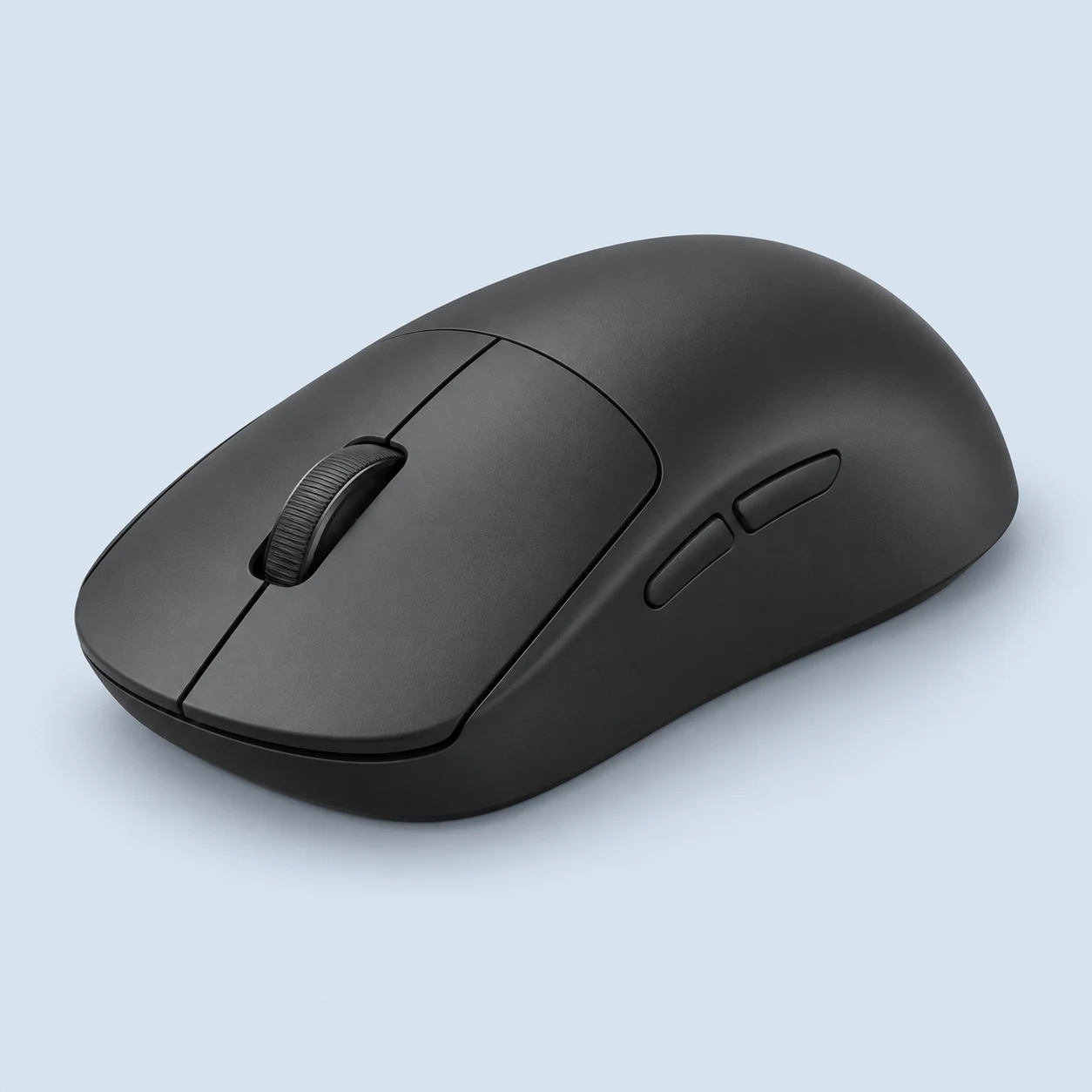
PRO Wireless pairs a rounded symmetrical shell with removable side buttons on either side, giving left- and right-handed users a meaningful control-placement choice. Logitech documents an 80 g nominal body, HERO 25K sensor and 1K LIGHTSPEED input. It retains RGB and a rechargeable battery, with separate lighting-on and lighting-off runtime claims. Its variable installed controls prevent one fixed physical-button total here. The design is heavier than SUPERLIGHT descendants but more adaptable in side-button placement, and Bluetooth is not supported.

Research-based review

Last reviewed: · 2 sources

Weight
80 g
Sensor
HERO 25K
Polling Rate
1000 Hz
DPI
25600
Battery
60 hours
Connection
Wired / Wireless receiver

Specification conditions: Nominal 80 g; exact cable basis unspecified. Variable removable side controls do not establish one fixed physical total. Battery maxima 60 h lights off / 48 h default lighting. >400 IPS and >40 G remain lower bounds.

Research-based coverage. Specifications, sourced assessments, and editorial views are kept distinct. No hands-on testing is claimed on this page. How we review ↗

EVIDENCE BEFORE VERDICTS

Research-Based Review

Overview

Logitech's PRO Wireless remains distinct from the SUPERLIGHT family because its removable side buttons can be arranged for either hand. That feature matters more than a merely symmetrical outline: it provides a physical way to retain secondary controls for left-handed use. The official body dimensions are 125 by 63.5 by 40 mm with an 80 g nominal weight. RTINGS' public review describes broad shape accommodation while cautioning that smaller hands using fingertip grip may have reach limitations.

The retained HERO 25K specification and 1,000 Hz reporting belong to this exact model. Lower-bound speed and acceleration claims are not converted into invented exact maxima. RGB is present, unlike the stripped-down SUPERLIGHT positioning, and the manufacturer separates up to 60 hours without lighting from 48 hours at default lighting. The selected lighting configuration therefore affects expected charging frequency. These remain advertised conditions, not PeriphPick battery tests.

Receiver and wired input are documented, while the actual independent review confirms the lack of Bluetooth. Removable controls make the installed button count variable, so the database does not force one physical total from programmable-input marketing. Buyers should compare the body and preferred control configuration, then decide whether the additional nominal weight is acceptable against a lower-weight model with fixed left-side buttons. Its enduring relevance is ambidextrous control access, rather than assuming an older wireless design inherits every later PRO feature.
Pros

  • Removable side buttons on either side enable meaningful handed control placement.
  • Wired and receiver modes offer a charging/input fallback.
  • Official battery claims distinguish default lighting from lights-off use.

Cons

  • 80 g nominal body is heavier than the low-weight SUPERLIGHT direction.
  • Bluetooth is absent despite wireless receiver support.
  • Small-hand fingertip reach can be limited in the independent shape analysis.

Best For

A left-handed player wanting receiver-based wireless input and secondary commands has a concrete reason to compare PRO Wireless. Its removable control arrangement is more relevant to that requirement than the lower advertised mass of a fixed-left-button mouse. A right-handed user can also configure the side controls to match familiar bindings. The rounded body supports a shape comparison across common holds, with the small-hand fingertip caveat kept in view. General gaming and ordinary desktop work can use the same modest layout when a full action grid is unnecessary. Before purchasing, check actual price against the newer simplified models and decide whether flexible side-button placement justifies keeping an 80 g nominal body and lighting-dependent rechargeable routine.

Who Should Avoid

Users whose main goal is the lowest mass in a similar rounded silhouette should compare the original SUPERLIGHT or SUPERLIGHT 2. Receiver-free Bluetooth pairing requires Haste 2 Wireless or another documented Bluetooth model. Someone with small hands and a strict fingertip hold should investigate a more compact shell before treating broad fit language as a guarantee. A dense MMO command requirement still calls for Naga or SCIMITAR hardware. Those choices address different constraints; upgrading maximum sensor DPI alone does not explain why the physically adaptable controls would or would not suit a particular user.

Hand Size

The public review describes broad hand-size accommodation and specifically cautions about smaller-hand fingertip reach. No numerical size scores follow from that statement. The installed side-button configuration must be included in any fit comparison.

Grip Style

Its rounded body can be compared across palm and claw holds, while small-hand fingertip use merits more care. Ambidextrous side-control placement is a separate verified feature; it does not guarantee equivalent comfort in every grip.

Game Compatibility

Competitive or general gaming with a modest binding set is the central role. Left-handed secondary access is an unusual practical advantage among today's fixed-left-button wireless designs. The layout remains different from an MMO grid even when software expands programmable functions.

Connectivity & Battery

Receiver and wired modes are confirmed. Public independent analysis explicitly reports no Bluetooth. Official maximum runtime is 60 h lights off or 48 h with default lighting; configuration and use can change actual battery duration.

Detailed Specifications

Nominal 80 g; exact cable basis unspecified. Variable removable side controls do not establish one fixed physical total. Battery maxima 60 h lights off / 48 h default lighting. >400 IPS and >40 G remain lower bounds.

PRO Wireless detailed specifications
BrandLogitech G
ModelPRO Wireless
SeriesPRO
Release dateNot verified
Weight80 g
Length125 mm
Width63.5 mm
Height40 mm
SensorHERO 25K
Maximum DPI25600
IPSNot verified
AccelerationNot verified
Polling rate1000 Hz
Switch typeNot verified
EncoderNot verified
ConnectionWired / Wireless receiver
WiredYes
WirelessYes
BluetoothNo
ButtonsNot verified
Battery life60 hours
ChargingNot verified
Handednessambidextrous
RGBYes
MSRPNot verified

Where to Buy

No verified merchant offers have been added.

Alternatives

Selected for specific differences in shape, connectivity or controls. Editorial selection is independent of merchant commission.

AI illustration of Logitech G PRO X SUPERLIGHT; visual reference, not an official product photoIllustration

Logitech G

PRO X SUPERLIGHT

The original PRO X SUPERLIGHT is a five-button rechargeable mouse built around Logitech's HERO 25K sensor and 1K LIGHTSPEED reporting. Its restrained, symmetrical shell is still relevant to competitive players who care about contact shape and simple controls more than newer high-rate features. This generation charges through Micro-USB rather than USB-C. The manufacturer describes weight below 63 g while a specification table rounds to 63 g, so no exact weight scalar is imposed. Bluetooth is absent, and small-hand fingertip reach deserves attention.

Weight —1000 Hz
PublishedCompare ↗

Choose the pared-down low-weight direction when fixed left-side buttons are acceptable.

AI illustration of Razer Viper 8KHz; visual reference, not an official product photoIllustration

Razer

Viper 8KHz

The Viper 8KHz is a wired competitive mouse distinguished by high-rate reporting and actual side buttons on both sides. Razer documents a 71 g cable-excluded body, Focus+ 20K sensor and second-generation optical main switches. That ambidextrous control arrangement differs from newer symmetrical-looking Vipers with left-side controls only. The retained launch specification supplies dimensions where the current page has inconsistent labels. RTINGS reports a low profile that can challenge a large-hand palm grip and a cable less flexible than some alternatives.

71 g8000 Hz
PublishedCompare ↗

A wired two-sided control layout is relevant when ambidextrous access matters more than removing the cable.

AI illustration of HyperX Pulsefire Haste 2 Wireless; visual reference, not an official product photoIllustration

HyperX

Pulsefire Haste 2 Wireless

The Pulsefire Haste 2 Wireless adds receiver and Bluetooth modes to a solid symmetrical shell, making it a more flexible everyday connection choice than many esports-focused mice. HyperX documents a 26K sensor, six buttons and 1,000 Hz reporting, with a 100-hour battery claim tied to lighting-off receiver operation. Its exact colour-dependent weight remains unconfirmed in this record. RTINGS' public review also raises click-latency tradeoffs against competing wireless models, so the connection convenience should not be mistaken for a universal competitive-performance advantage.

Weight —1000 Hz
PublishedCompare ↗

Bluetooth provides a different second-device option if receiver-only connectivity is unsuitable.

Sources

  1. PRO Wireless review ↗

    RTINGS.com · LAB_TEST · Accessed 10/3/2026

    Source checked: 10/3/2026 · Verified

    Actual public review confirms no Bluetooth, broad shape accommodation and small-hand fingertip caveat.

  2. Logitech G PRO Wireless official specification review ↗

    Logitech G · OFFICIAL · Accessed 10/3/2026

    Source checked: 10/3/2026 · Verified

    Removable side controls, HERO 25K and lighting-dependent runtime inspected.

FAQ

Are side buttons removable on PRO Wireless?

Yes. Its side-button arrangement can be configured for left- or right-handed secondary access.

Does RGB change the stated battery life?

Logitech gives 60 h without lighting versus 48 h with default lighting.

Does it pair through Bluetooth?

No. The public independent review confirms receiver-based wireless rather than Bluetooth.