Amazon
Check Price
US · USD
Planning a seasonal purchase? See this model’s Black Friday watchlist.
 Illustration
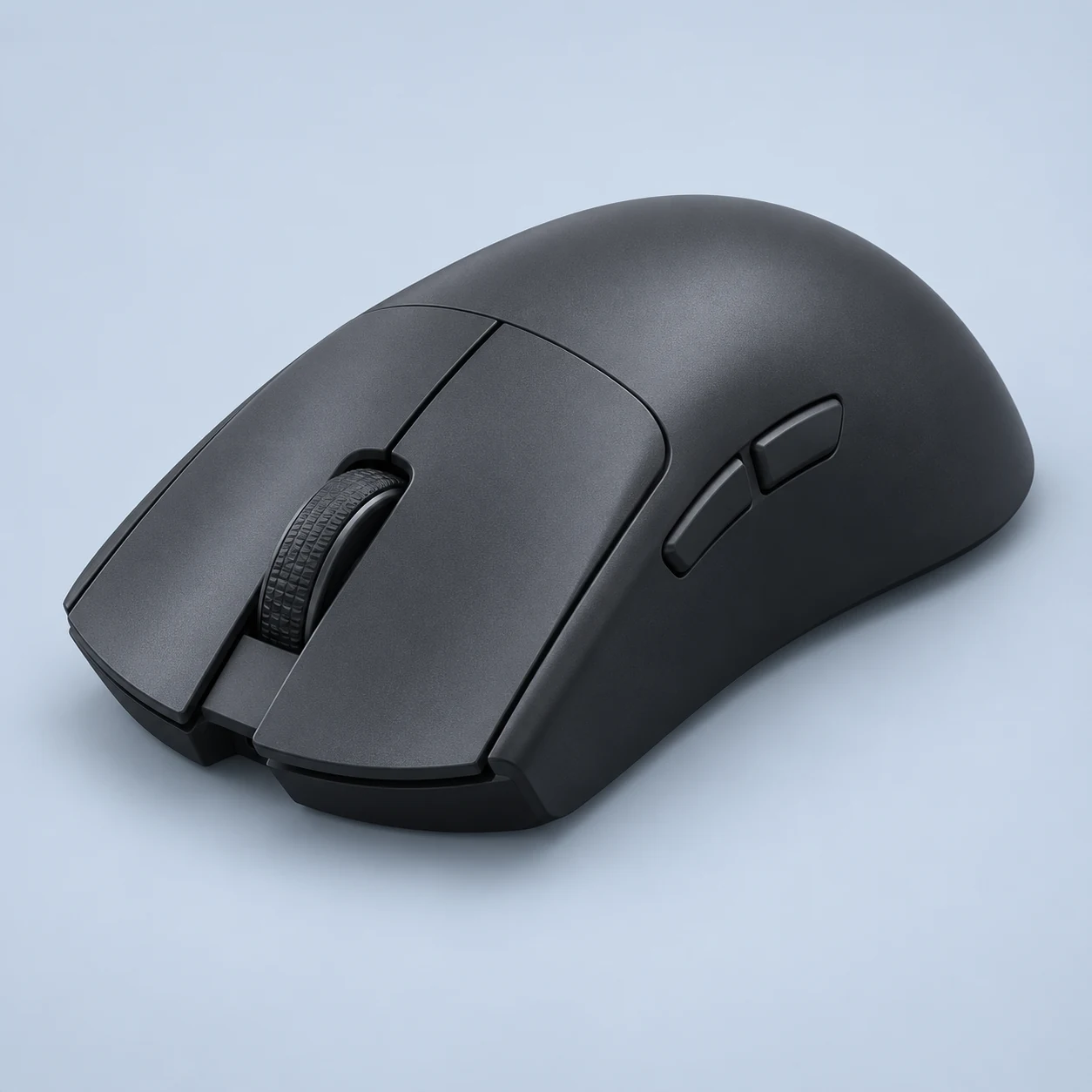
Illustrative image for visual reference. Actual product appearance may vary.
Razer's Viper V3 Pro is a receiver-based esports mouse centered on a light, symmetrical right-handed shell. The black edition weighs 54 g excluding cable and dongle, with a Focus Pro 35K Gen-2 sensor and third-generation optical main switches. Its included HyperPolling receiver enables up to 8,000 Hz wireless reporting. The design favors aiming and a small command layout; Bluetooth and lighting are absent, and the official battery figures change substantially with report rate.
Research-based reviewResearch-based coverage. Specifications, sourced assessments, and editorial views are kept distinct. No hands-on testing is claimed on this page. How we review ↗
EVIDENCE BEFORE VERDICTS
The Viper V3 Pro is Razer's light wireless option for players who want a symmetrical shell with esports-oriented controls. This record uses the original black RZ01-0512 edition: the official 54 g figure excludes cable and receiver, while white is specified at 55 g. Its 127.1 mm length is relevant when comparing finger reach, not a reason to presume that a particular hand size will automatically fit. RTINGS describes a shape usable across several grips and hand sizes, with a lower profile than the rounder SUPERLIGHT family.
The Focus Pro 35K Optical Sensor Gen-2 and Gen-3 optical switches are documented features. The supplied HyperPolling receiver is an important purchase distinction because 8,000 Hz wireless capability does not require the separate receiver purchase associated with some older Razer mice. Higher polling increases report frequency, but the useful setting depends on game behavior and the host system rather than sensor resolution alone.
Battery planning deserves more attention than the headline 95-hour maximum. Razer associates 95 hours with 1,000 Hz and only 17 hours with 8,000 Hz, with intermediate figures for intermediate rates. USB-C charging and supported wired operation provide a fallback, but Bluetooth is not included. This makes the Viper a focused gaming-device choice rather than a receiver-free work companion. Its limited side-control layout also differs materially from a Naga-style command mouse. The practical shortlist question is whether that shell and the charging schedule suit your play, not whether every session needs the maximum polling option.
The Viper V3 Pro belongs on the shortlist of FPS players who already know they prefer a relatively symmetrical shell and want a low moving weight. Its included high-rate receiver simplifies the hardware requirement for experimenting with 2K, 4K or 8K, while the documented runtime table makes the battery cost visible. Players who use keyboard bindings for most utility have less need for an elaborate side panel. Those coming from a rounded SUPERLIGHT or a sloped DeathAdder should compare the contact profile rather than assume that similar overall dimensions mean the same feel. The premium feature set is most relevant when the receiver connection, recharge routine and restrained controls all suit the intended gaming setup.
Someone looking for long intervals between charging while permanently using 8K should consider the documented 17-hour limit before buying. Bluetooth-dependent laptop use is another clear mismatch. A palm user who deliberately wants the side support and slope of an ergonomic right-handed shell has a reason to compare the DeathAdder V3 Pro instead. MMO players wanting many accessible abilities should evaluate a Naga or Scimitar. The wired Haste 2 changes a different constraint by removing battery management, though it retains cable routing. Choose an alternative for the requirement it changes rather than treating any lower weight or higher DPI figure as a complete verdict.
RTINGS's public review describes broad hand-size accommodation. The official 127.1 × 63.9 × 39.9 mm envelope helps compare overall reach with your current mouse, but grip width and contact points are not fully described by those three numbers. No exact small, medium or large hand score is assigned. Buyers at either size extreme should treat fit as conditional.
Published RTINGS commentary describes a symmetrical shape suitable for multiple grips, and distinguishes its profile from the rounder Logitech SUPERLIGHT. That supports a comparison for claw or fingertip users without establishing a universal preference. Palm users should pay attention to where the hump contacts the hand. PeriphPick has not physically evaluated the shell or measured grip comfort.
The Viper's low shell weight and restrained controls align with aim-led competitive games. Wireless report-rate choice is a system setting, not evidence that an FPS player will perform better at 8K. General gaming and keyboard-heavy MOBA layouts can use the same controls. A large MMO action bar remains a distinct reason to select a multi-button model.
Razer lists receiver-based 2.4 GHz wireless and wired operation with USB-C charging, without Bluetooth. Claimed runtime is up to 95 hours at 1K, 62 at 2K, 40 at 4K and 17 at 8K. These are manufacturer estimates rather than PeriphPick measurements. The included HyperPolling receiver is part of this model's package; do not substitute accessory requirements from the Viper V3 HyperSpeed.
Black RZ01-0512 weighs 54 g excluding cable and receiver; white is 55 g. Receiver included. Manufacturer battery ceilings: 95 h at 1K, 62 h at 2K, 40 h at 4K and 17 h at 8K. Programmable inputs do not establish a verified physical button total.
| Brand | Razer |
|---|---|
| Model | Viper V3 Pro |
| Series | Viper |
| Release date | 2024-04-23 |
| Weight | 54 g |
| Length | 127.1 mm |
| Width | 63.9 mm |
| Height | 39.9 mm |
| Sensor | Focus Pro 35K Optical Sensor Gen-2 |
| Maximum DPI | 35000 |
| IPS | 750 |
| Acceleration | 70 G |
| Polling rate | 8000 Hz |
| Switch type | Razer Optical Mouse Switches Gen-3 |
| Encoder | Not verified |
| Connection | Wired / Wireless receiver |
| Wired | Yes |
| Wireless | Yes |
| Bluetooth | No |
| Buttons | Not verified |
| Battery life | 95 hours |
| Charging | USB-C |
| Handedness | Right-handed symmetrical |
| RGB | No |
| MSRP | USD 159.99 |
This page contains affiliate links. We may earn a commission if you make a purchase, at no additional cost to you.
As an Amazon Associate I earn from qualifying purchases.
Read our affiliate disclosure ↗Check Price
US · USD
Compare this fit with a Mouse Finder shortlist ↗
 Illustration
Logitech G
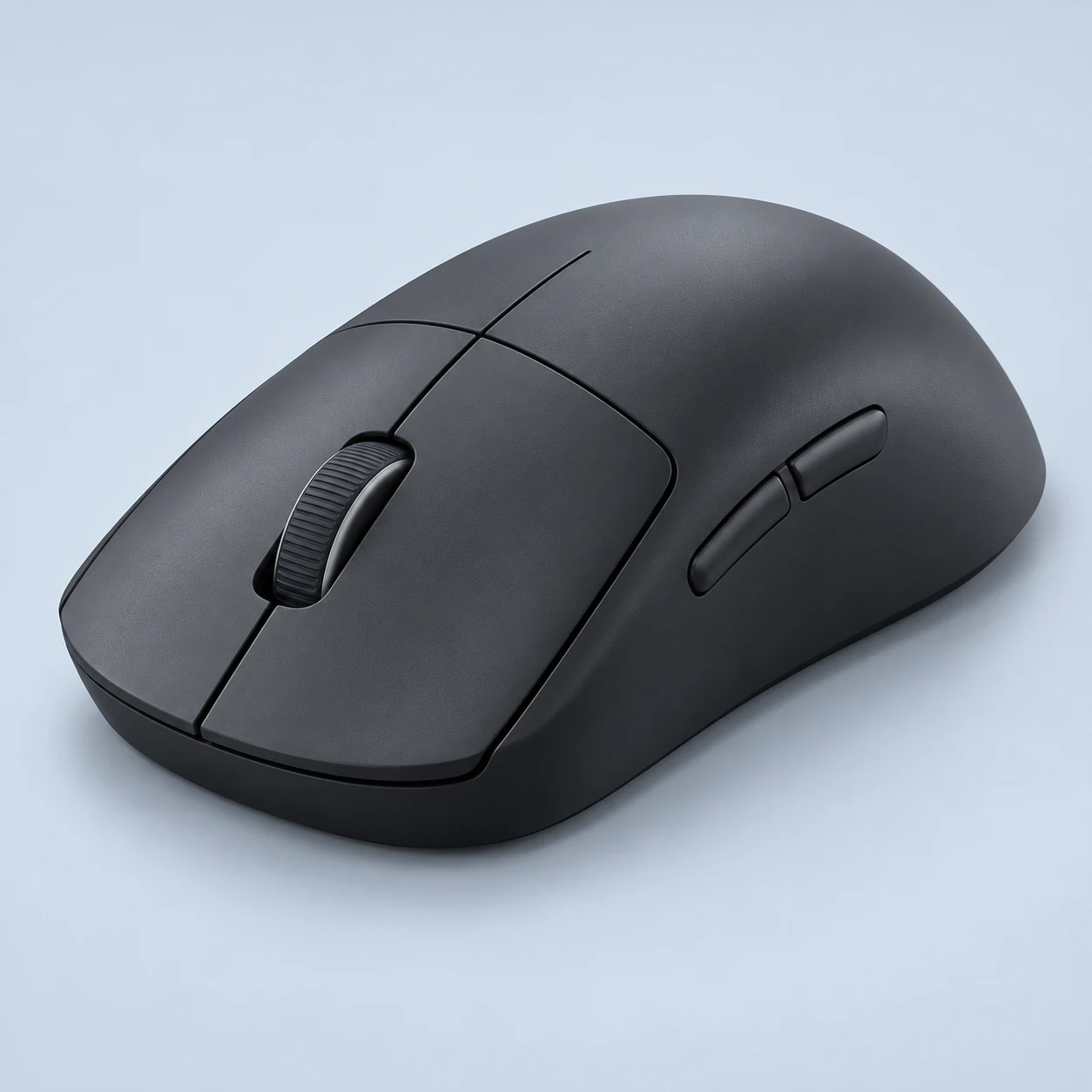
The PRO X SUPERLIGHT 2 concentrates on low-weight wireless control rather than a large command layout. Logitech documents a 60 g shell, HERO 2 sensor and LIGHTFORCE main switches, with current support information confirming 8,000 Hz wireless reporting and USB-C charging. Its broadly symmetrical shape makes it a starting point for players comparing grip preferences. Five buttons and receiver-only wireless connectivity keep the purpose clear: competitive aiming, with fewer conveniences for extensive macros or multi-device work.
Compare the SUPERLIGHT 2 for a rounder symmetrical profile and five-button layout; its current firmware also supports high-rate wireless reporting.
 Illustration
Razer
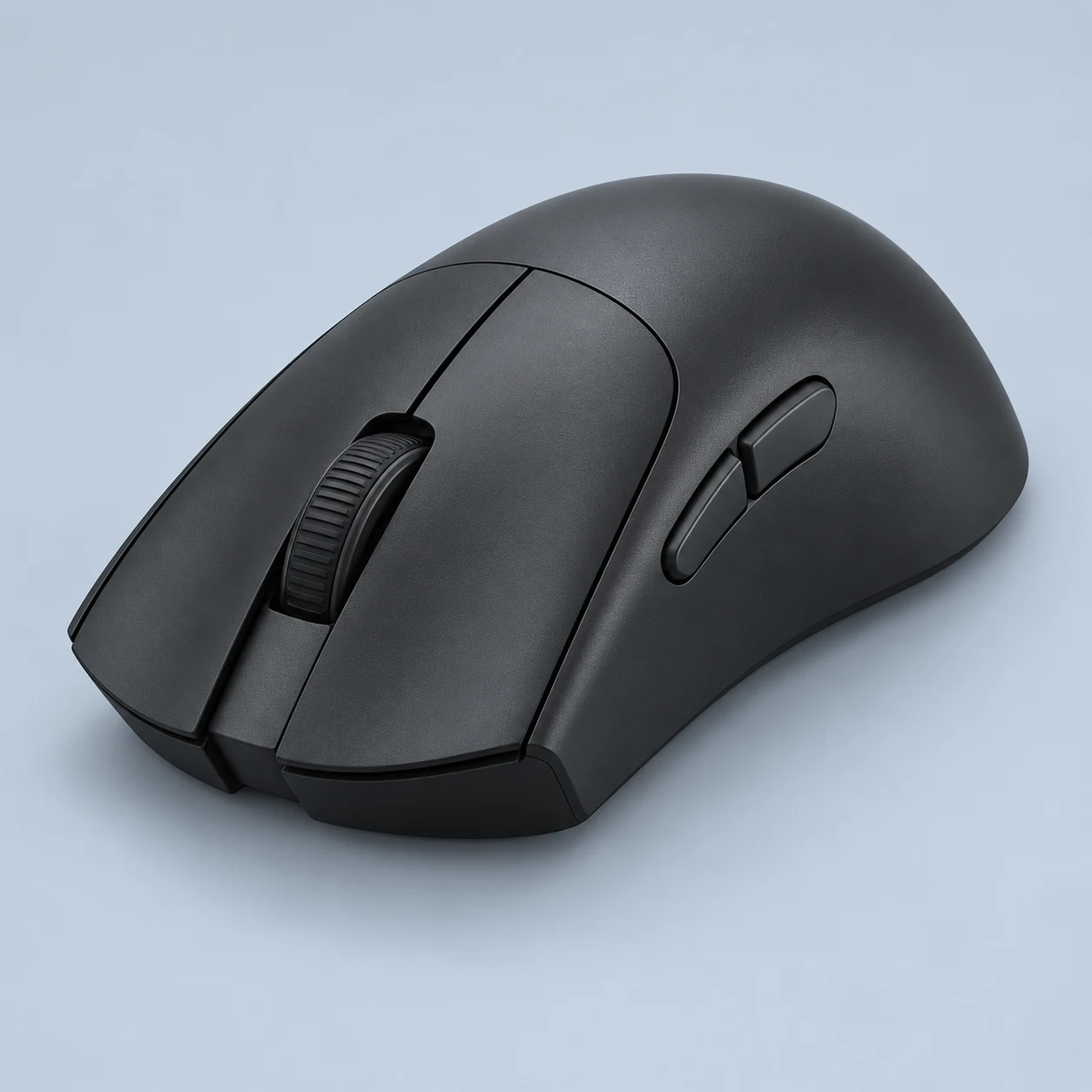
The DeathAdder V3 Pro combines a sloped right-handed shell with a lightweight rechargeable design for aim-focused gaming. This entry covers the original black Classic Base edition, specified at 63 g excluding its cable, with a Focus Pro 30K sensor and Gen-3 optical main switches. High-rate wireless reporting requires an optional HyperPolling receiver. Its relatively large shape and small button layout make it a different ergonomic choice from a symmetrical Viper or a multi-button Naga.
The DeathAdder provides a sloped right-handed shape for players who want a different palm-contact profile.
 Illustration
HyperX
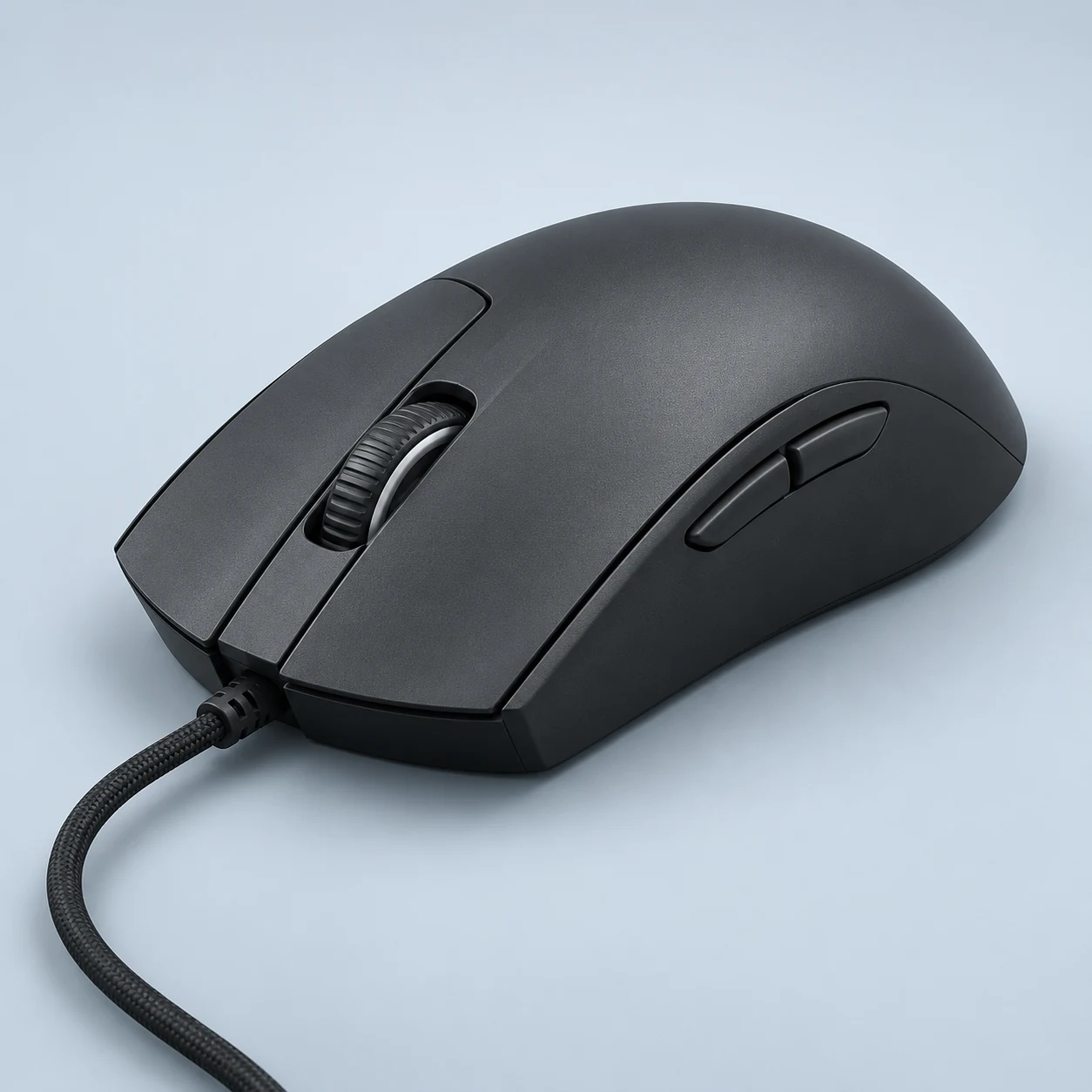
The wired Pulsefire Haste 2 keeps a solid symmetrical shell while prioritizing low mouse-only weight and high-rate USB input. This record uses black SKU 6N0A7AA, specified at 52 g without its cable and 75 g including it. The HyperX 26K sensor, six programmable buttons and up to 8,000 Hz polling serve aim-focused gaming without a charging schedule. Cable routing remains part of the purchase decision, and the similarly named wireless version must be evaluated as separate hardware.
The wired Haste 2 offers documented 8K support without a rechargeable battery, trading cable-free movement for no recharge schedule.
RTINGS.com · LAB_TEST · Accessed 10/3/2026
Source checked: 10/3/2026 · Verified
Public independent shape/grip and connectivity commentary supports the qualitative analysis. Measurements and scores behind the membership gate were not used; no imagery was copied.
Razer · OFFICIAL · Accessed 10/3/2026
Source checked: 10/3/2026 · Verified
Black RZ01-0512 weighs 54 g excluding cable and receiver; white is 55 g. Receiver included. Manufacturer battery ceilings: 95 h at 1K, 62 h at 2K, 40 h at 4K and 17 h at 8K. Programmable inputs do not establish a verified physical button total.
Razer · OFFICIAL · Accessed 10/3/2026
Source checked: 10/3/2026 · Verified
Official indexed support specification inspected; direct access may encounter an Oracle session gate. Dimensions and rate-dependent battery figures apply to RZ01-0512. Official support identifies wired and 2.4 GHz operation and explicitly no RGB. Unconfirmed: eight programmable controls are not an explicit physical button count; encoder and numeric compatibility ratings unavailable. Black 54 g versus white 55 g, excluding cable/dongle.
Razer · OFFICIAL · Accessed 10/3/2026
Source checked: 10/3/2026 · Verified
Published: 2024-04-23
US launch MSRP $159.99; available April 23, 2024. Not a live offer price.
Yes. Razer lists the HyperPolling wireless receiver in the Viper V3 Pro package. This differs from models that need an optional receiver purchase.
No. The supported wireless connection is through its USB receiver, with wired operation also documented.
Razer specifies 54 g for black and 55 g for white, excluding cable and receiver. This page keeps one product record and clearly identifies the black weight basis.
Razer states up to 17 hours at 8,000 Hz, compared with up to 95 hours at 1,000 Hz. Those are conditional manufacturer figures.