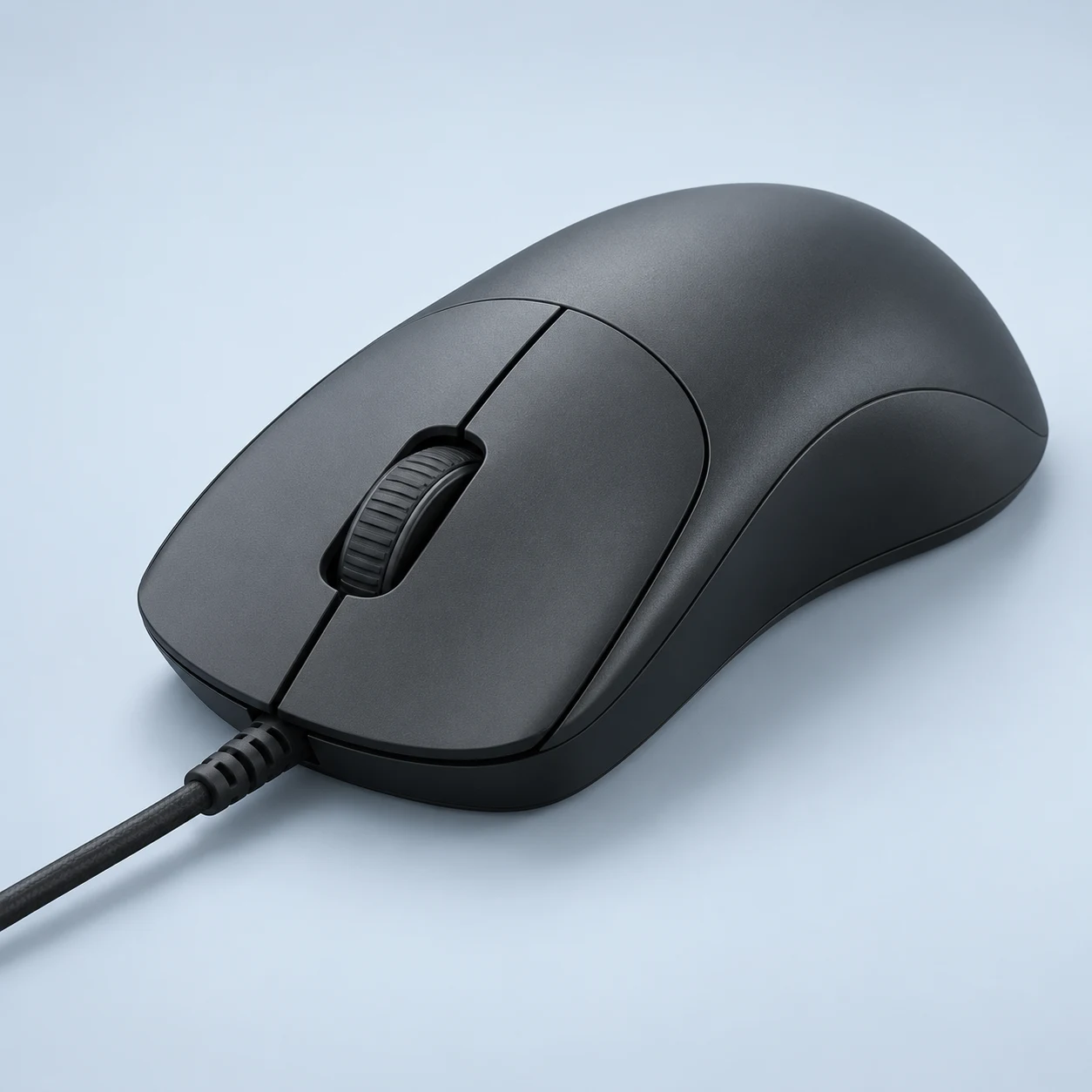
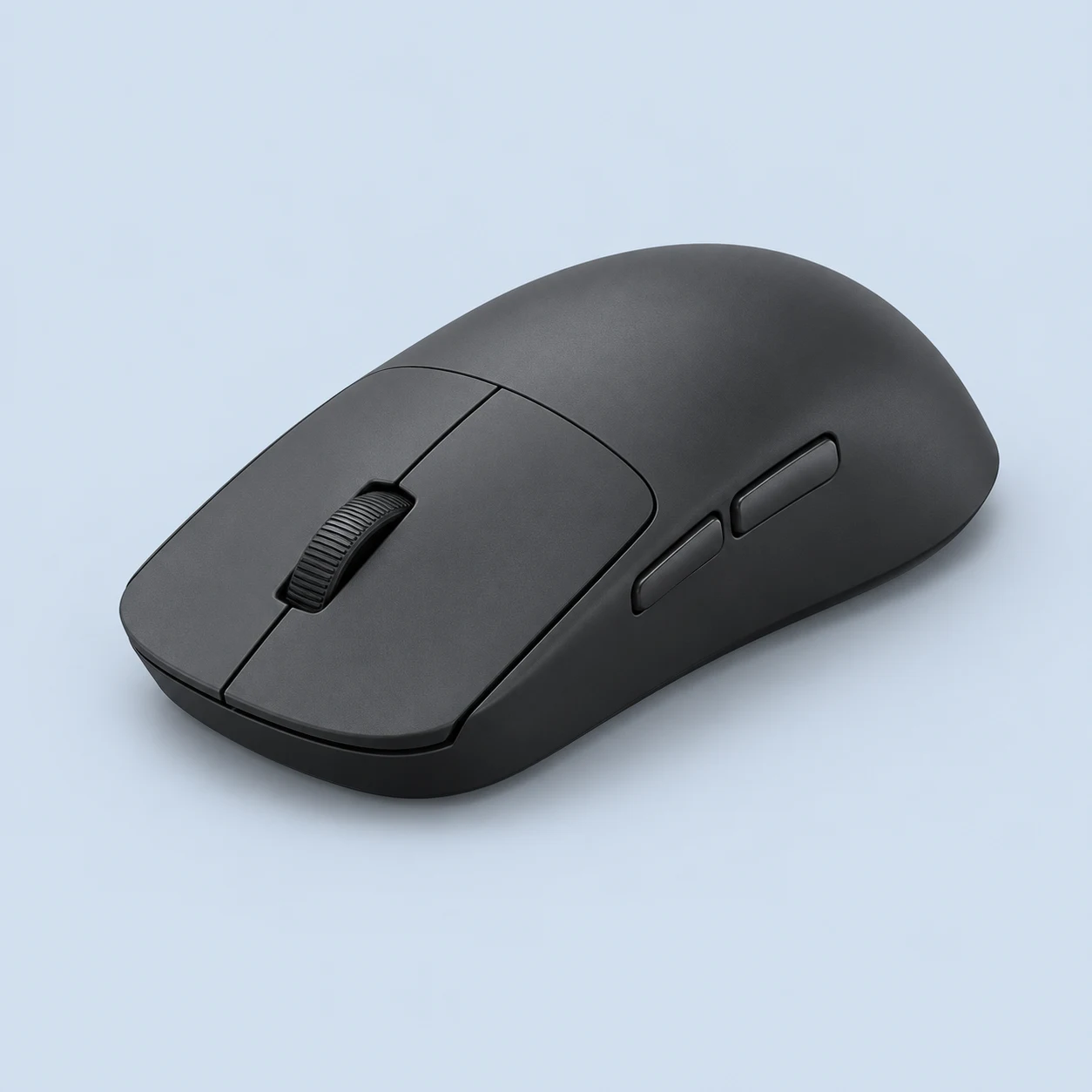
Compact wired control versus wireless ownership. Compare documented specifications, shell fit and ownership tradeoffs without an absolute winner.
Last Updated: 10/4/2026 · Research-based editorial comparison
Key Differences
The catalog documents approximate 118.2 × 60.5 × 37.2 mm dimensions for both. The wired registered Raw Input Edition records 49.5 g and 8K; OP1w 4k v2 records 59.5 g and 4K. Cable inclusion is not explicit in these mass figures, so the apparent difference is not a measured cable-free comparison.
Shape & Size
Compare the exact dimensions in the table with a mouse you already know. Width and height do not determine comfort by themselves; the grip and hand-size research below explains the contact differences.
Weight, Sensor & Polling
The table preserves unknown fields and manufacturer reporting limits. Weight conventions, firmware and optional receivers can differ. Neither a larger DPI maximum nor a higher polling ceiling establishes lower measured latency or better aim.
Choose OP1 8k v2 (Raw Input Edition) If…
Choose this model if you want cable-powered operation and the wired v2’s 8K capability. The registered Raw Input bundle differs cosmetically and in accessories from the reviewed standard hardware; maximum CPI remains unknown where official statements conflict.
Choose OP1w 4k v2 If…
Choose this model if you prefer receiver-based wireless in the compact OP1 shape. Battery is approximately 30 hours at 4K with default power saving. Conflicting official sensor names and control counting keep those fields unconfirmed.
Price Positioning
No live selling price or value winner is established here. Historical MSRP, when verified, is labelled separately in the table. Compare current new-product checkout costs, optional receivers and shipping before deciding; merchant links and commissions do not affect these conclusions.
Claw contact and flatter sides are the official emphasis. Independent public analysis also supports fingertip exploration for the compact body.
Hand Size
RTINGS supports smaller/medium-hand claw or fingertip use. Official broader-hand flexibility is retained as manufacturer positioning, not converted to exact comfort scores.
Gaming Use
Competitive wired FPS and keyboard-led commands are the focus. Two side buttons do not replicate a dedicated MMO control panel.
Connection & Battery Conditions
USB cable supplies power and input, with up to 8K reporting and lower selectable rates. No rechargeable runtime applies.
Claw is the strongest documented direction for this OP1. Flat side walls and the rear contact area are the relevant features. Fingertip use is discussed in the independent review, but a palm recommendation for every hand would go beyond the available evidence.
Hand Size
EloShapes describes a small shell that its large-hand reviewer could use in claw grip. That observation supports a conditional fit discussion across hand sizes, not an exact small/medium/large rating. The narrow sides may matter more than overall length when comparing finger spread.
Gaming Use
Aim-focused games are the natural context for the compact shell and 4K option. Repeated MMO commands remain better served by a thumb grid. Reporting rate does not determine whether a particular player will prefer the shape in Valorant or CS2.
Connection & Battery Conditions
The existing specification record confirms wired and receiver-based wireless modes, with up to 4,000 Hz wireless reporting. Its 30-hour manufacturer battery figure applies at 4K with default power saving. Bluetooth and a precise charging specification are not confirmed here. Use the model-specific official Windows downloads rather than firmware for an earlier OP1.
Dimensions, weight, sensor names and maximum specifications describe products. They do not establish an overall winner. Hand and grip assessments need research context. No hands-on testing is implied.
Affiliate commissions and buying-channel priorities are excluded from this comparison.
OP1 8k v2 (Raw Input Edition)
Available merchants · channel order does not determine comparison conclusions.